TherizinosaurusTherizinosaurus
Therizinosaurus cheloniformis
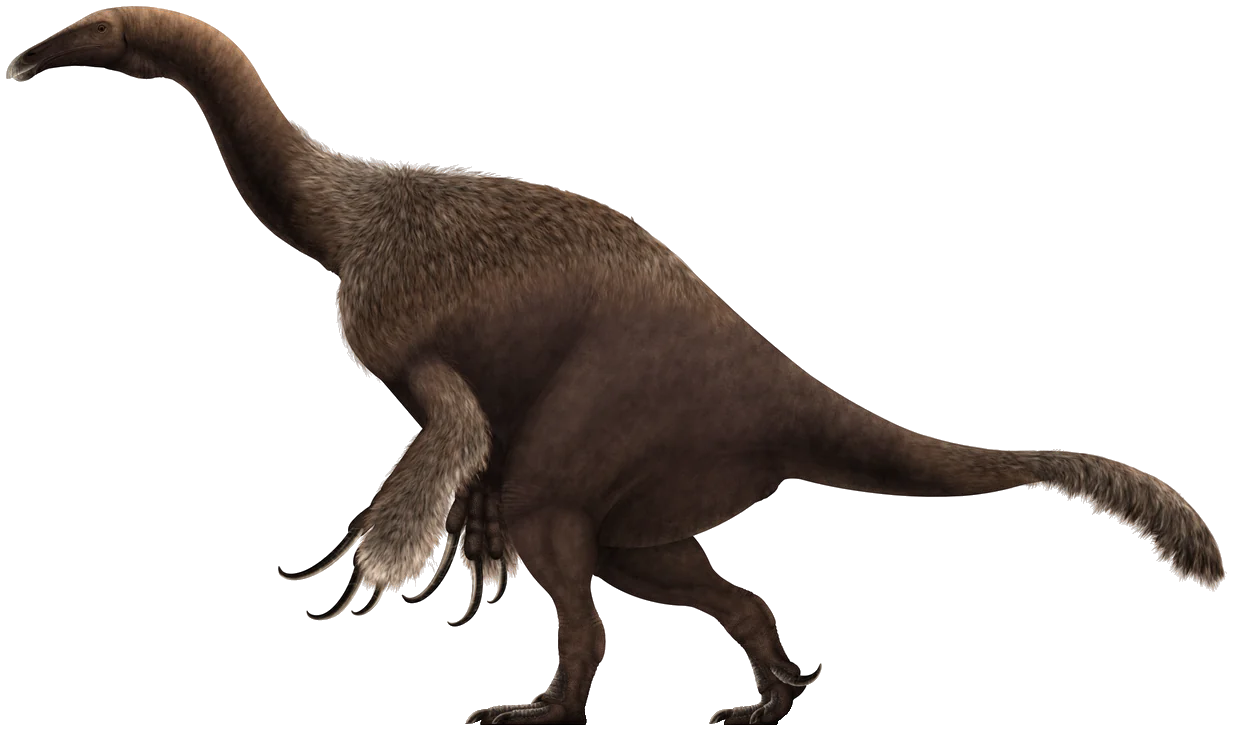
Therizinosaurus war ein riesiger, pflanzenfressender Theropode aus der späten Kreidezeit der Mongolei. Er hatte die längsten Handkrallen aller bekannten Landtiere, über 50 Zentimeter lang. Damit zog er wohl Äste heran, statt zu jagen. Er wurde etwa 9 bis 10 Meter lang und 4 bis 5 Meter hoch.Therizinosaurus was a huge, plant-eating theropod from the Late Cretaceous of Mongolia. It had the longest hand claws of any known land animal, more than 50 centimetres long. It probably used them to pull branches within reach rather than to hunt. It grew about 9 to 10 metres long and 4 to 5 metres tall.
Mehr InformationenMore information
Eine mongolisch-sowjetische Expedition fand 1948 in der Nemegt-Formation der Wüste Gobi drei riesige Krallenknochen. Evgeny Maleev beschrieb sie 1954 und hielt sie für die Reste einer grossen, schildkrötenartigen Echse, die mit den Krallen Seetang erntete. Daher der Name: Therizinosaurus heisst «Sensenechse», cheloniformis «schildkrötenförmig».In 1948 a Mongolian–Soviet expedition found three huge claw bones in the Nemegt Formation of the Gobi Desert. Evgeny Maleev described them in 1954 and thought they came from a large, turtle-like reptile that harvested seaweed with its claws. Hence the name: Therizinosaurus means "scythe lizard", cheloniformis "turtle-shaped".
Erst nach und nach wurde klar, dass es sich um einen Dinosaurier handelt. Lange wurden Therizinosaurus und seine Verwandten bei den Sauropodomorphen oder Ornithischiern vermutet. Heute gelten sie als Theropoden, also Verwandte der Raubdinosaurier und Vögel, die zu Pflanzenfressern wurden. Von Therizinosaurus selbst kennt man nur Arme, Krallen und Teile der Beine.Only gradually did it become clear that this was a dinosaur. For a long time Therizinosaurus and its relatives were thought to be sauropodomorphs or ornithischians. Today they are regarded as theropods, relatives of the predatory dinosaurs and birds that became plant-eaters. Of Therizinosaurus itself only arms, claws and parts of the legs are known.
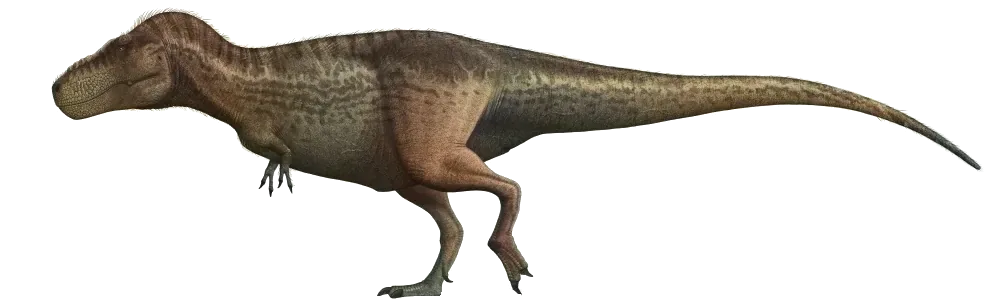
Nach näheren Verwandten hatte er einen kleinen Kopf mit Hornschnabel, einen langen Hals und einen breiten Bauch für Pflanzenkost. Computersimulationen zeigen, dass die langen, schmalen Krallen zum Graben schlecht geeignet waren. Wahrscheinlicher hakte er damit Zweige ein und zog sie heran. Wegen seiner Höhe reichte ihn wohl selbst ein grosser Tarbosaurus nur bis zu Bauch oder Oberschenkeln.Based on closer relatives, it had a small head with a horny beak, a long neck and a wide belly for digesting plants. Computer simulations show that the long, narrow claws were poorly suited for digging. More likely it hooked branches with them and pulled them closer. Because of its height, even a large Tarbosaurus could probably only reach its belly or thighs.
Wusstest du?Did you know?
- Seine Handkrallen sind die längsten bekannten aller Landtiere, über 50 Zentimeter.Its hand claws are the longest known of any land animal, over 50 centimetres.4
- Der Erstbeschreiber hielt ihn für eine riesige Schildkröte, die Seetang erntete.The first person to describe it thought it was a giant turtle harvesting seaweed.4
- Obwohl er zu den Theropoden gehört, frass er wohl Pflanzen.Although it was a theropod, it probably ate plants.1,4
- Anders als die meisten Theropoden stand er auf vier tragenden Zehen.Unlike most theropods, it stood on four weight-bearing toes.4
- Er war der grösste bekannte Maniraptor, die Gruppe, zu der auch die Vögel gehören.It was the largest known maniraptoran, the group that also includes birds.4
Was man nicht sicher weissWhat we don’t know for sure
- Wie er genau aussah; fast alles ausser Armen und Beinen ist aus Verwandten erschlossen.What exactly it looked like; almost everything except the arms and legs is inferred from relatives.4
- Wofür die Krallen dienten: Nahrung heranziehen, Drohen oder Abwehr.What the claws were for: pulling in food, display or defence.1,4
- Wie schwer er war.How heavy it was.4
VerwandtschaftRelationships
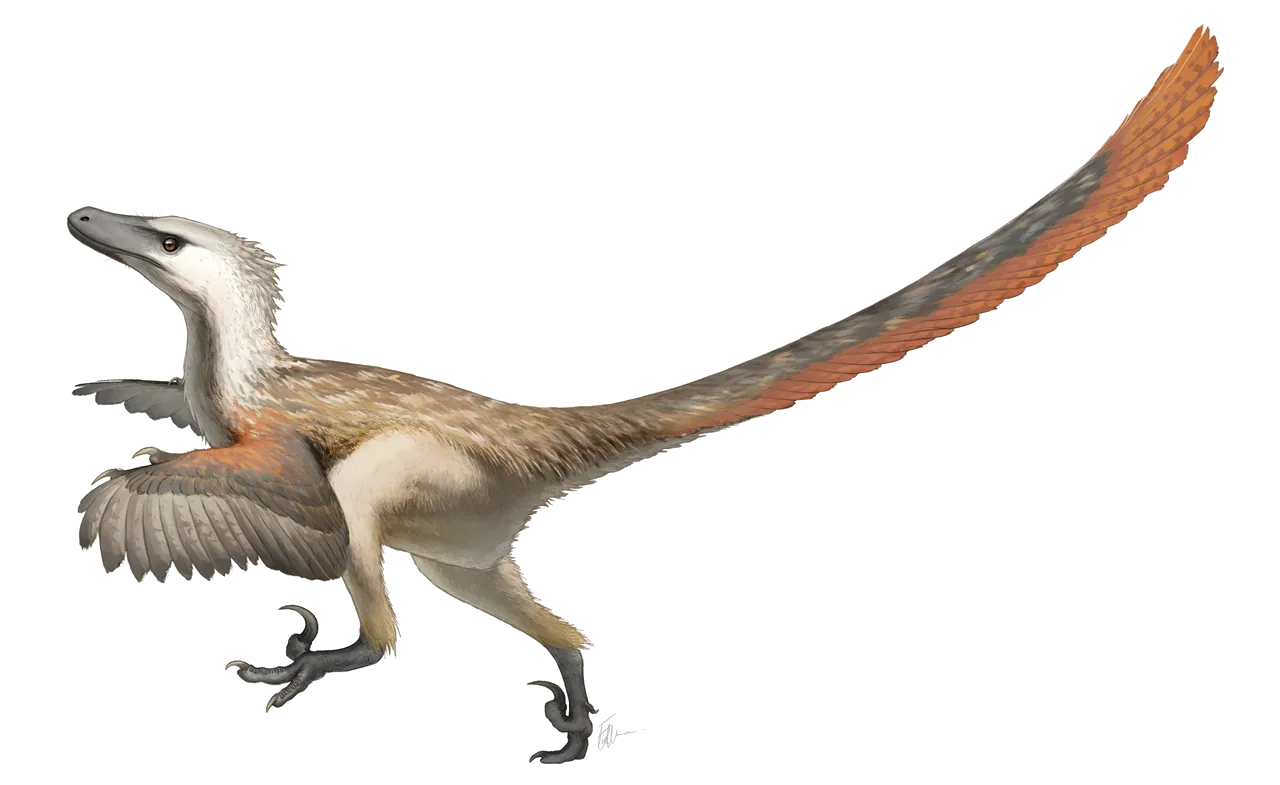
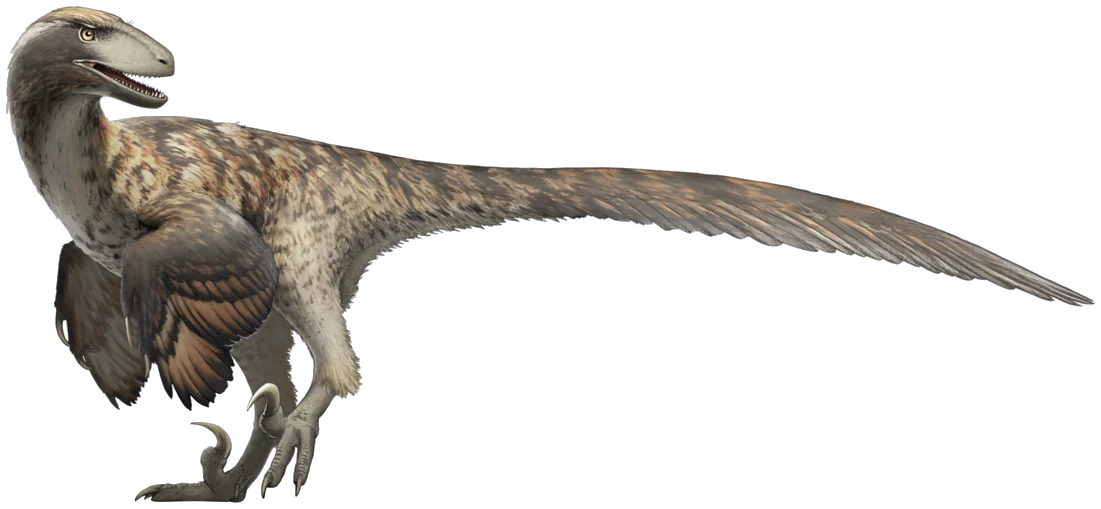
Therizinosaurus ist der grösste und einer der letzten Vertreter der Therizinosaurier. Diese Gruppe gehört zu den Maniraptoren, zu denen auch die Dromaeosaurier wie Velociraptor und die Vögel zählen.Therizinosaurus is the largest and one of the last members of the therizinosaurs. This group belongs to the maniraptorans, which also include dromaeosaurs such as Velociraptor and the birds.2,4
SteckbriefKey facts
- LängeLength
- 9–10 m9–10 m4Aus Verwandten hochgerechnet.Extrapolated from relatives.
- Höhe (stehend)Height (standing)
- 4–5 m4–5 m4Aus Verwandten hochgerechnet.Extrapolated from relatives.
- GewichtWeight
- 5–6.6 t5–6.6 t4Schätzungen gehen weit auseinander, von etwa 3 bis 10 Tonnen.Estimates vary widely, from about 3 to 10 tonnes.
- ZeitraumTime range
- 72.1–66 Mio. Jahre72.1–66 million years ago3,4Maastrichtium (späte Kreide); die Nemegt-Formation ist nicht radiometrisch datiert.Maastrichtian (Late Cretaceous); the Nemegt Formation has not been dated radiometrically.
- ErnährungDiet
- PflanzenfresserHerbivore1,4Wohl Blätter in grosser Höhe.Probably leaves high above the ground.
- FortbewegungLocomotion
- zweibeinigtwo-legged4
FundorteFossil sites
EntdeckungDiscovery4
- JahrYear
- 1948
- OrtPlace
- Nemegt, Wüste Gobi, MongoleiNemegt, Gobi Desert, Mongolia
- Beschrieben vonDescribed by
- Evgeny Maleev (1954)
- FundSpecimen
- Holotyp PIN 551-483
Drei Krallenknochen, gefunden bei einer mongolisch-sowjetischen Expedition.Three claw bones, found on a Mongolian–Soviet expedition.
Wo gefundenWhere it was found
Ungefähre Lage, nur die Region ist angegeben: Nemegt BasinApproximate location, only the region is given: Nemegt Basin5 · FundkarteDiscovery map →
GrössenvergleichSize comparison
QuellenSources
- Lautenschlager, S. (2014): Morphological and functional diversity in therizinosaur claws and the implications for theropod claw evolution. Proceedings of the Royal Society B 281
- Zanno, L. E. (2010): A taxonomic and phylogenetic re-evaluation of Therizinosauria (Dinosauria: Maniraptora). Journal of Systematic Palaeontology 8
- Eberth, D. A. (2018): Stratigraphy and paleoenvironmental evolution of the dinosaur-rich Baruungoyot-Nemegt succession (Upper Cretaceous), Nemegt Basin, southern Mongolia. Palaeogeography, Palaeoclimatology, Palaeoecology 494
- Wikipedia: Therizinosaurus (secondary source, accessed October 2026)
- Wikipedia: Nemegt Basin (coordinates, accessed October 2026)