DeinonychusDeinonychus
Deinonychus antirrhopus
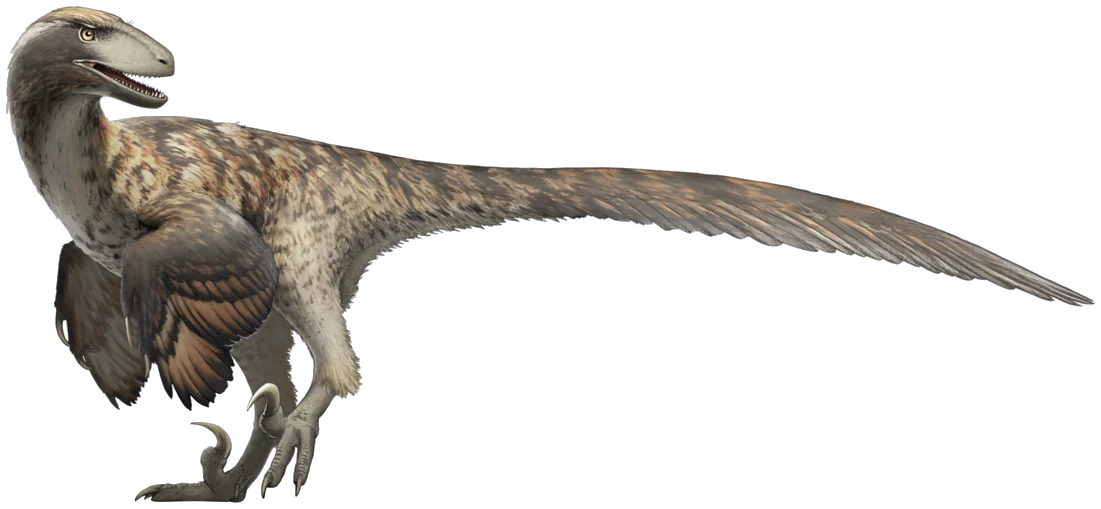
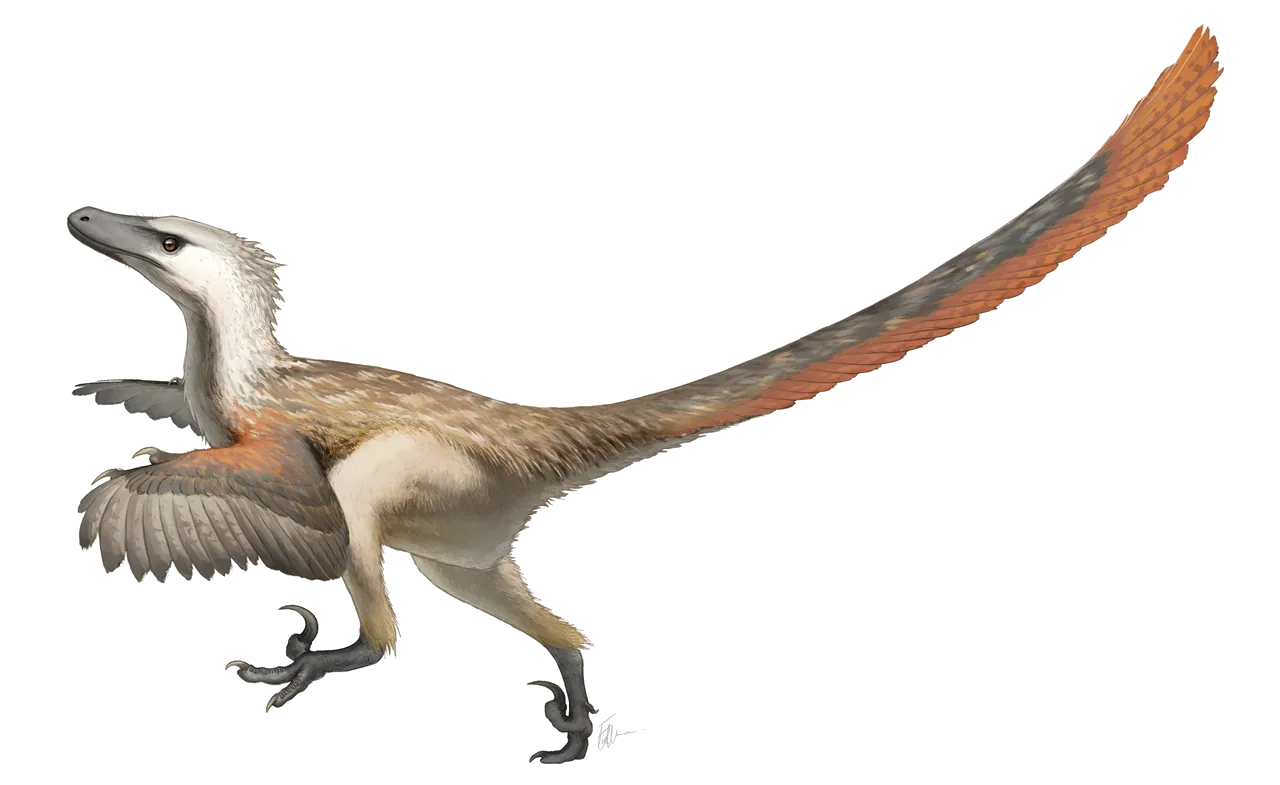
Deinonychus war ein gefiederter Raubdinosaur aus der frühen Kreidezeit Nordamerikas, ein naher Verwandter von Velociraptor, aber deutlich grösser. Er wurde etwa 3.4 Meter lang. An jedem Fuss trug er eine grosse, sichelförmige Kralle. Seine Entdeckung veränderte das Bild der Dinosaurier: weg von trägen Riesenechsen, hin zu aktiven, vogelähnlichen Tieren.Deinonychus was a feathered predatory dinosaur from the Early Cretaceous of North America, a close relative of Velociraptor but much larger. It grew to about 3.4 metres long. On each foot it carried a large, sickle-shaped claw. Its discovery changed the picture of dinosaurs: away from sluggish giant lizards, towards active, bird-like animals.
Mehr InformationenMore information
Barnum Brown fand schon 1931 in Montana Reste, beschrieb sie aber nie. 1964 grub ein Team der Yale University unter John Ostrom bei Bridger in Montana über 1000 Knochen von mindestens drei Tieren aus. Ostrom benannte die Art 1969: Deinonychus heisst «schreckliche Klaue», antirrhopus «Gegengewicht», wegen des steifen Schwanzes.Barnum Brown had already found remains in Montana in 1931, but never described them. In 1964 a Yale University team led by John Ostrom dug up more than 1,000 bones from at least three animals near Bridger, Montana. Ostrom named the species in 1969: Deinonychus means "terrible claw", antirrhopus "counterbalance", because of its stiff tail.
Ostrom sah im schlanken Körperbau und in der grossen Fusskralle Hinweise auf ein flinkes, aktives Raubtier. Das löste die «Dinosaurier-Renaissance» aus und die Debatte, ob Dinosaurier warmblütig waren. Einige Jahre später bemerkte Ostrom, wie ähnlich die Hände von Deinonychus denen von Vögeln sind, und belebte so die Idee neu, dass Vögel von Dinosauriern abstammen.Ostrom saw the slender build and the large foot claw as signs of a quick, active predator. This sparked the "dinosaur renaissance" and the debate over whether dinosaurs were warm-blooded. A few years later Ostrom noticed how similar the hands of Deinonychus are to those of birds, and so revived the idea that birds descend from dinosaurs.
Deinonychus wog wohl etwa 60 bis 100 Kilogramm. Hautabdrücke kennt man nicht, aber nahe Verwandte wie Microraptor und Velociraptor hatten Federn. Zähne von Deinonychus liegen oft bei Skeletten des Pflanzenfressers Tenontosaurus. Ob er in Rudeln jagte, ist umstritten.Deinonychus probably weighed about 60 to 100 kilograms. No skin impressions are known, but close relatives such as Microraptor and Velociraptor had feathers. Deinonychus teeth are often found with skeletons of the plant-eater Tenontosaurus. Whether it hunted in packs is disputed.
Wusstest du?Did you know?
- Die «Velociraptoren» in Jurassic Park beruhen fast ganz auf Deinonychus. Michael Crichton fand den Namen Velociraptor einfach «dramatischer».The "Velociraptors" in Jurassic Park are based almost entirely on Deinonychus. Michael Crichton simply found the name Velociraptor "more dramatic".6
- Der Name bedeutet «schreckliche Klaue», nach der Sichelkralle am zweiten Zeh.The name means "terrible claw", after the sickle claw on the second toe.1,6
- Bei einem Skelett von 1931 liegt ein mögliches Ei, vielleicht beim Brüten erhalten.A possible egg lies with a skeleton found in 1931, perhaps preserved while brooding.5
- Seine Beschreibung 1969 löste die «Dinosaurier-Renaissance» aus.Its description in 1969 sparked the "dinosaur renaissance".6
- Jungtiere frassen laut Isotopen-Untersuchung der Zähne andere Beute als Erwachsene.According to an isotope study of its teeth, young animals ate different prey from adults.4
Was man nicht sicher weissWhat we don’t know for sure
- Ob Deinonychus in Rudeln jagte oder Tiere sich nur an Beute trafen.Whether Deinonychus hunted in packs or animals only gathered at prey.2,3,4
- Wie die Sichelkralle genau eingesetzt wurde: zum Festhalten oder zum Aufschlitzen der Beute.How exactly the sickle claw was used: to pin down or to slash prey.6
- Wie das Gefieder aussah; direkte Belege fehlen.What its plumage looked like; direct evidence is lacking.6
VerwandtschaftRelationships
Deinonychus gehört zu den Dromaeosauriden, den «Raptoren». Diese sind eng mit den Vögeln verwandt. Sein bekannter Verwandter Velociraptor lebte später in Asien und war kleiner.Deinonychus belongs to the dromaeosaurids, the "raptors". These are closely related to birds. Its well-known relative Velociraptor lived later in Asia and was smaller.6
SteckbriefKey facts
- LängeLength
- 3.3–3.4 m3.3–3.4 m6Schätzung von Gregory S. Paul für ausgewachsene Tiere.Estimate by Gregory S. Paul for fully grown animals.
- GewichtWeight
- 60–100 kg60–100 kg6Paul: 60–73 kg; Campione und Kollegen: etwa 100 kg.Paul: 60–73 kg; Campione and colleagues: about 100 kg.
- ZeitraumTime range
- 115–98 Mio. Jahre115–98 million years ago6Aptium bis Cenomanium (frühe bis frühe späte Kreide); die genaue Spanne ist unsicher.Aptian to Cenomanian (Early to earliest Late Cretaceous); the exact range is uncertain.
- ErnährungDiet
- FleischfresserCarnivore3,6Unter anderem wohl Tenontosaurus.Probably including Tenontosaurus.
- FortbewegungLocomotion
- zweibeinigtwo-legged6
FundorteFossil sites
EntdeckungDiscovery1,6
- JahrYear
- 1964
- OrtPlace
- Bei Bridger, Montana, USANear Bridger, Montana, USA
- Beschrieben vonDescribed by
- John Ostrom (1969)
- FundSpecimen
- YPM 5205 (Holotyp, Füsse eines Tiers)
Erste Reste fand Barnum Brown schon 1931, beschrieb sie aber nicht.Barnum Brown found the first remains as early as 1931 but did not describe them.
Wo gefundenWhere it was found
Lage von Bridger, MontanaLocation of Bridger, Montana7 · FundkarteDiscovery map →
GrössenvergleichSize comparison
QuellenSources
- Ostrom, J. H. (1969): Osteology of Deinonychus antirrhopus, an unusual theropod from the Lower Cretaceous of Montana. Peabody Museum of Natural History Bulletin 30
- Maxwell, W. D. & Ostrom, J. H. (1995): Taphonomy and paleobiological implications of Tenontosaurus–Deinonychus associations. Journal of Vertebrate Paleontology 15
- Roach, B. T. & Brinkman, D. L. (2007): A reevaluation of cooperative pack hunting and gregariousness in Deinonychus antirrhopus and other nonavian theropod dinosaurs. Bulletin of the Peabody Museum of Natural History 48
- Frederickson, J. A., Engel, M. H. & Cifelli, R. L. (2020): Ontogenetic dietary shifts in Deinonychus antirrhopus (Theropoda; Dromaeosauridae). Palaeogeography, Palaeoclimatology, Palaeoecology 552
- Grellet-Tinner, G. & Makovicky, P. (2006): A possible egg of the dromaeosaur Deinonychus antirrhopus: phylogenetic and biological implications. Canadian Journal of Earth Sciences 43
- Wikipedia: Deinonychus (secondary source, accessed October 2026)
- Wikipedia: Bridger, Montana (coordinates, accessed October 2026)