StegosaurusStegosaurus
Stegosaurus stenops
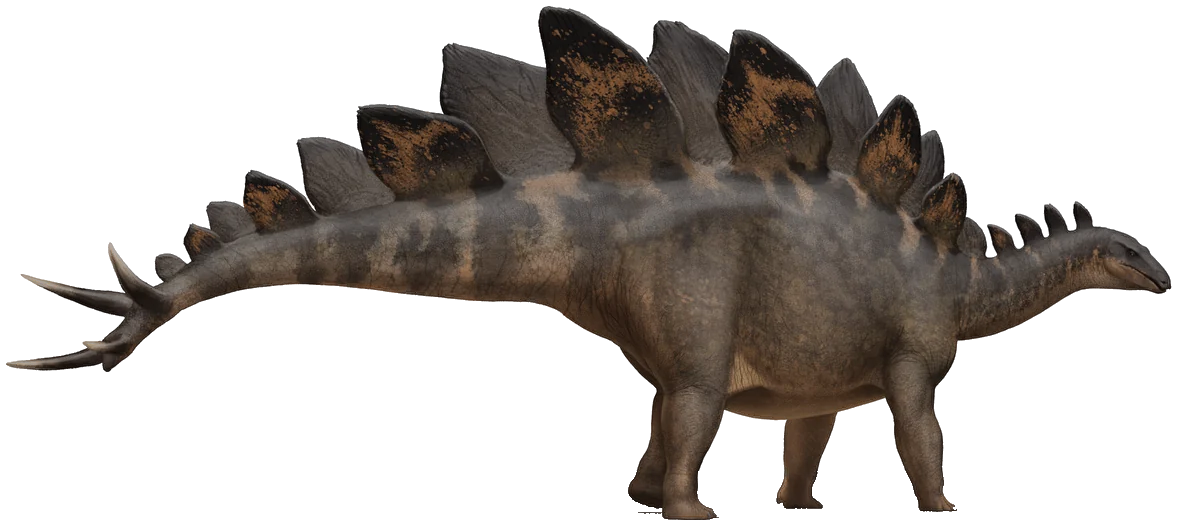
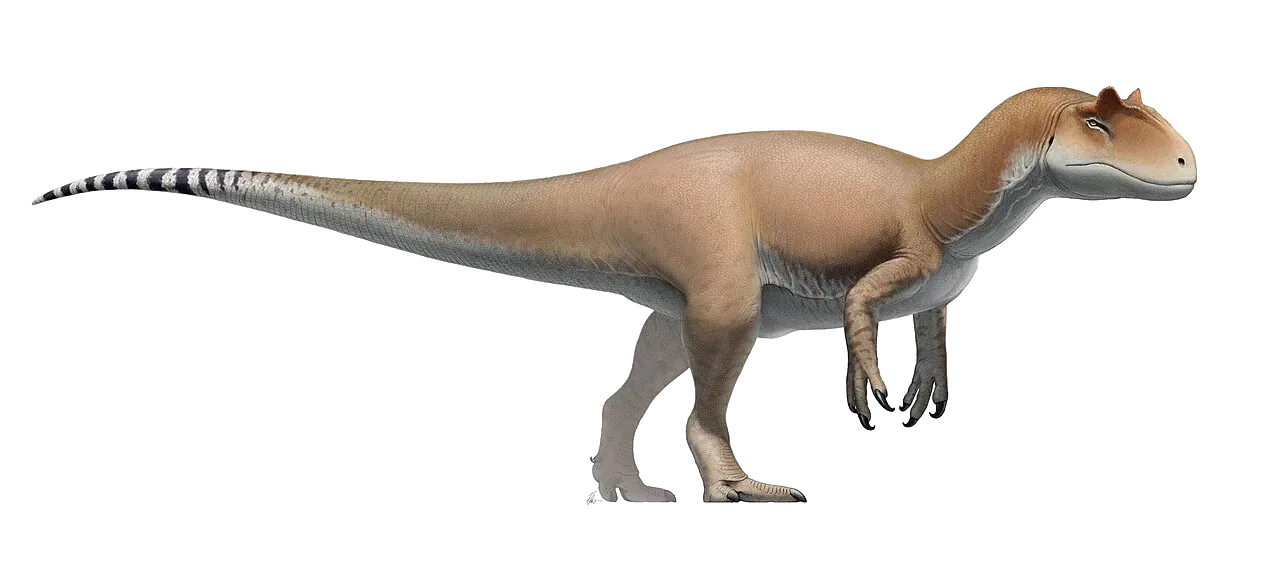
Stegosaurus war ein grosser Pflanzenfresser aus dem späten Jura mit zwei Reihen grosser Knochenplatten auf dem Rücken und vier Stacheln am Schwanz. Er lief auf vier Beinen und hatte einen sehr kleinen Kopf. Mit den Schwanzstacheln konnte er sich wohl gegen Räuber wie Allosaurus wehren. Er ist einer der bekanntesten Dinosaurier überhaupt.Stegosaurus was a large plant-eater from the Late Jurassic with two rows of large bony plates on its back and four spikes on its tail. It walked on four legs and had a very small head. It could probably defend itself against predators such as Allosaurus with its tail spikes. It is one of the best-known dinosaurs of all.
Mehr InformationenMore information
Arthur Lakes und H. C. Beckwith fanden die ersten Knochen nördlich von Morrison in Colorado, und Othniel Charles Marsh beschrieb sie 1877 als Stegosaurus armatus. Marsh glaubte zuerst, die Platten lägen flach wie Dachziegel auf dem Rücken, daher der Name «Dachechse». Weil das erste Fundstück zu unvollständig ist, gilt seit 2013 S. stenops als Typusart. Alle Funde stammen aus der Morrison-Formation im Westen der USA.Arthur Lakes and H. C. Beckwith found the first bones north of Morrison, Colorado, and Othniel Charles Marsh described them in 1877 as Stegosaurus armatus. Marsh first thought the plates lay flat on the back like roof tiles, hence the name "roofed lizard". Because the first specimen is too incomplete, S. stenops has been the type species since 2013. All finds come from the Morrison Formation in the western USA.
Erwachsene Tiere waren etwa 6.5 bis 9 Meter lang und wogen geschätzt 3.5 bis über 5 Tonnen. Das fast vollständige Skelett «Sophie» aus Wyoming steht seit 2014 im Natural History Museum in London; es stammt von einem noch nicht ausgewachsenen Tier von etwa 1.6 Tonnen. Das Gehirn war nur etwa so gross wie eine Pflaume. Die Platten waren in der Haut verankert und standen abwechselnd in zwei Reihen.Adults were about 6.5 to 9 metres long and weighed an estimated 3.5 to over 5 tonnes. The almost complete skeleton "Sophie" from Wyoming has been on display at the Natural History Museum in London since 2014; it belongs to an animal that was not yet fully grown and weighed about 1.6 tonnes. Its brain was only about the size of a plum. The plates were anchored in the skin and stood alternately in two rows.
Wofür die Platten dienten, ist umstritten: Diskutiert werden Schutz, Schau und die Regelung der Körpertemperatur. Die Schwanzstacheln waren dagegen wohl Waffen. Fast jeder zehnte untersuchte Stegosaurus hat verletzte Stacheln, und ein Allosaurus-Wirbel trägt ein Loch, in das ein Stachel genau passt. Die Idee eines «zweiten Gehirns» im Becken gilt heute als überholt.What the plates were for is debated: protection, display and temperature control are all discussed. The tail spikes, by contrast, were probably weapons. Almost one in ten Stegosaurus examined has injured spikes, and an Allosaurus vertebra bears a hole into which a spike fits exactly. The idea of a "second brain" in the hips is now considered outdated.
Wusstest du?Did you know?
- Der Name bedeutet «Dachechse», weil Marsh die Platten zuerst für flach liegende Dachziegel hielt.The name means "roofed lizard", because Marsh first thought the plates lay flat like roof tiles.1,7
- Das Gehirn von Stegosaurus war etwa so gross wie eine Pflaume.The brain of Stegosaurus was about the size of a plum.3
- Fast jeder zehnte untersuchte Stegosaurus hatte verletzte Schwanzstacheln, ein Hinweis auf Kämpfe.Almost one in ten Stegosaurus examined had injured tail spikes, a sign of fights.7
- Das fast vollständige Skelett «Sophie» wurde wohl rasch in einem Teich begraben und blieb deshalb so gut erhalten.The almost complete skeleton "Sophie" was probably buried quickly in a pond and so stayed very well preserved.4
- Je nach Methode ergaben sich für dasselbe Skelett Gewichte von etwa 1.6 bis 3.8 Tonnen.Depending on the method, the same skeleton gave weights from about 1.6 to 3.8 tonnes.5
Was man nicht sicher weissWhat we don’t know for sure
- Wofür die Platten dienten: Schutz, Schau, Erkennung von Artgenossen oder Temperaturregelung.What the plates were for: protection, display, recognition of the same species or temperature control.3,7
- Wie viele Stegosaurus-Arten es gab.How many Stegosaurus species there were.2,7
- Wie schwer erwachsene Tiere waren: Die Ergebnisse hängen stark von der Methode ab.How heavy adults were: results depend strongly on the method.5,7
- Wozu die Erweiterung des Rückenmarkkanals im Becken diente; ein «zweites Gehirn» war es wohl nicht.What the widened spinal canal in the hips was for; it was probably not a "second brain".7
VerwandtschaftRelationships
Stegosaurus gehört zu den Stegosauriern innerhalb der Thyreophora, der gepanzerten Gruppe der Ornithischia. Zu seinen nahen Verwandten zählen andere Stegosaurier wie Kentrosaurus und Hesperosaurus.Stegosaurus belongs to the stegosaurs within Thyreophora, the armoured group of Ornithischia. Its close relatives include other stegosaurs such as Kentrosaurus and Hesperosaurus.7
SteckbriefKey facts
- LängeLength
- 6.5–9 m6.5–9 m3,7S. stenops ca. 6.5 m, S. ungulatus ca. 7 m; grosse Tiere bis 7.5–9 m; NHM: 9 m.S. stenops about 6.5 m, S. ungulatus about 7 m; large animals up to 7.5–9 m; NHM: 9 m.
- GewichtWeight
- 3.5–5.3 t3.5–5.3 t7Erwachsene; das subadulte Skelett «Sophie» wog geschätzt ca. 1.6 t.Adults; the subadult skeleton "Sophie" weighed an estimated 1.6 t.
- ZeitraumTime range
- 152–145 Mio. Jahre152–145 million years ago3Spätes Jura.Late Jurassic.
- ErnährungDiet
- PflanzenfresserHerbivore3
- FortbewegungLocomotion
- vierbeinigfour-legged7
FundorteFossil sites
EntdeckungDiscovery1,2,6,7
- JahrYear
- 1877
- OrtPlace
- nördlich von Morrison, Colorado, USAnorth of Morrison, Colorado, USA
- Beschrieben vonDescribed by
- Othniel Charles Marsh (1877)
- FundSpecimen
- Holotyp YPM 1850 (S. armatus)
Gefunden von Arthur Lakes und H. C. Beckwith. Seit 2013 ist S. stenops die Typusart.Found by Arthur Lakes and H. C. Beckwith. Since 2013, S. stenops has been the type species.
Wo gefundenWhere it was found
Lage von Morrison, ColoradoLocation of Morrison, Colorado8 · FundkarteDiscovery map →
GrössenvergleichSize comparison
QuellenSources
- Marsh, O. C. (1877): A new order of extinct Reptilia (Stegosauria) from the Jurassic of the Rocky Mountains. American Journal of Science s3-14
- Galton, P. M. (2010): Species of plated dinosaur Stegosaurus (Morrison Formation, Late Jurassic) of western USA: new type species designation needed. Swiss Journal of Geosciences 103
- Natural History Museum London: Dino Directory – Stegosaurus
- Maidment, S. C. R., Brassey, C. & Barrett, P. M. (2015): The postcranial skeleton of an exceptionally complete individual of the plated dinosaur Stegosaurus stenops. PLoS ONE 10
- Brassey, C. A., Maidment, S. C. R. & Barrett, P. M. (2015): Body mass estimates of an exceptionally complete Stegosaurus. Biology Letters 11
- ICZN (2013): Opinion 2320 (Case 3536): Stegosaurus Marsh, 1877: type species replaced with Stegosaurus stenops Marsh, 1887. Bulletin of Zoological Nomenclature 70
- Wikipedia: Stegosaurus (secondary source, accessed October 2026)
- Wikipedia: Morrison, Colorado (coordinates, accessed October 2026)