ProtoceratopsProtoceratops
Protoceratops andrewsi
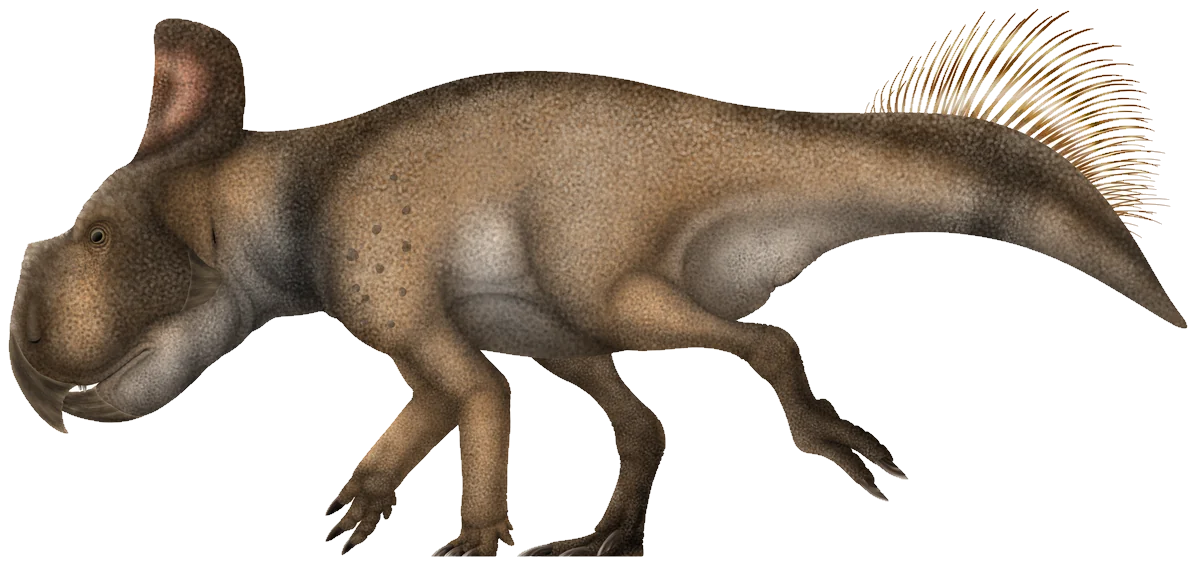
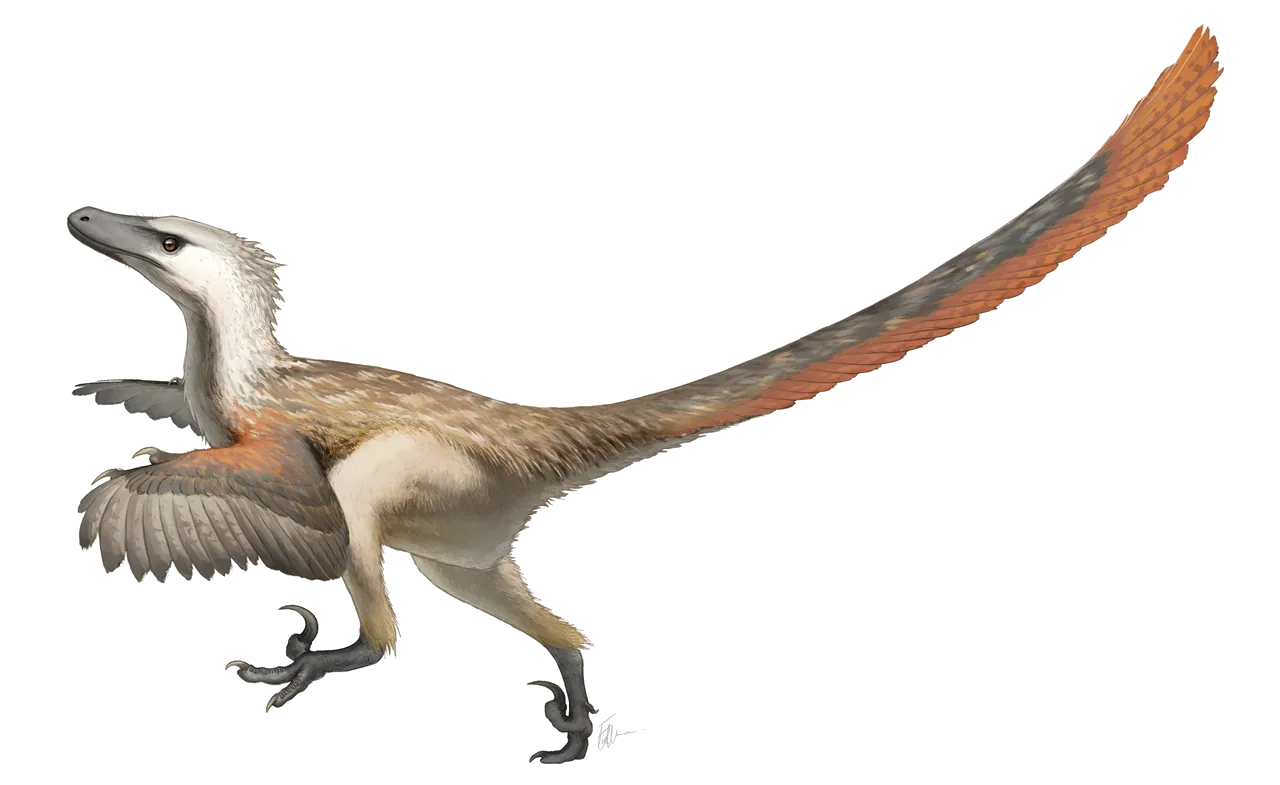
Protoceratops war ein kleiner, schafgrosser Horndinosaurier aus der späten Kreidezeit der Mongolei und Chinas. Er hatte einen grossen Kopf mit Nackenschild und Papageienschnabel, aber keine richtigen Hörner. Er lebte wohl in Gruppen und legte Eier mit weicher Schale. Berühmt ist ein Fossil, in dem er mit einem Velociraptor kämpft.Protoceratops was a small, sheep-sized horned dinosaur from the Late Cretaceous of Mongolia and China. It had a large head with a neck frill and a parrot-like beak, but no real horns. It probably lived in groups and laid soft-shelled eggs. It is famous for a fossil in which it is fighting a Velociraptor.
Mehr InformationenMore information
Am 2. September 1922 fand der Fotograf James Shackelford einer Expedition des American Museum of Natural History an den Flaming Cliffs in der Wüste Gobi einen Schädel. Walter Granger und William Gregory beschrieben ihn 1923 als Protoceratops andrewsi, nach dem Expeditionsleiter Roy Chapman Andrews. Der Name bedeutet etwa «erstes Horngesicht»; man hielt ihn für einen Vorfahren von Triceratops.On 2 September 1922 James Shackelford, the photographer of an American Museum of Natural History expedition, found a skull at the Flaming Cliffs in the Gobi Desert. Walter Granger and William Gregory described it in 1923 as Protoceratops andrewsi, after the expedition leader Roy Chapman Andrews. The name means roughly "first horned face"; it was thought to be an ancestor of Triceratops.
Protoceratops wurde 2 bis 2.5 Meter lang und 62 bis 104 Kilogramm schwer. Er hatte einen grossen Schädel, einen kurzen, steifen Hals, einen Nackenschild und einen Schnabel. Erwachsene gingen auf vier Beinen, Jungtiere konnten wohl auch auf zwei laufen. Die flachen Krallen an den Füssen eigneten sich zum Graben im Sand.Protoceratops grew 2 to 2.5 metres long and weighed 62 to 104 kilograms. It had a large skull, a short, stiff neck, a neck frill and a beak. Adults walked on four legs, while young animals could probably also run on two. The flat claws on its feet were suited to digging in sand.
Von Protoceratops kennt man über 100 Exemplare aller Altersstufen, darum weiss man viel über sein Wachstum. 2020 zeigte eine Studie, dass seine Eier eine weiche Schale hatten. 1971 fand eine polnisch-mongolische Expedition die «Kämpfenden Dinosaurier»: einen Protoceratops und einen Velociraptor, im Kampf versteinert.More than 100 specimens of Protoceratops of all ages are known, so a lot is known about its growth. In 2020 a study showed that its eggs had soft shells. In 1971 a Polish-Mongolian expedition found the "Fighting Dinosaurs": a Protoceratops and a Velociraptor, fossilised in combat.
Fundstellen mit mehreren gleich grossen Tieren deuten darauf hin, dass Protoceratops in Gruppen lebte, offenbar schon als Jungtiere. Wegen seiner grossen Augen hielt man ihn früher für nachtaktiv. Eine Studie von 2011 kam dagegen zum Schluss, dass er zu wechselnden Tageszeiten aktiv war; der Kampf mit Velociraptor fand dann vielleicht in der Dämmerung statt.Sites with several animals of the same size suggest that Protoceratops lived in groups, apparently even as juveniles. Because of its large eyes it was once thought to be nocturnal. A 2011 study, however, concluded that it was active at irregular times of day and night; the fight with Velociraptor may then have taken place at dusk.
Wusstest du?Did you know?
- Das Fossil der «Kämpfenden Dinosaurier» zeigt einen Protoceratops und einen Velociraptor im Kampf.The "Fighting Dinosaurs" fossil shows a Protoceratops and a Velociraptor in combat.2
- Seine Eier hatten eine weiche Schale, ähnlich wie bei vielen heutigen Reptilien.Its eggs had soft shells, similar to many reptiles today.1
- Der Holotyp wurde vom Fotografen der Expedition entdeckt.The holotype was discovered by the expedition's photographer.2
- Eine Folkloristin vermutet, dass Funde von Protoceratops die Sage vom Greif mitgeprägt haben könnten.A folklorist has suggested that finds of Protoceratops may have helped shape the legend of the griffin.2
- Man kennt über 100 Exemplare, von Jungtieren bis zu Erwachsenen.More than 100 specimens are known, from young animals to adults.2
Was man nicht sicher weissWhat we don’t know for sure
- Wozu der Nackenschild diente: Schau, Kämpfe, Schutz oder Ansatz für Kiefermuskeln.What the neck frill was for: display, fighting, protection or anchoring jaw muscles.2
- Ob Männchen und Weibchen unterschiedlich aussahen; es gibt keine klaren Belege.Whether males and females looked different; there is no clear evidence.2
- Wann am Tag Protoceratops aktiv war: Die Deutungen seiner grossen Augen gehen auseinander.At what time of day Protoceratops was active: interpretations of its large eyes differ.5,2
- Ob alle Protoceratops in Gruppen lebten oder manche auch allein.Whether all Protoceratops lived in groups or some lived alone.4,2
VerwandtschaftRelationships
Protoceratops ist ein früher Horndinosaurier (Ceratopsier), aber nicht der direkte Vorfahre von Triceratops. Zusammen mit den Dickkopfsauriern gehören die Horndinosaurier zu den Marginocephalia.Protoceratops is an early horned dinosaur (ceratopsian), but not the direct ancestor of Triceratops. Together with the thick-headed dinosaurs, horned dinosaurs belong to the Marginocephalia.2
SteckbriefKey facts
- LängeLength
- 2–2.5 m2–2.5 m2
- GewichtWeight
- 62–104 kg62–104 kg2
- ZeitraumTime range
- 75–71 Mio. Jahre75–71 million years ago2Campanium (späte Kreide).Campanian (Late Cretaceous).
- ErnährungDiet
- PflanzenfresserHerbivore2
- FortbewegungLocomotion
- vierbeinigfour-legged2Jungtiere konnten wohl auch auf zwei Beinen laufen.Young animals could probably also run on two legs.
FundorteFossil sites
EntdeckungDiscovery2
- JahrYear
- 1922
- OrtPlace
- Flaming Cliffs, Wüste Gobi, MongoleiFlaming Cliffs, Gobi Desert, Mongolia
- Beschrieben vonDescribed by
- Walter Granger & William K. Gregory (1923)
- FundSpecimen
- Holotyp AMNH 6251
Gefunden am 2. September 1922 vom Fotografen James Shackelford.Found on 2 September 1922 by the photographer James Shackelford.
Wo gefundenWhere it was found
Lage von Flaming CliffsLocation of Flaming Cliffs3 · FundkarteDiscovery map →
GrössenvergleichSize comparison
QuellenSources
- Norell, M. A. et al. (2020): The first dinosaur egg was soft. Nature 583
- Wikipedia: Protoceratops (secondary source, accessed October 2026)
- Wikipedia: Flaming Cliffs (coordinates, accessed October 2026)
- Hone, D. W. E., Farke, A. A., Watabe, M. et al. (2014): A new mass mortality of juvenile Protoceratops and size-segregated aggregation behaviour in juvenile non-avian dinosaurs. PLoS ONE 9
- Schmitz, L. & Motani, R. (2011): Nocturnality in dinosaurs inferred from scleral ring and orbit morphology. Science 332