PachycephalosaurusPachycephalosaurus
Pachycephalosaurus wyomingensis
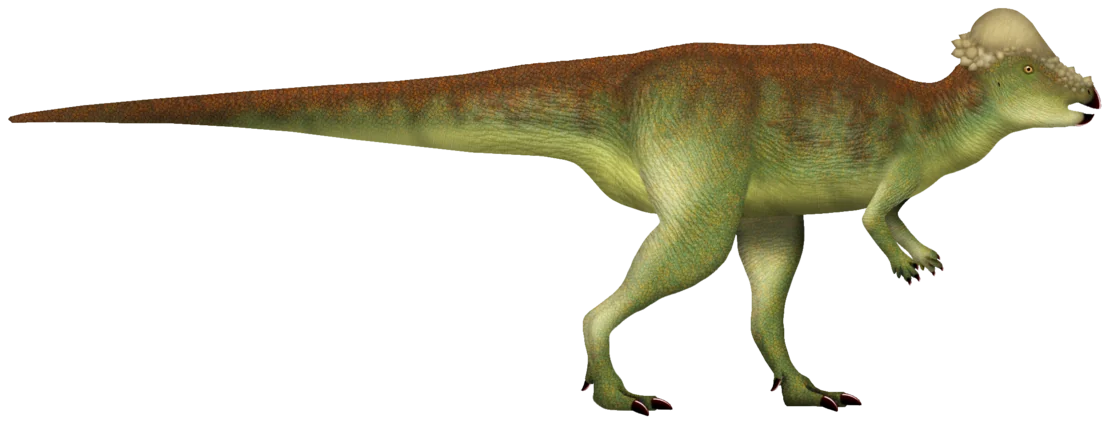
Pachycephalosaurus war ein Pflanzenfresser aus der allerletzten Zeit der Kreide in Nordamerika. Berühmt ist sein gewölbtes Schädeldach, das bis 22 Zentimeter dick war. Er lief auf zwei Beinen und wurde etwa 4.5 Meter lang. Ob er damit wie ein Widder gegen Rivalen rammte, ist umstritten.Pachycephalosaurus was a plant-eater from the very end of the Cretaceous in North America. It is famous for its domed skull roof, which was up to 22 centimetres thick. It walked on two legs and grew about 4.5 metres long. Whether it rammed rivals with it like a ram is disputed.
Mehr InformationenMore information
George Fryer Sternberg fand 1930 in der Lance-Formation in Wyoming einen Teilschädel. Charles Gilmore beschrieb ihn 1931 als Troodon wyomingensis, denn damals hielt man die Zähne von Troodon und den Dickkopfsauriern für gleich. 1943 schufen Barnum Brown und Erich Schlaikjer nach einem fast vollständigen Schädel aus Montana die Gattung Pachycephalosaurus, «Dickkopfechse».In 1930 George Fryer Sternberg found a partial skull in the Lance Formation of Wyoming. Charles Gilmore described it in 1931 as Troodon wyomingensis, because at that time the teeth of Troodon and the thick-headed dinosaurs were thought to be the same. In 1943 Barnum Brown and Erich Schlaikjer created the genus Pachycephalosaurus, "thick-headed lizard", based on an almost complete skull from Montana.
Pachycephalosaurus wurde etwa 4.5 Meter lang und 370 bis 450 Kilogramm schwer; er ist der grösste bekannte Dickkopfsaurier. Er lief auf zwei langen, kräftigen Beinen und hatte eher kurze Arme mit fünf Fingern. Bekannt ist er vor allem von Schädeln, besonders von den sehr dicken Schädeldächern.Pachycephalosaurus grew about 4.5 metres long and weighed 370 to 450 kilograms; it is the largest known thick-headed dinosaur. It walked on two long, strong legs and had rather short arms with five fingers. It is known mainly from skulls, especially the very thick skull roofs.
Lange galt er als Kopframmer wie Dickhornschafe oder Moschusochsen. Eine Studie von 2004 fand im Knochen der Kuppel Strukturen, die dazu nicht passen. Eine Studie von 2013 fand dagegen viele verheilte Verletzungen an Schädeldächern von Dickkopfsauriern, die für Kopfstösse sprechen. Ob Dracorex und Stygimoloch eigene Gattungen oder Jungtiere von Pachycephalosaurus sind, ist umstritten.For a long time it was regarded as a head-rammer like bighorn sheep or musk oxen. A 2004 study found structures in the bone of the dome that do not fit this. A 2013 study, on the other hand, found many healed injuries on the skull roofs of thick-headed dinosaurs that support head-butting. Whether Dracorex and Stygimoloch are separate genera or young Pachycephalosaurus is disputed.
Wusstest du?Did you know?
- Sein Schädeldach war bis 22 Zentimeter dick.Its skull roof was up to 22 centimetres thick.4
- Er wurde zuerst als Art von Troodon beschrieben, einem ganz anderen Dinosaurier.It was first described as a species of Troodon, a completely different dinosaur.1,4
- Er gehörte zu den letzten Dinosauriern vor dem Aussterben vor 66 Millionen Jahren.It was among the last dinosaurs before the extinction 66 million years ago.4
- An Schädeldächern von Dickkopfsauriern fanden sich viele verheilte Verletzungen.Many healed injuries have been found on the skull roofs of thick-headed dinosaurs.3
- Er ist der grösste bekannte Dickkopfsaurier.It is the largest known thick-headed dinosaur.4
Was man nicht sicher weissWhat we don’t know for sure
VerwandtschaftRelationships
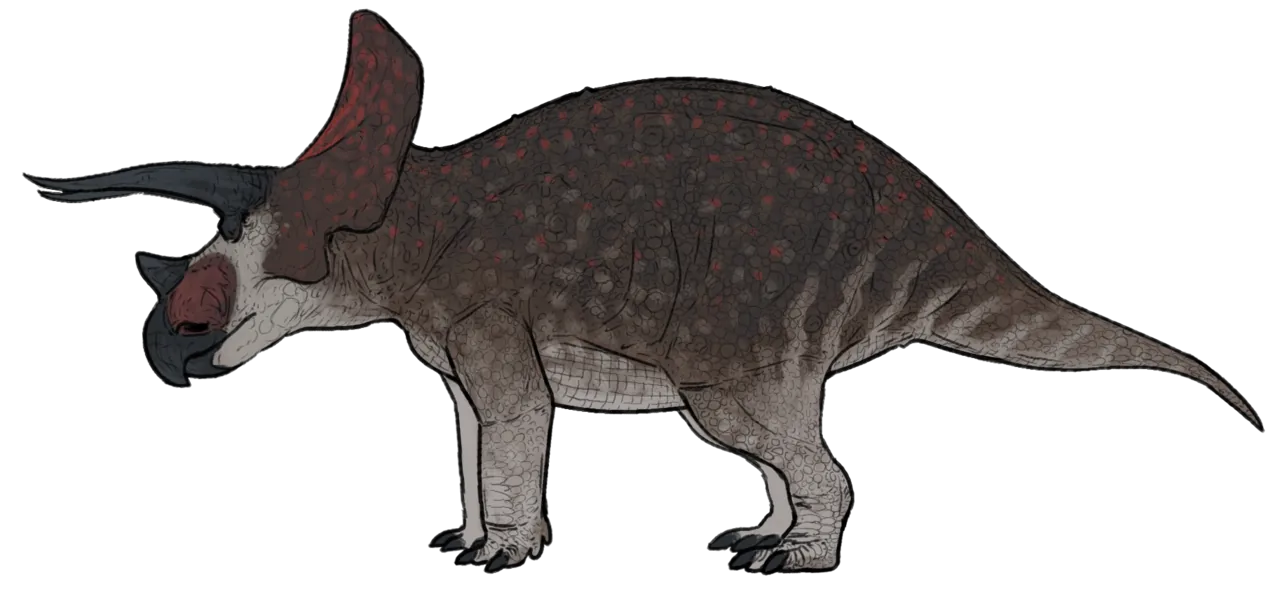
Pachycephalosaurus gehört zu den Dickkopfsauriern (Pachycephalosauriern). Zusammen mit den Horndinosauriern wie Triceratops bilden sie die Marginocephalia.Pachycephalosaurus belongs to the thick-headed dinosaurs (pachycephalosaurs). Together with horned dinosaurs such as Triceratops they form the Marginocephalia.4
Wo gefundenWhere it was found
Ungefähre Lage, nur die Region ist angegeben: Niobrara County, WyomingApproximate location, only the region is given: Niobrara County, Wyoming5 · FundkarteDiscovery map →
GrössenvergleichSize comparison
QuellenSources
- Gilmore, C. W. (1931): A new species of troödont dinosaur from the Lance formation of Wyoming. Proceedings of the United States National Museum 79
- Goodwin, M. B. & Horner, J. R. (2004): Cranial histology of pachycephalosaurs (Ornithischia: Marginocephalia) reveals transitory structures inconsistent with head-butting behavior. Paleobiology 30
- Peterson, J. E., Dischler, C. & Longrich, N. R. (2013): Distributions of cranial pathologies provide evidence for head-butting in dome-headed dinosaurs (Pachycephalosauridae). PLoS ONE 8
- Wikipedia: Pachycephalosaurus (secondary source, accessed October 2026)
- Wikipedia: Niobrara County, Wyoming (coordinates, accessed October 2026)