DreadnoughtusDreadnoughtus
Dreadnoughtus schrani
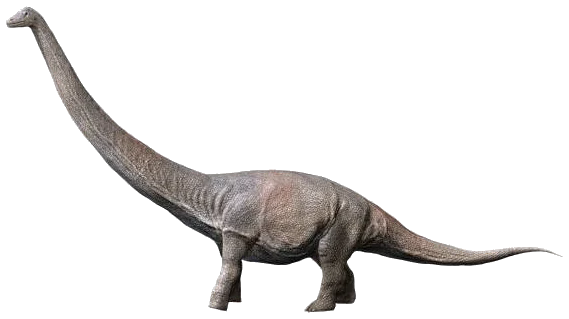
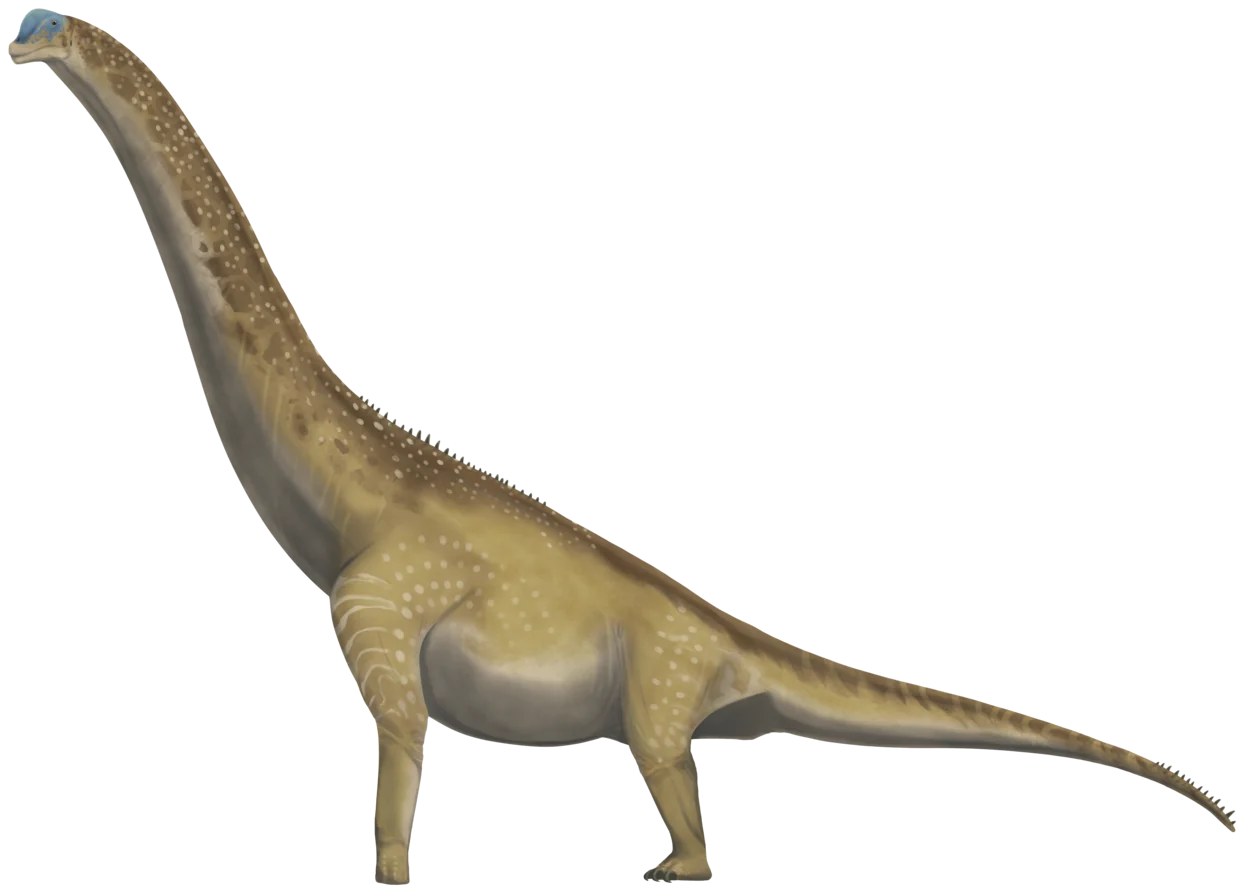
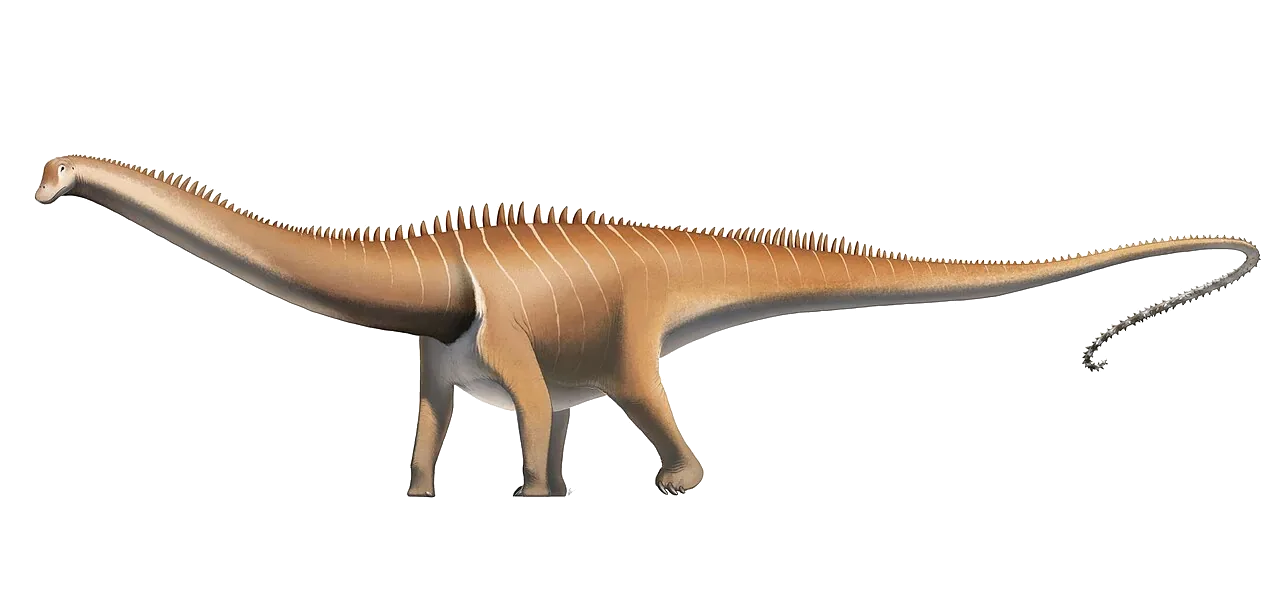
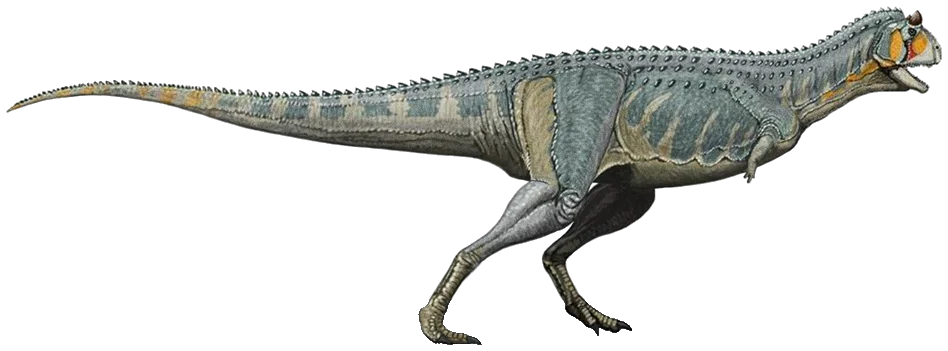
Dreadnoughtus war ein riesiger Titanosaurier, ein langhalsiger Pflanzenfresser aus der späten Kreidezeit Argentiniens. Das gefundene Tier war noch nicht ausgewachsen und trotzdem etwa 26 Meter lang. Von keinem anderen Riesen-Titanosaurier kennt man so vollständige Skelette. Wie schwer er war, ist heftig umstritten.Dreadnoughtus was a giant titanosaur, a long-necked plant-eater from the Late Cretaceous of Argentina. The animal that was found was not yet fully grown, yet it was about 26 metres long. No other giant titanosaur is known from such complete skeletons. How heavy it was is hotly debated.
Mehr InformationenMore information
Kenneth Lacovara entdeckte die Knochen 2005 in der Provinz Santa Cruz in Patagonien. Weil sie so gross waren und so abgelegen lagen, dauerte die Bergung vier Sommer; Maultiere und Seile halfen, die Gipsblöcke zum Lastwagen zu bringen. 2014 benannten Lacovara und Kollegen die Art. Der Name bedeutet «fürchtet nichts» und spielt auf die Dreadnought-Schlachtschiffe an.Kenneth Lacovara discovered the bones in 2005 in Santa Cruz Province, Patagonia. Because they were so large and so remote, recovery took four summers; mules and ropes helped get the plaster jackets to a truck. In 2014 Lacovara and colleagues named the species. The name means "fears nothing" and refers to the dreadnought battleships.
Bekannt sind zwei Teilskelette: der Holotyp und ein etwas kleineres Tier. Vom Holotyp sind unter anderem 32 Schwanzwirbel, die Schulter, der Arm, das Becken und ein Bein erhalten. Die Knochen wurden mit 3D-Scannern erfasst und digital zusammengesetzt.Two partial skeletons are known: the holotype and a slightly smaller animal. From the holotype, 32 tail vertebrae, the shoulder, an arm, the pelvis and a leg are among the preserved bones. The bones were captured with 3D scanners and assembled digitally.
Die Erstbeschreiber schätzten das Gewicht über die Dicke der Bein- und Armknochen auf rund 59 Tonnen. Eine Studie von 2015 mit einem 3D-Modell kam auf nur 22 bis 38 Tonnen; die Erstbeschreiber widersprachen. Weil das Tier noch wuchs, waren ausgewachsene Dreadnoughtus wohl noch grösser.The original describers estimated its mass at about 59 tonnes from the thickness of the leg and arm bones. A 2015 study using a 3D model arrived at only 22 to 38 tonnes; the describers disagreed. Because the animal was still growing, fully grown Dreadnoughtus were probably even larger.
Die beiden Tiere wurden wohl schnell und tief begraben, als ein Fluss über die Ufer trat; deshalb sind sie so vollständig erhalten. Zwischen den Knochen lagen Zähne kleiner Raubdinosaurier, die wohl am Kadaver frassen. Wie alle Titanosaurier stand Dreadnoughtus breitbeinig, mit breiten Schultern. Seinen Hals hielt er nach der Erstbeschreibung eher waagrecht als steil nach oben.The two animals were probably buried quickly and deeply when a river burst its banks; that is why they are so complete. Teeth of small predatory dinosaurs lay among the bones, probably from animals feeding on the carcass. Like all titanosaurs, Dreadnoughtus stood with its legs wide apart and had broad shoulders. According to the original description it held its neck more horizontally than steeply upwards.
Wusstest du?Did you know?
- Der Name bedeutet «fürchtet nichts», nach den Dreadnought-Schlachtschiffen.The name means "fears nothing", after the dreadnought battleships.3
- Die Bergung dauerte vier Sommer; Maultiere halfen beim Transport.Recovery took four summers; mules helped with transport.3
- Der Artname ehrt den Unternehmer Adam Schran, der das Projekt unterstützte.The species name honours the entrepreneur Adam Schran, who supported the project.3
- Die Knochen reisten 2009 per Frachtschiff nach Philadelphia und 2015 zurück nach Argentinien.The bones travelled to Philadelphia by freighter in 2009 and back to Argentina in 2015.3
- Das gefundene Tier war noch nicht ausgewachsen.The animal that was found was not yet fully grown.1,3
Was man nicht sicher weissWhat we don’t know for sure
- Wie schwer er war: Die Schätzungen reichen von 22 bis 59 Tonnen.How heavy it was: estimates range from 22 to 59 tonnes.1,2,3
- Wie gross ein ausgewachsenes Tier wurde.How large a fully grown animal became.3
- Welche Raubtiere am Kadaver frassen; vermutet werden Megaraptoren wie Orkoraptor.Which predators fed on the carcass; megaraptorans such as Orkoraptor are suspected.3
VerwandtschaftRelationships
Dreadnoughtus gehört zu den Titanosauriern, den letzten grossen Sauropoden der Kreidezeit. Zu ihnen zählen auch Riesen wie Argentinosaurus und Patagotitan.Dreadnoughtus belongs to the titanosaurs, the last great sauropods of the Cretaceous. They also include giants such as Argentinosaurus and Patagotitan.3
SteckbriefKey facts
- LängeLength
- ca. 26 mapprox. 26 m1,3Nicht ausgewachsenes Tier (Holotyp).Not fully grown animal (holotype).
- GewichtWeight
- 22.1–59.3 t22.1–59.3 t1,2Je nach Methode 22 bis 59 Tonnen; stark umstritten.Depending on the method 22 to 59 tonnes; hotly debated.
- ZeitraumTime range
- 76–70 Mio. Jahre76–70 million years ago1,3Campanium bis Maastrichtium (späte Kreide).Campanian to Maastrichtian (Late Cretaceous).
- ErnährungDiet
- PflanzenfresserHerbivore3
- FortbewegungLocomotion
- vierbeinigfour-legged3
FundorteFossil sites
EntdeckungDiscovery1,3
- JahrYear
- 2005
- OrtPlace
- Provinz Santa Cruz, Patagonien, ArgentinienSanta Cruz Province, Patagonia, Argentina
- Beschrieben vonDescribed by
- Kenneth Lacovara und Kollegen (2014)
- FundSpecimen
- Holotyp MPM-PV 1156
Wo gefundenWhere it was found
Ungefähre Lage, nur die Region ist angegeben: Santa Cruz Province, ArgentinaApproximate location, only the region is given: Santa Cruz Province, Argentina4 · FundkarteDiscovery map →
GrössenvergleichSize comparison
QuellenSources
- Lacovara, K. J. et al. (2014): A gigantic, exceptionally complete titanosaurian sauropod dinosaur from southern Patagonia, Argentina. Scientific Reports 4
- Bates, K. T. et al. (2015): Downsizing a giant: re-evaluating Dreadnoughtus body mass. Biology Letters 11
- Wikipedia: Dreadnoughtus (secondary source, accessed October 2026)
- Wikipedia: Santa Cruz Province, Argentina (coordinates, accessed October 2026)