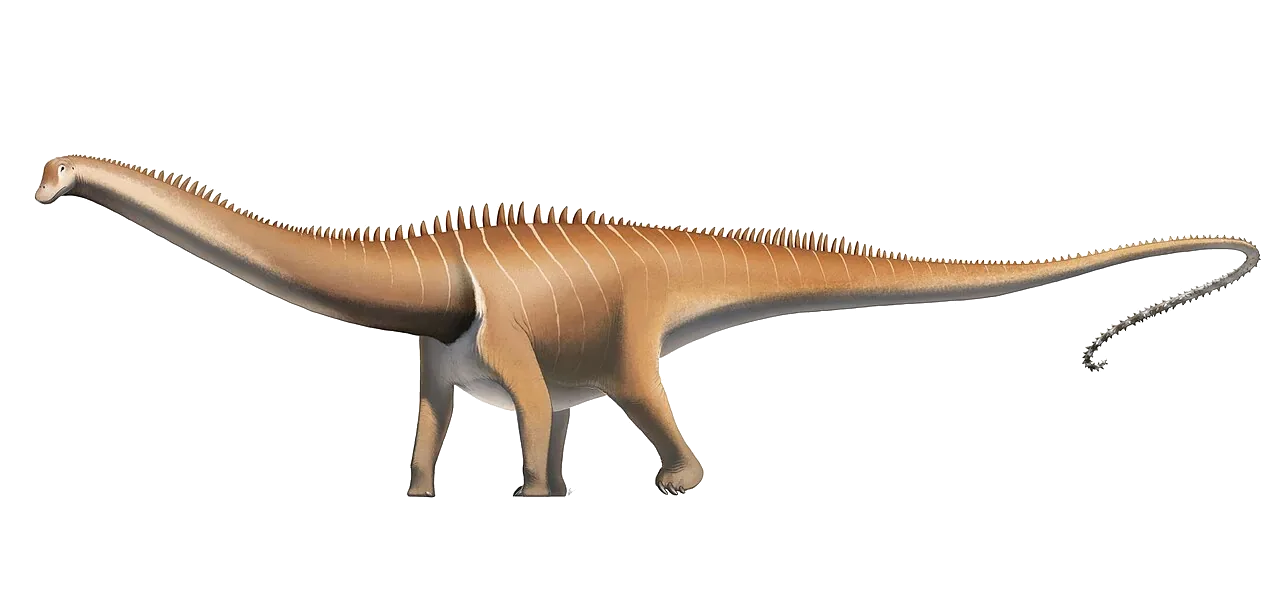
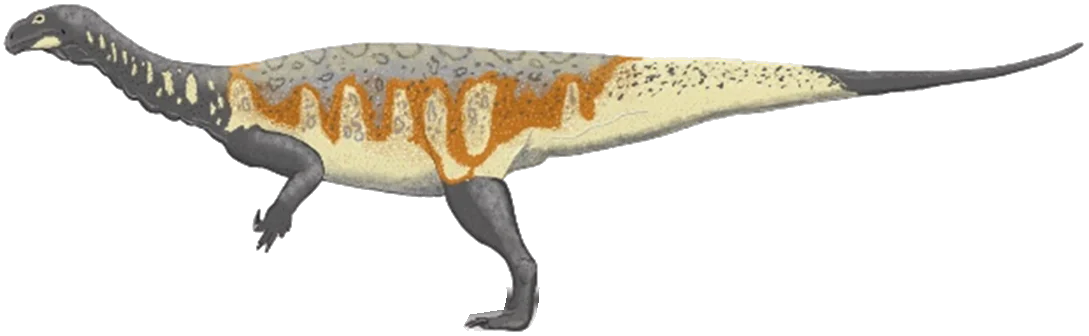
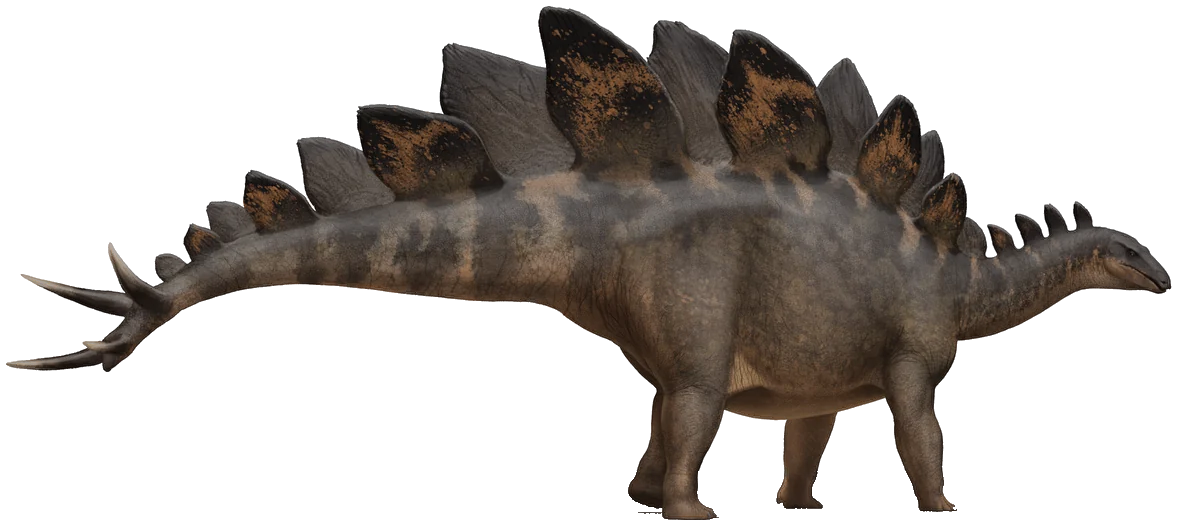
BrachiosaurusBrachiosaurus
Brachiosaurus altithorax
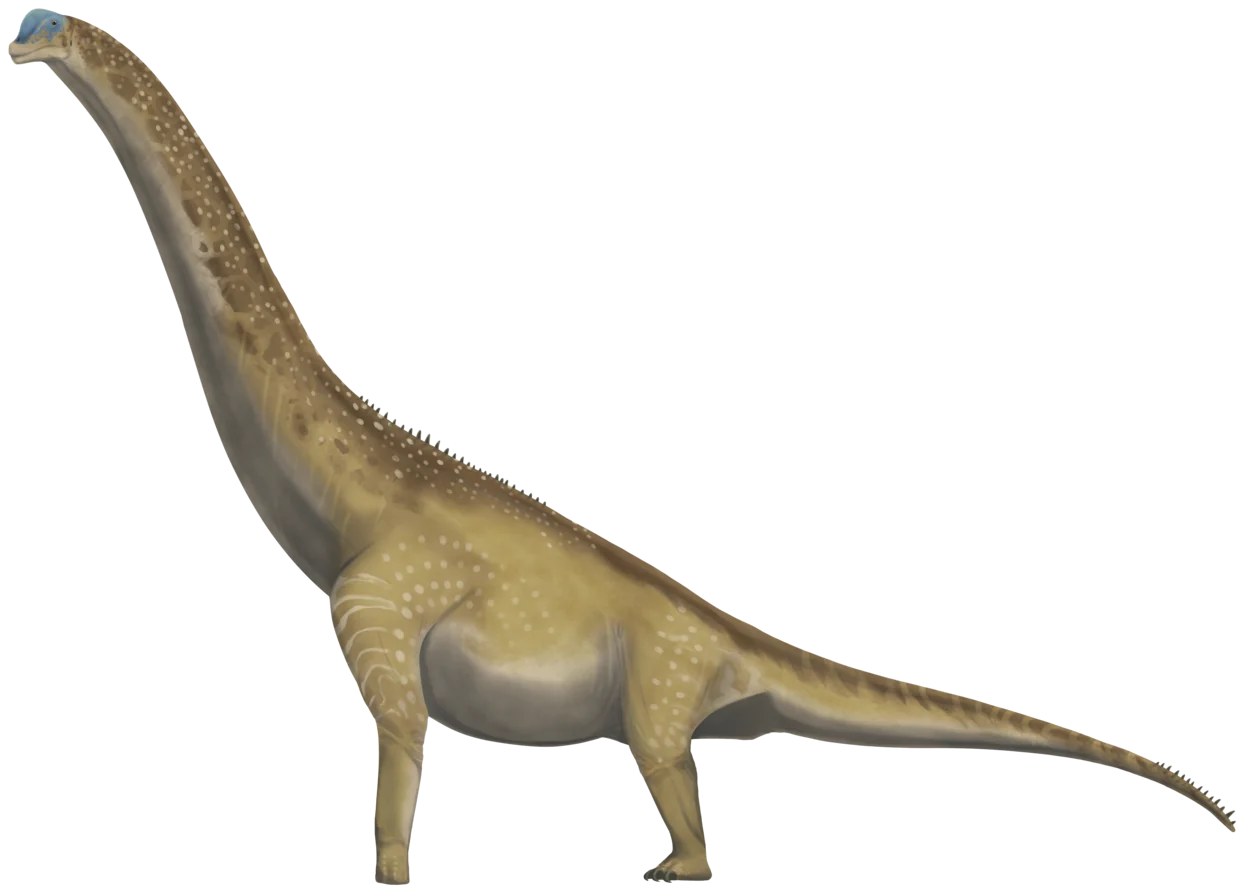
Brachiosaurus war ein riesiger, pflanzenfressender Langhals-Dinosaurier aus dem späten Jura Nordamerikas. Anders als die meisten Sauropoden hatte er längere Vorder- als Hinterbeine, sodass sein Rücken nach hinten abfiel. So konnte er wohl Blätter in über 9 Metern Höhe erreichen. Er war etwa 18 bis 22 Meter lang.Brachiosaurus was a huge, plant-eating long-necked dinosaur from the Late Jurassic of North America. Unlike most sauropods it had longer front legs than hind legs, so its back sloped down towards the tail. This probably let it reach leaves more than 9 metres up. It was about 18 to 22 metres long.
Mehr InformationenMore information
Im Juli 1900 fand Harold William Menke, Assistent von Elmer S. Riggs vom Field Columbian Museum in Chicago, bei Fruita in Colorado einen riesigen Oberarmknochen. Riggs hielt ihn zuerst für einen Oberschenkel. Er beschrieb das Tier 1903 als Brachiosaurus altithorax, «Armechse» mit «tiefer Brust». Das Skelett ist unvollständig: Arm, Oberschenkel, Hüfte, Teile der Wirbelsäule und einige Rippen.In July 1900 Harold William Menke, assistant to Elmer S. Riggs of the Field Columbian Museum in Chicago, found a huge upper arm bone near Fruita, Colorado. Riggs first took it for a thigh bone. In 1903 he described the animal as Brachiosaurus altithorax, "arm lizard" with a "deep chest". The skeleton is incomplete: arm, thigh, hip, parts of the spine and some ribs.
Der Holotyp war noch nicht ganz ausgewachsen. Er wird auf etwa 28 bis 47 Tonnen geschätzt. Viele Grössenangaben beruhen auf Giraffatitan aus Tansania, der viel vollständiger bekannt ist. Giraffatitan galt lange als Brachiosaurus brancai und wurde 2009 als eigene Gattung abgetrennt. Die meisten bekannten Bilder von «Brachiosaurus» zeigen eigentlich Giraffatitan.The holotype was not yet fully grown. Its mass is estimated at about 28 to 47 tonnes. Many size figures are based on Giraffatitan from Tanzania, which is known from much more complete remains. Giraffatitan was long regarded as Brachiosaurus brancai and was split off as a separate genus in 2009. Most familiar pictures of "Brachiosaurus" actually show Giraffatitan.
Brachiosaurus frass wohl vor allem Pflanzen in grosser Höhe und konkurrierte so kaum mit anderen Sauropoden wie Diplodocus oder Camarasaurus. Er schluckte die Nahrung ohne zu kauen. Aufrichten auf die Hinterbeine konnte er sich wegen seines Körperbaus wohl kaum. In der Morrison-Formation ist er selten: Eine Übersicht von 2003 zählte nur 12 Funde.Brachiosaurus probably fed mainly on plants high up, so it hardly competed with other sauropods such as Diplodocus or Camarasaurus. It swallowed its food without chewing. Because of its build it could hardly rear up on its hind legs. It is rare in the Morrison Formation: a 2003 survey counted only 12 finds.
Wusstest du?Did you know?
- Riggs hielt den riesigen Oberarm zuerst für einen verformten Oberschenkelknochen.Riggs at first took the huge upper arm bone for a deformed thigh bone.4
- Der Name bedeutet «Armechse», wegen der langen Vorderbeine.The name means "arm lizard", because of its long front legs.4
- Die meisten Rekonstruktionen von «Brachiosaurus» beruhen eigentlich auf Giraffatitan aus Tansania.Most reconstructions of "Brachiosaurus" are actually based on Giraffatitan from Tanzania.2,4
- Brachiosaurus ist einer der Dinosaurier im Film Jurassic Park von 1993.Brachiosaurus is one of the dinosaurs in the 1993 film Jurassic Park.4
- Er war selten: Eine Übersicht von 2003 zählte nur 12 Funde, aber 179 von Camarasaurus.It was rare: a 2003 survey counted only 12 finds, but 179 of Camarasaurus.4
Was man nicht sicher weissWhat we don’t know for sure
- Wie schwer er war: Die Schätzungen reichen von etwa 28 bis 47 Tonnen, manche liegen noch höher.How heavy it was: estimates range from about 28 to 47 tonnes, some are higher still.2,3,4
- Wie steil er den Hals hielt.How steeply it held its neck.4
- Ob er warmblütig war; neuere Studien sprechen eher dafür.Whether it was warm-blooded; more recent studies tend to support this.4
VerwandtschaftRelationships
Brachiosaurus ist namensgebend für die Brachiosauridae, eine Familie von Sauropoden mit langen Vorderbeinen. Sein naher Verwandter Giraffatitan aus Tansania wurde früher zur selben Gattung gezählt.Brachiosaurus gives its name to the Brachiosauridae, a family of sauropods with long front legs. Its close relative Giraffatitan from Tanzania used to be placed in the same genus.2,4
SteckbriefKey facts
- LängeLength
- 18–22 m18–22 m4Schätzungen gehen auseinander.Estimates vary.
- Höhe (stehend)Height (standing)
- 9.4–13 m9.4–13 m4Kopfhöhe; je nach angenommener Halshaltung.Head height; depends on the assumed neck posture.
- GewichtWeight
- 28.3–46.9 t28.3–46.9 t2,3Schätzungen für den nicht ausgewachsenen Holotyp.Estimates for the not fully grown holotype.
- ZeitraumTime range
- 155.6–145.5 Mio. Jahre155.6–145.5 million years ago2Kimmeridgium und Tithonium (später Jura). Der Holotyp ist etwa 154 bis 153 Millionen Jahre alt.Kimmeridgian and Tithonian (Late Jurassic). The holotype is about 154 to 153 million years old.
- ErnährungDiet
- PflanzenfresserHerbivore4Vor allem Pflanzen in grosser Höhe.Mainly plants high above the ground.
- FortbewegungLocomotion
- vierbeinigfour-legged4
FundorteFossil sites
EntdeckungDiscovery1,2,4
- JahrYear
- 1900
- OrtPlace
- Riggs Hill bei Fruita, Colorado, USARiggs Hill near Fruita, Colorado, USA
- Beschrieben vonDescribed by
- Elmer S. Riggs (1903)
- FundSpecimen
- Holotyp FMNH P 25107
Gefunden am 4. Juli 1900 von Harold William Menke.Found on 4 July 1900 by Harold William Menke.
Wo gefundenWhere it was found
Lage von Fruita, ColoradoLocation of Fruita, Colorado5 · FundkarteDiscovery map →
GrössenvergleichSize comparison
QuellenSources
- Riggs, E. S. (1903): Brachiosaurus altithorax, the largest known dinosaur. American Journal of Science s4-15
- Taylor, M. P. (2009): A re-evaluation of Brachiosaurus altithorax Riggs 1903 (Dinosauria, Sauropoda) and its generic separation from Giraffatitan brancai (Janensch 1914). Journal of Vertebrate Paleontology 29
- Campione, N. E. & Evans, D. C. (2020): The accuracy and precision of body mass estimation in non-avian dinosaurs. Biological Reviews 95
- Wikipedia: Brachiosaurus (secondary source, accessed October 2026)
- Wikipedia: Fruita, Colorado (coordinates, accessed October 2026)