DilophosaurusDilophosaurus
Dilophosaurus wetherilli
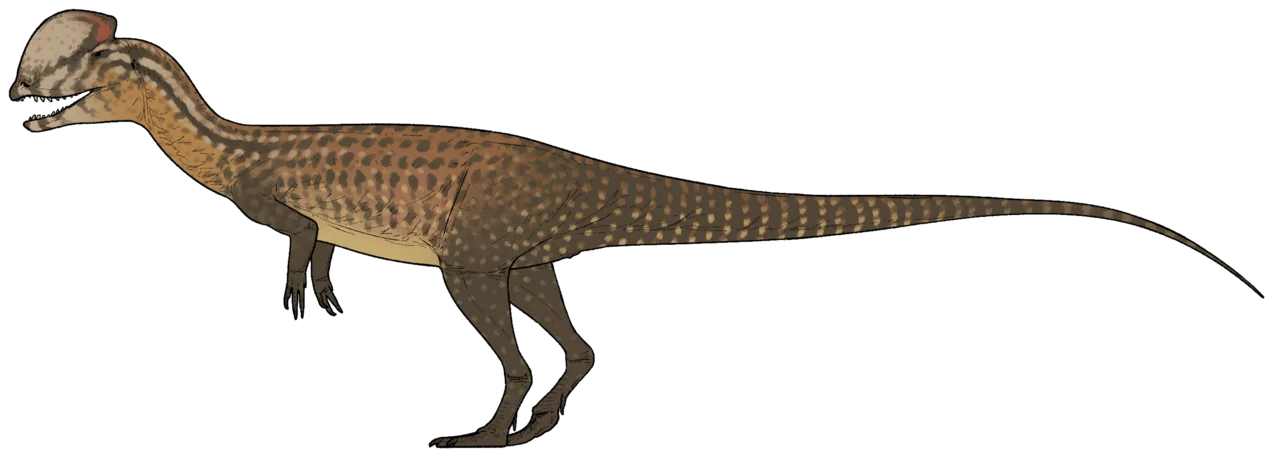
Dilophosaurus war ein schlanker Raubdinosaurier aus dem frühen Jura Nordamerikas. Er wurde etwa 7 Meter lang und trug zwei dünne, gebogene Knochenkämme auf dem Kopf. Er war einer der ersten grossen Raubdinosaurier und das grösste bekannte Landtier seiner Zeit in Nordamerika. Mit dem Giftspucker aus Jurassic Park hat er wenig gemeinsam.Dilophosaurus was a slender predatory dinosaur from the Early Jurassic of North America. It grew to about 7 metres long and had two thin, arched bony crests on its head. It was one of the first large predatory dinosaurs and the largest known land animal of its time in North America. It has little in common with the venom-spitter from Jurassic Park.
Mehr InformationenMore information
Der Navajo Jesse Williams entdeckte 1940 im Norden Arizonas drei Skelette und führte 1942 ein Team der University of California dorthin. Samuel P. Welles beschrieb das beste Skelett 1954 zunächst als Megalosaurus wetherilli. Erst ein weiterer Fund von 1964 zeigte die Kämme deutlich, und Welles schuf 1970 die Gattung Dilophosaurus, «Zweikamm-Echse».In 1940 the Navajo Jesse Williams discovered three skeletons in northern Arizona and in 1942 led a University of California team to them. Samuel P. Welles described the best skeleton in 1954, at first as Megalosaurus wetherilli. Only a further find in 1964 showed the crests clearly, and in 1970 Welles created the genus Dilophosaurus, "two-crested lizard".
Dilophosaurus wog etwa 400 Kilogramm und war leicht gebaut. Der Schädel war gross, aber zart, die Schnauze schmal mit einem Knick im Oberkiefer. Die Kämme waren zu schwach für Kämpfe und dienten wohl zur Schau, etwa um Artgenossen oder Partner zu beeindrucken. Die Arme waren kräftig, der erste Finger trug eine grosse Kralle.Dilophosaurus weighed about 400 kilograms and was lightly built. The skull was large but delicate, the snout narrow with a kink in the upper jaw. The crests were too weak for fighting and were probably for display, for example to impress rivals or mates. The arms were strong, and the first finger bore a large claw.
Er jagte wohl grössere Tiere, konnte aber auch kleinere Tiere und Fische fressen. Der Holotyp zeigt mehrere verheilte Verletzungen. Im Film Jurassic Park wurde er stark verändert: kleiner, mit Halskrause und Giftspucke. Für beides gibt es keine Belege; die Macher selbst nannten ihn ihre grösste Abweichung von der Wissenschaft.It probably hunted larger animals, but could also eat smaller animals and fish. The holotype shows several healed injuries. In the film Jurassic Park it was heavily altered: smaller, with a neck frill and venom spit. There is no evidence for either; the filmmakers themselves called it their biggest departure from science.
Wusstest du?Did you know?
- Die Giftspucke und die Halskrause aus Jurassic Park sind frei erfunden.The venom spit and neck frill from Jurassic Park are pure invention.4
- Im Film ist er nur etwa 1.2 Meter hoch, in Wirklichkeit wohl rund 3 Meter.In the film it is only about 1.2 metres tall; in reality it was probably about 3 metres.4
- Er wurde zuerst als Art von Megalosaurus beschrieben.It was first described as a species of Megalosaurus.1,4
- Der Name bedeutet «Zweikamm-Echse».The name means "two-crested lizard".4
- Er war das grösste bekannte Landtier Nordamerikas im frühen Jura.It was the largest known land animal in North America in the Early Jurassic.2
Was man nicht sicher weissWhat we don’t know for sure
- Wozu die Kämme dienten und wie sie mit Horn vollständig aussahen.What the crests were for and what they looked like complete with horn.2,4
- Ob es eine eigene Familie Dilophosauridae gibt.Whether there is a separate family Dilophosauridae.2,4
- Ob er Beute zuerst mit dem Maul packte; die Arme waren dafür wohl zu wenig beweglich.Whether it seized prey with its mouth first; its arms were probably not mobile enough.3,4
VerwandtschaftRelationships
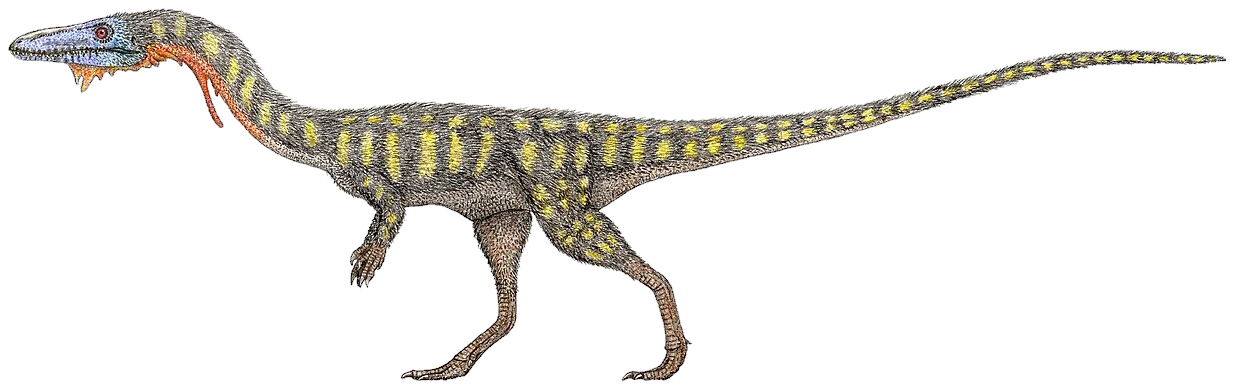
Dilophosaurus ist ein früher Theropode. Er wurde oft mit Dracovenator zu den Dilophosauriden gezählt, die zwischen Coelophysis und späteren Theropoden stehen; diese Gruppe ist aber nicht von allen Studien gestützt.Dilophosaurus is an early theropod. It has often been placed with Dracovenator in the Dilophosauridae, between Coelophysis and later theropods; however, not all studies support this group.2,4
SteckbriefKey facts
- LängeLength
- ca. 7 mapprox. 7 m4Ungefähre Länge grosser Tiere.Approximate length of large animals.
- GewichtWeight
- ca. 400 kgapprox. 400 kg4Ungefähres Gewicht.Approximate mass.
- ZeitraumTime range
- 195.2–183.7 Mio. Jahre195.2–183.7 million years ago4Frühes Jura (Sinemurium bis Toarcium). Wikipedia nennt etwa 186 Millionen Jahre.Early Jurassic (Sinemurian to Toarcian). Wikipedia gives about 186 million years.
- ErnährungDiet
- FleischfresserCarnivore4Wohl grössere Tiere, aber auch kleine Tiere und Fische.Probably larger animals, but also small animals and fish.
- FortbewegungLocomotion
- zweibeinigtwo-legged4
FundorteFossil sites
EntdeckungDiscovery1,4
- JahrYear
- 1940
- OrtPlace
- Bei Tuba City, Arizona, USANear Tuba City, Arizona, USA
- Beschrieben vonDescribed by
- Samuel P. Welles (1954, Gattung 1970)
- FundSpecimen
- Holotyp UCMP 37302
Entdeckt von Jesse Williams, geborgen 1942.Discovered by Jesse Williams, collected in 1942.
Wo gefundenWhere it was found
Lage von Tuba City, ArizonaLocation of Tuba City, Arizona5 · FundkarteDiscovery map →
GrössenvergleichSize comparison
QuellenSources
- Welles, S. P. (1954): New Jurassic dinosaur from the Kayenta Formation of Arizona. Geological Society of America Bulletin 65
- Marsh, A. D. & Rowe, T. B. (2020): A comprehensive anatomical and phylogenetic evaluation of Dilophosaurus wetherilli. Journal of Paleontology 94
- Senter, P. & Sullivan, C. (2019): Forelimbs of the theropod dinosaur Dilophosaurus wetherilli. Palaeontologia Electronica
- Wikipedia: Dilophosaurus (secondary source, accessed October 2026)
- Wikipedia: Tuba City, Arizona (coordinates, accessed October 2026)