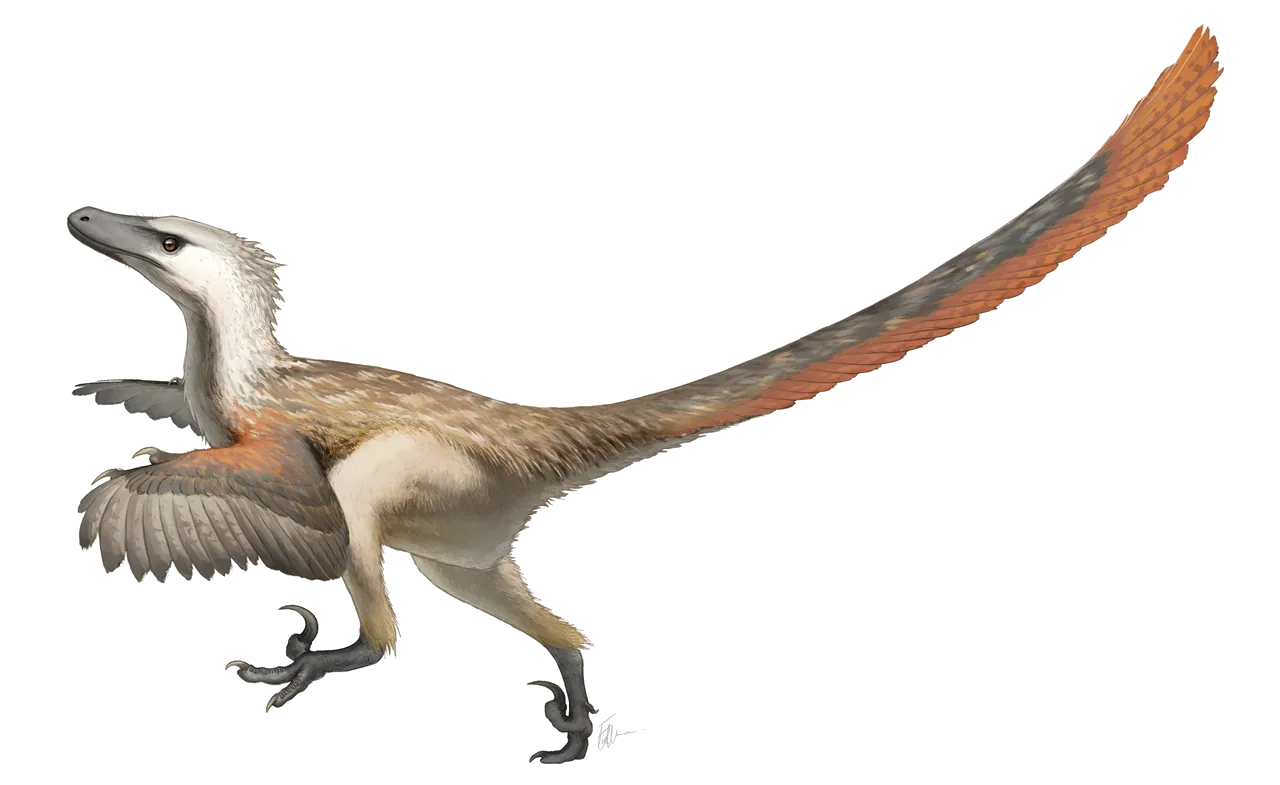
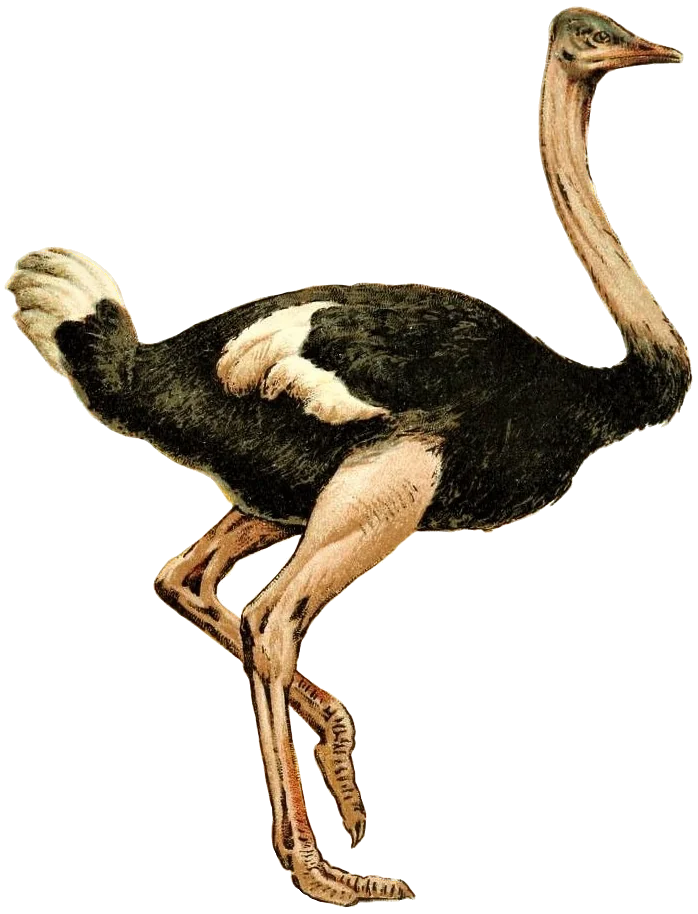
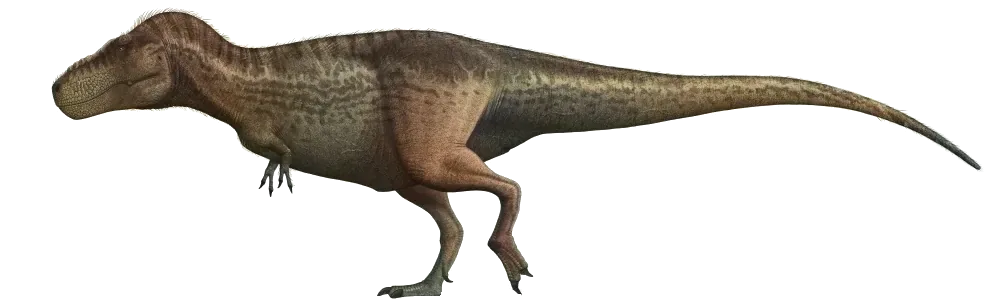
ArchaeopteryxArchaeopteryx
Archaeopteryx lithographica
Umstritten: Einordnung oder Deutung werden in der Forschung diskutiert.Contested: its classification or interpretation is debated by researchers.
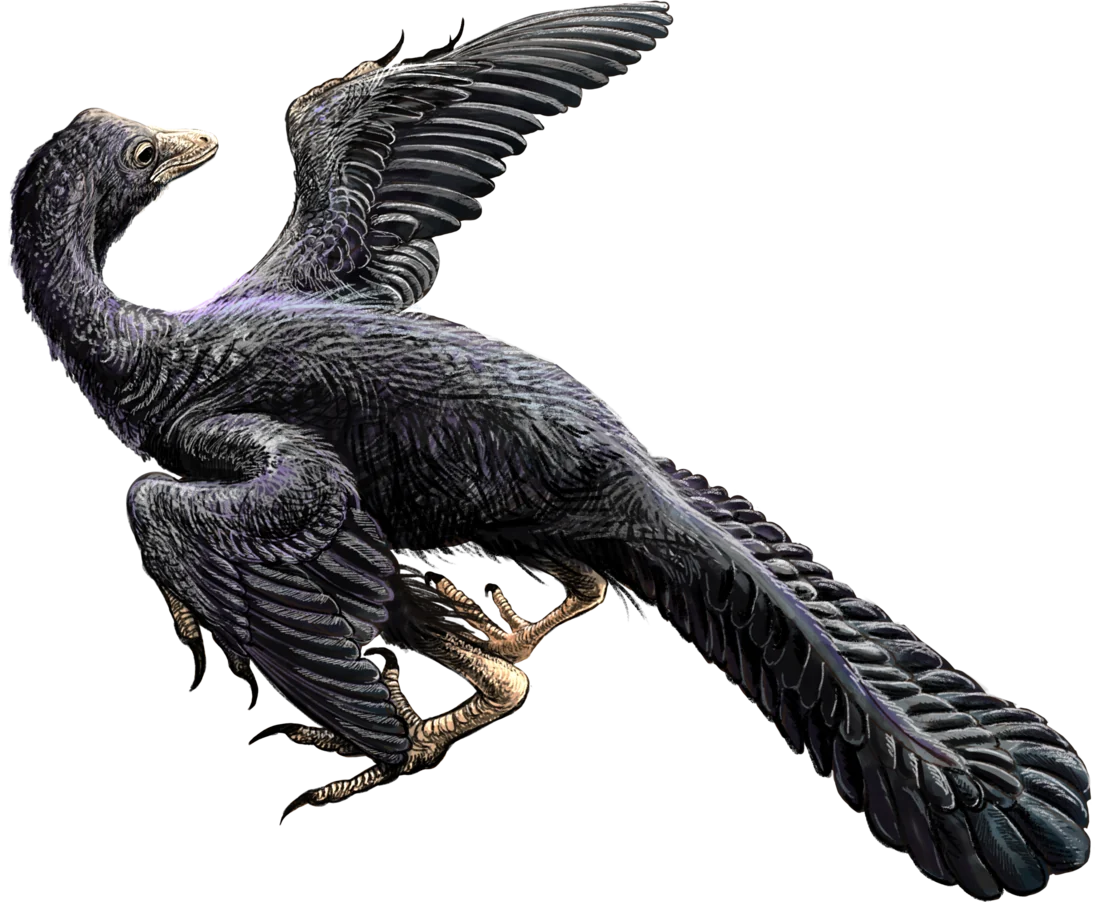
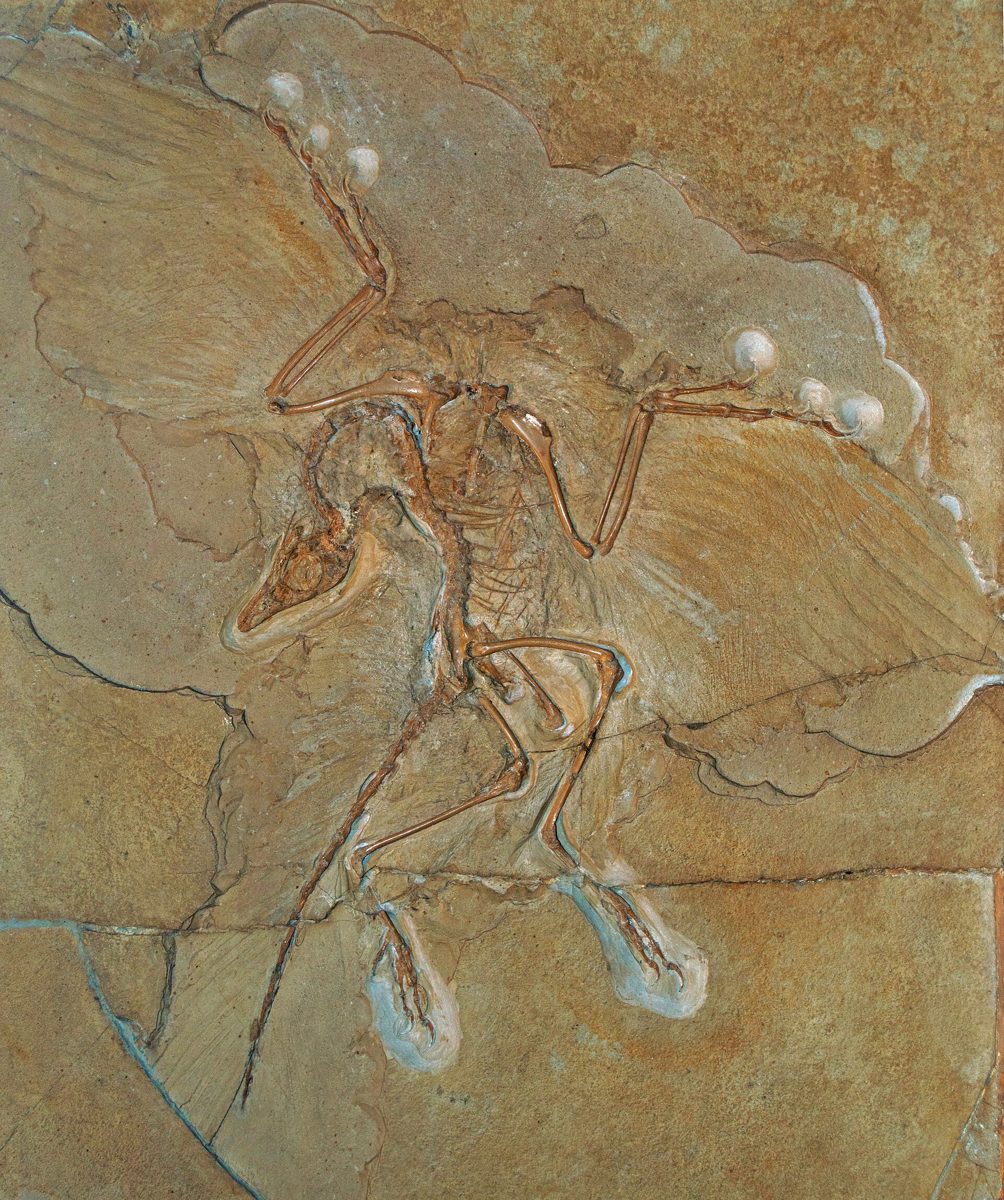
Archaeopteryx war ein etwa rabengrosses, gefiedertes Tier aus dem späten Jura im heutigen Bayern. Es hatte Flügel mit Federn wie ein Vogel, aber auch Zähne, Krallen an den Fingern und einen langen Knochenschwanz wie ein Raubdinosaurier. Deshalb gilt es als berühmtes Übergangsfossil zwischen Dinosauriern und Vögeln. Ob es der älteste Vogel ist, wird heute diskutiert.Archaeopteryx was a feathered animal about the size of a raven from the Late Jurassic of present-day Bavaria. It had feathered wings like a bird, but also teeth, clawed fingers and a long bony tail like a predatory dinosaur. This makes it a famous transitional fossil between dinosaurs and birds. Whether it is the oldest bird is debated today.
Mehr InformationenMore information
Alle Funde stammen aus den Plattenkalken bei Solnhofen und Eichstätt in Bayern, die etwa 150 Millionen Jahre alt sind. 1861 beschrieb Hermann von Meyer zuerst eine einzelne Feder, im selben Jahr wurde das erste Skelett gefunden, das heute im Natural History Museum in London liegt. Das Berliner Exemplar von 1874/75 ist das vollständigste und das erste mit vollständigem Kopf. Insgesamt sind 14 Skelettfunde bekannt.All finds come from the lithographic limestones near Solnhofen and Eichstätt in Bavaria, which are about 150 million years old. In 1861 Hermann von Meyer first described a single feather, and in the same year the first skeleton was found, which is now at the Natural History Museum in London. The Berlin specimen from 1874/75 is the most complete one and the first with a complete head. In total, 14 skeletal finds are known.
Archaeopteryx erreichte bis etwa 50 Zentimeter Körperlänge und 70 Zentimeter Spannweite und wog geschätzt 0.5 bis 1 Kilogramm. Die Schwungfedern waren asymmetrisch wie bei heutigen Flugvögeln. Eine Studie von 2018 fand in den Flügelknochen Merkmale, die auf aktiven Flatterflug über kurze Strecken hinweisen. Knochenschnitte zeigen, dass Archaeopteryx deutlich langsamer wuchs als heutige Vögel.Archaeopteryx reached up to about 50 centimetres in body length and 70 centimetres in wingspan, and weighed an estimated 0.5 to 1 kilogram. Its flight feathers were asymmetrical, as in modern flying birds. A 2018 study found features in its wing bones that point to active flapping flight over short distances. Bone sections show that Archaeopteryx grew much more slowly than modern birds.
Die Entdeckung kam nur zwei Jahre nach Charles Darwins «Entstehung der Arten» und wurde zu einem wichtigen Beleg für die Evolution. Neuere Funde gefiederter Dinosaurier aus China haben die Stellung von Archaeopteryx unsicherer gemacht: Eine Analyse von 2011 stellte ihn näher zu Velociraptor als zu den Vögeln. Eine Untersuchung der Einzelfeder ergab, dass sie mit hoher Wahrscheinlichkeit matt schwarz war.The discovery came only two years after Charles Darwin’s "On the Origin of Species" and became an important piece of evidence for evolution. Newer finds of feathered dinosaurs from China have made the position of Archaeopteryx less certain: a 2011 analysis placed it closer to Velociraptor than to birds. A study of the single feather found that it was very probably matte black.
Wusstest du?Did you know?
- Der Name bedeutet «alter Flügel»; auf Deutsch heisst das Tier auch «Urvogel».The name means "ancient wing"; in German the animal is also called "Urvogel" (primeval bird).1,8
- Das erste Skelett wurde nur zwei Jahre nach Darwins «Entstehung der Arten» gefunden.The first skeleton was found only two years after Darwin’s "On the Origin of Species".8
- Der Bauer, der das Berliner Exemplar fand, verkaufte es angeblich, um eine Kuh zu kaufen.The farmer who found the Berlin specimen reportedly sold it to buy a cow.8
- Die einzelne Feder von 1861 war mit etwa 90 Prozent Wahrscheinlichkeit matt schwarz.The single feather from 1861 was matte black with about 90 percent probability.5
- Archaeopteryx wuchs viel langsamer als heutige Vögel, eher wie ein Reptil.Archaeopteryx grew much more slowly than modern birds, more like a reptile.2
Was man nicht sicher weissWhat we don’t know for sure
- Ob Archaeopteryx ein früher Vogel ist oder näher mit Velociraptor verwandt war.Whether Archaeopteryx is an early bird or more closely related to Velociraptor.7,8
- Wie gut Archaeopteryx fliegen konnte: Manche Studien sprechen für aktiven Flug, andere für Gleiten.How well Archaeopteryx could fly: some studies suggest active flight, others gliding.3,8
- Ob die einzelne Feder von 1861 überhaupt zu Archaeopteryx gehört.Whether the single feather from 1861 belongs to Archaeopteryx at all.5,8
- Ob alle Funde zu einer Art gehören oder zu mehreren.Whether all finds belong to one species or to several.8
- Welche Farbe das ganze Gefieder hatte: Bekannt ist nur die Farbe einer Feder.What colour the whole plumage was: only the colour of one feather is known.4,5
VerwandtschaftRelationships
Archaeopteryx gehört zu den Theropoda und gilt meist als früher Vertreter der Avialae (Vögel im weiteren Sinn). Manche Analysen stellen ihn näher zu den Dromaeosauriden wie Velociraptor. Ältere mögliche Vögel wie Anchiornis machen die Frage zusätzlich offen.Archaeopteryx belongs to Theropoda and is usually regarded as an early member of Avialae (birds in the broad sense). Some analyses place it closer to dromaeosaurids such as Velociraptor. Older possible birds such as Anchiornis leave the question even more open.7,8
SteckbriefKey facts
- LängeLength
- ca. 0.5 mapprox. 0.5 m1,8Grösste Exemplare; viele Funde sind kleiner (ab ca. 25 cm).Largest specimens; many finds are smaller (from about 25 cm).
- SpannweiteWingspan
- ca. 0.7 mapprox. 0.7 m8Grösste Exemplare.Largest specimens.
- GewichtWeight
- 0.5–1 t0.5–1 t8Geschätzt; je nach Methode und Exemplar sehr unterschiedlich.Estimated; varies widely with method and specimen.
- ZeitraumTime range
- 150.8–145 Mio. Jahre150.8–145 million years ago1,8Solnhofener Plattenkalke: ca. 150.8–148.5 Mio. Jahre (Wikipedia); NHM: 149–145 Mio. Jahre.Solnhofen limestones: about 150.8–148.5 million years (Wikipedia); NHM: 149–145 million years.
FundorteFossil sites
- Bayern, Deutschland (Solnhofen, Eichstätt, Langenaltheim)Bavaria, Germany (Solnhofen, Eichstätt, Langenaltheim)8Solnhofener Plattenkalk
EntdeckungDiscovery1,6,8
- JahrYear
- 1861
- OrtPlace
- bei Langenaltheim, Bayern, Deutschlandnear Langenaltheim, Bavaria, Germany
- Beschrieben vonDescribed by
- Hermann von Meyer (1861)
- FundSpecimen
- Londoner Exemplar BMNH 37001
Von Meyer benannte die Gattung nach einer einzelnen Feder. Das Berliner Exemplar (HMN 1880/81) wurde 1874/75 bei Eichstätt gefunden.Von Meyer named the genus based on a single feather. The Berlin specimen (HMN 1880/81) was found near Eichstätt in 1874/75.
Berühmter FundFamous specimen
Wo gefundenWhere it was found
Lage von LangenaltheimLocation of Langenaltheim9 · FundkarteDiscovery map →
GrössenvergleichSize comparison
QuellenSources
- Natural History Museum London: Dino Directory – Archaeopteryx
- Erickson, G. M. et al. (2009): Was dinosaurian physiology inherited by birds? Reconciling slow growth in Archaeopteryx. PLoS ONE 4
- Voeten, D. F. A. E. et al. (2018): Wing bone geometry reveals active flight in Archaeopteryx. Nature Communications 9
- Carney, R. M. et al. (2012): New evidence on the colour and nature of the isolated Archaeopteryx feather. Nature Communications 3
- Carney, R. M., Tischlinger, H. & Shawkey, M. D. (2020): Evidence corroborates identity of isolated fossil feather as a wing covert of Archaeopteryx. Scientific Reports 10
- von Meyer, H. (1861): Vogel-Federn und Palpipes priscus von Solenhofen. Neues Jahrbuch für Mineralogie, Geognosie, Geologie und Petrefakten-Kunde
- Xu, X. et al. (2011): An Archaeopteryx-like theropod from China and the origin of Avialae. Nature 475
- Wikipedia: Archaeopteryx (secondary source, accessed October 2026)
- Wikipedia: Langenaltheim (coordinates, accessed October 2026)