ConfuciusornisConfuciusornis
Confuciusornis sanctus
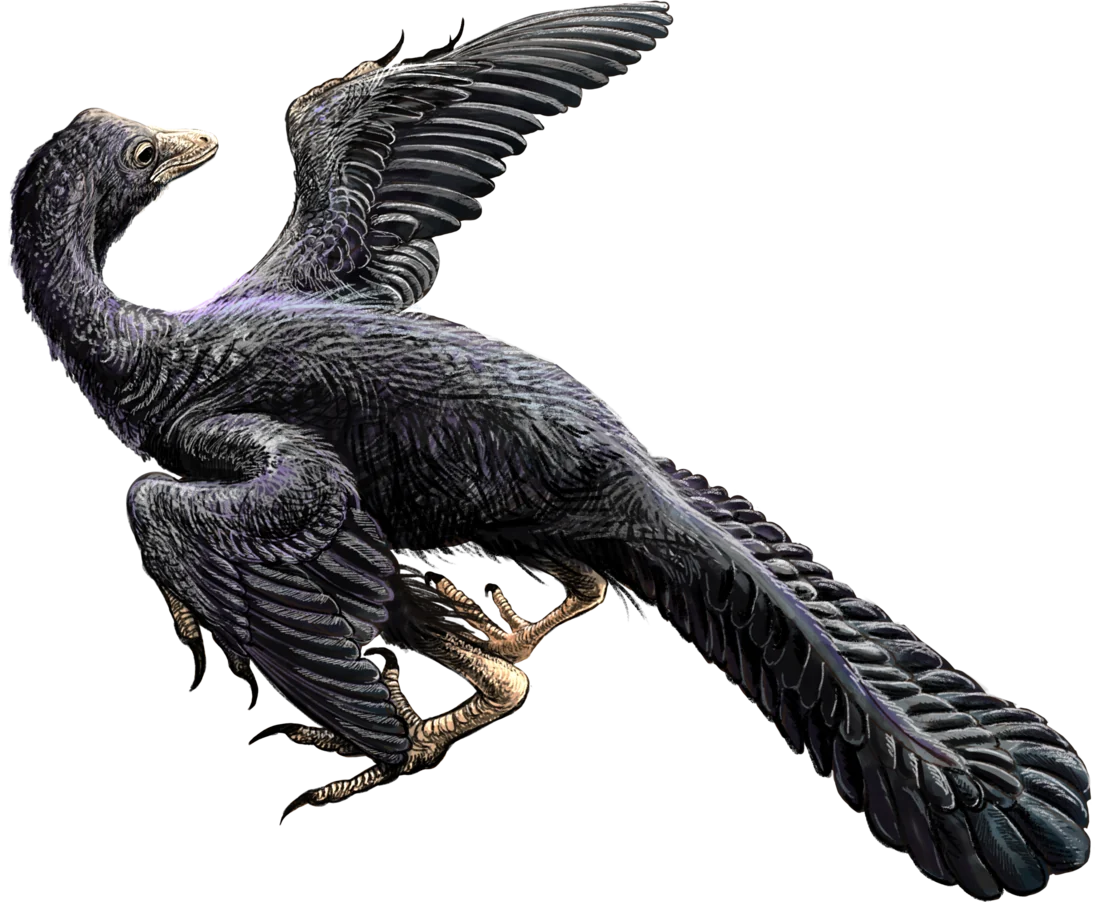
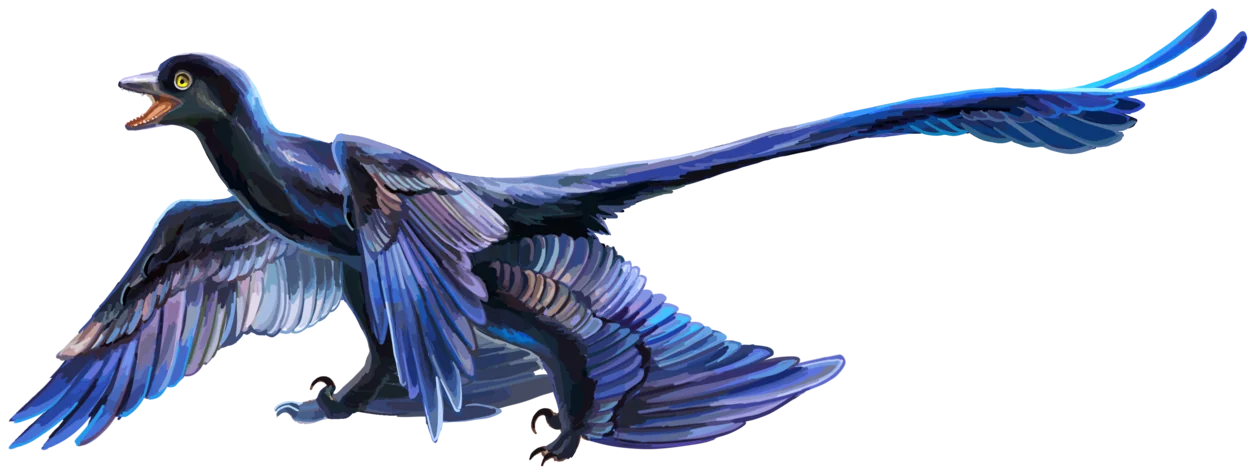
Confuciusornis war ein krähengrosser Vogel aus der frühen Kreidezeit Chinas. Wie heutige Vögel hatte er einen zahnlosen Schnabel, aber noch Krallen an den Flügeln. Von ihm kennt man Hunderte vollständige Skelette, oft mit Federn. Er zeigt, wie Vögel zwischen Archaeopteryx und heute aussahen.Confuciusornis was a crow-sized bird from the Early Cretaceous of China. Like today's birds it had a toothless beak, but still had claws on its wings. Hundreds of complete skeletons are known, often with feathers. It shows what birds looked like between Archaeopteryx and today.
Mehr InformationenMore information
Im November 1993 zeigte der Sammler Zhang He dem Forscher Hou Lianhai und einem Kollegen einen Vogel, den er auf einem Flohmarkt gekauft hatte. Ein zweites Stück fand ein Bauer am selben Ort bei Beipiao in Liaoning. Hou und Kollegen beschrieben die Art 1995 und benannten sie nach dem Philosophen Konfuzius.In November 1993 the collector Zhang He showed the researcher Hou Lianhai and a colleague a bird he had bought at a flea market. A farmer found a second specimen at the same site near Beipiao in Liaoning. Hou and colleagues described the species in 1995 and named it after the philosopher Confucius.
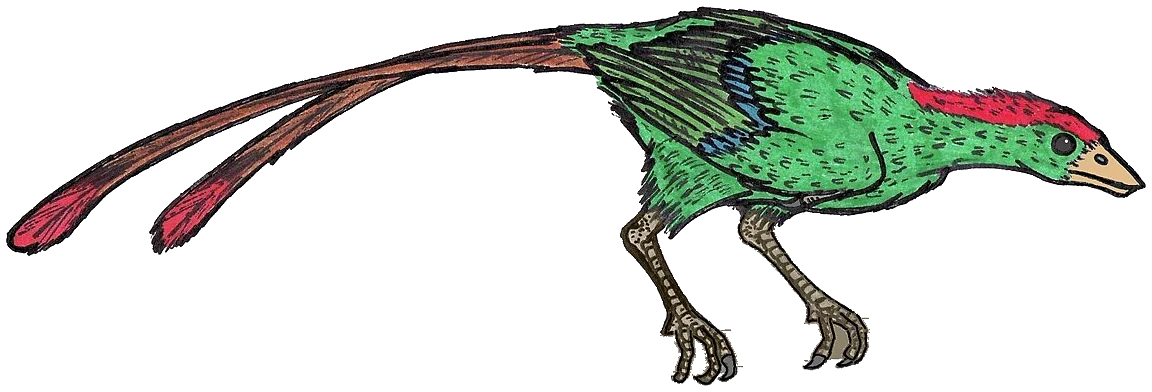
Confuciusornis war etwa 50 Zentimeter lang, hatte bis 70 Zentimeter Flügelspannweite und wog wohl 0.2 bis 0.5 Kilogramm. Manche Tiere hatten zwei sehr lange Schwanzfedern. Den zahnlosen Schnabel erwarb er unabhängig von den heutigen Vögeln: Spätere Verwandte wie Hesperornis hatten wieder Zähne.Confuciusornis was about 50 centimetres long, had a wingspan of up to 70 centimetres and probably weighed 0.2 to 0.5 kilograms. Some individuals had two very long tail feathers. It acquired its toothless beak independently of modern birds: later relatives such as Hesperornis had teeth again.
An einer einzigen Fundstelle bei Sihetun wurden Hunderte Exemplare ausgegraben; einmal lagen 40 Tiere auf 100 Quadratmetern, wohl von Vulkanasche getötet. Ob und wie gut er fliegen konnte, ist umstritten: Die Flügel waren lang, aber der Brustbeinkamm war klein.Hundreds of specimens were dug up at a single site near Sihetun; once, 40 animals lay on 100 square metres, probably killed by volcanic ash. Whether and how well it could fly is disputed: its wings were long, but its breastbone keel was small.
Eine Studie von 2018 beschrieb ein sehr gut erhaltenes Exemplar mit kleinen Flecken auf Flügeln, Haube und Kehle. Die Muster stammen von Melanin und dienten wohl zur Tarnung; welche Farben sie hatten, lässt sich aber nicht sagen. Der Knochenbau deutet auf schnelles Wachstum hin. Neben einem Skelett lag ein mögliches Ei von 17 Millimetern Durchmesser.A 2018 study described an exceptionally preserved specimen with small spots on the wings, crest and throat. The patterns come from melanin and were probably for camouflage; which colours they had cannot be said, though. Its bone structure suggests fast growth. A possible egg 17 millimetres across lay next to one skeleton.
Wusstest du?Did you know?
- Das erste Exemplar stammt von einem Flohmarkt.The first specimen came from a flea market.3
- Er ist nach dem Philosophen Konfuzius benannt.It is named after the philosopher Confucius.3
- Ein einziges Museum besass 2010 über 500 Exemplare.In 2010 a single museum had more than 500 specimens.3
- Einmal lagen 40 Tiere auf nur 100 Quadratmetern, wohl gemeinsam von Vulkanasche getötet.Once, 40 individuals lay on just 100 square metres, probably killed together by volcanic ash.3
- Trotz Schnabel hatte er an den Flügeln noch Krallen.Despite its beak it still had claws on its wings.3
Was man nicht sicher weissWhat we don’t know for sure
- Wie gut Confuciusornis fliegen konnte.How well Confuciusornis could fly.3,6
- Wozu die langen Schwanzfedern dienten und ob nur Männchen sie hatten.What the long tail feathers were for and whether only males had them.3
- Welche Farben das Gefieder hatte: Die Muster sind erhalten, die Farben nicht; die Illustration ist darum eine künstlerische Annahme.What colours its plumage had: the patterns are preserved, the colours are not, so the illustration is an artistic guess.5
VerwandtschaftRelationships
Confuciusornis ist ein früher Vogel (Avialae), näher an den heutigen Vögeln als Archaeopteryx, aber noch keiner der modernen Vögel. Den Schnabel entwickelte er unabhängig von ihnen.Confuciusornis is an early bird (avialan), closer to modern birds than Archaeopteryx but not yet one of the modern birds. It evolved its beak independently of them.2,3
SteckbriefKey facts
- LängeLength
- ca. 0.5 mapprox. 0.5 m3
- SpannweiteWingspan
- ca. 0.7 mapprox. 0.7 m3Höchstwert.Maximum.
- GewichtWeight
- 0.2–0.5 kg0.2–0.5 kg3
- ZeitraumTime range
- 125–120 Mio. Jahre125–120 million years ago3Frühe Kreide.Early Cretaceous.
- ErnährungDiet
- AllesfresserOmnivore3Umstritten: vermutet werden unter anderem Samen und Fische.Debated: suggestions include seeds and fish.
- FortbewegungLocomotion
- fliegendflying3Wie gut er flog, ist umstritten.How well it flew is disputed.
FundorteFossil sites
EntdeckungDiscovery1,3
- JahrYear
- 1993
- OrtPlace
- Shangyuan bei Beipiao, Liaoning, ChinaShangyuan near Beipiao, Liaoning, China
- Beschrieben vonDescribed by
- Hou Lianhai und Kollegen (1995)
- FundSpecimen
- IVPP V10918 (Holotyp)
Gekauft von einem Sammler auf einem Flohmarkt.Bought by a collector at a flea market.
Wo gefundenWhere it was found
Lage von BeipiaoLocation of Beipiao4 · FundkarteDiscovery map →
GrössenvergleichSize comparison
QuellenSources
- Hou, L., Zhou, Z., Martin, L. D. & Feduccia, A. (1995): A beaked bird from the Jurassic of China. Nature 377
- Chiappe, L. M. (1995): The first 85 million years of avian evolution. Nature 378
- Wikipedia: Confuciusornis (secondary source, accessed October 2026)
- Wikipedia: Beipiao (coordinates, accessed October 2026)
- Li, Q., Clarke, J. A., Gao, K.-Q. et al. (2018): Elaborate plumage patterning in a Cretaceous bird. PeerJ 6
- Nudds, R. L. & Dyke, G. J. (2010): Narrow primary feather rachises in Confuciusornis and Archaeopteryx suggest poor flight ability. Science 328