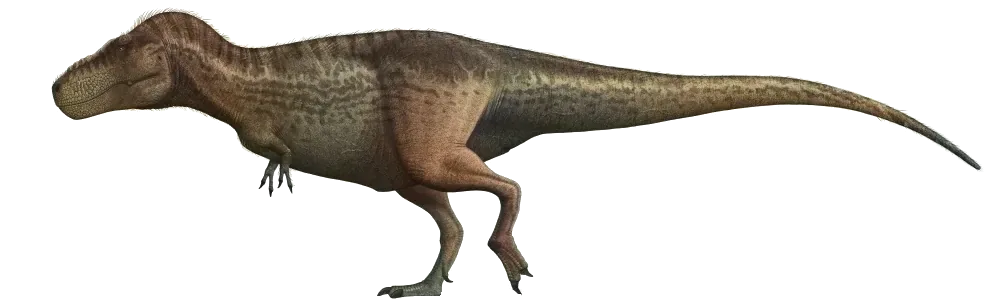
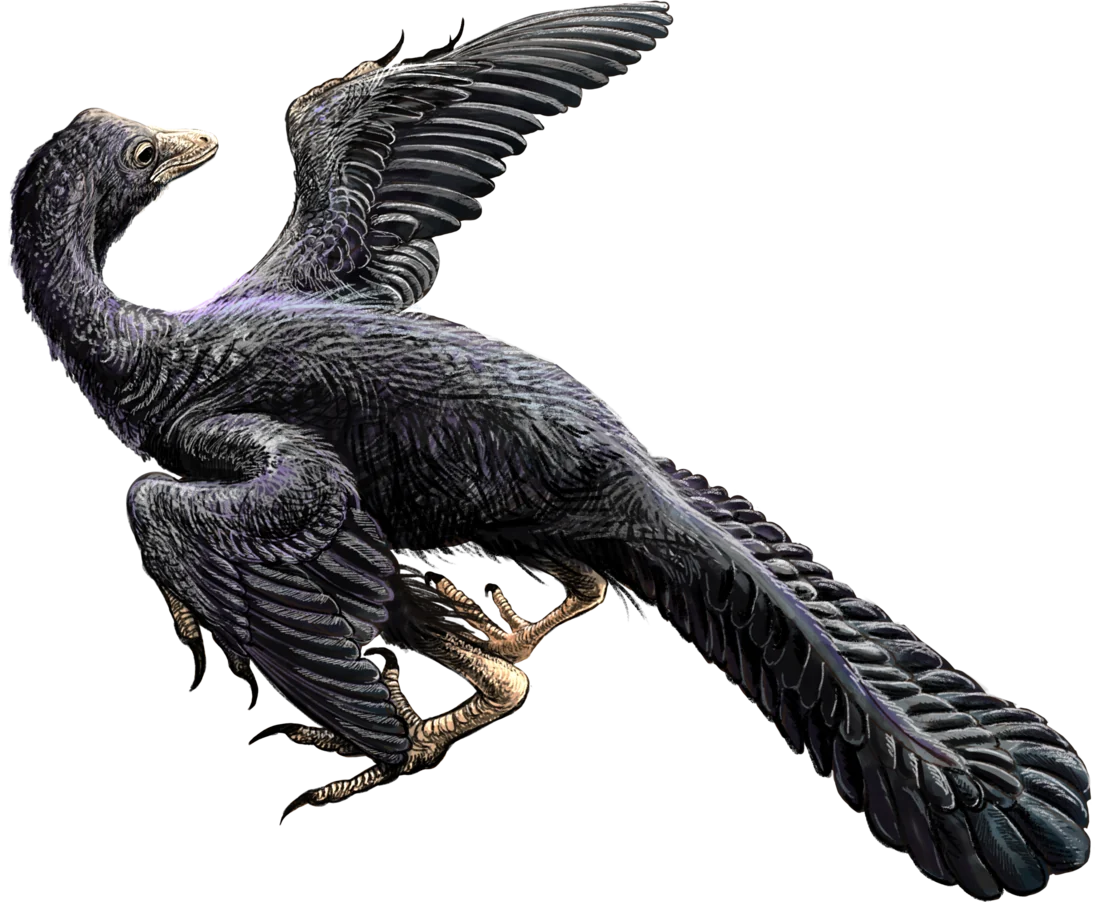
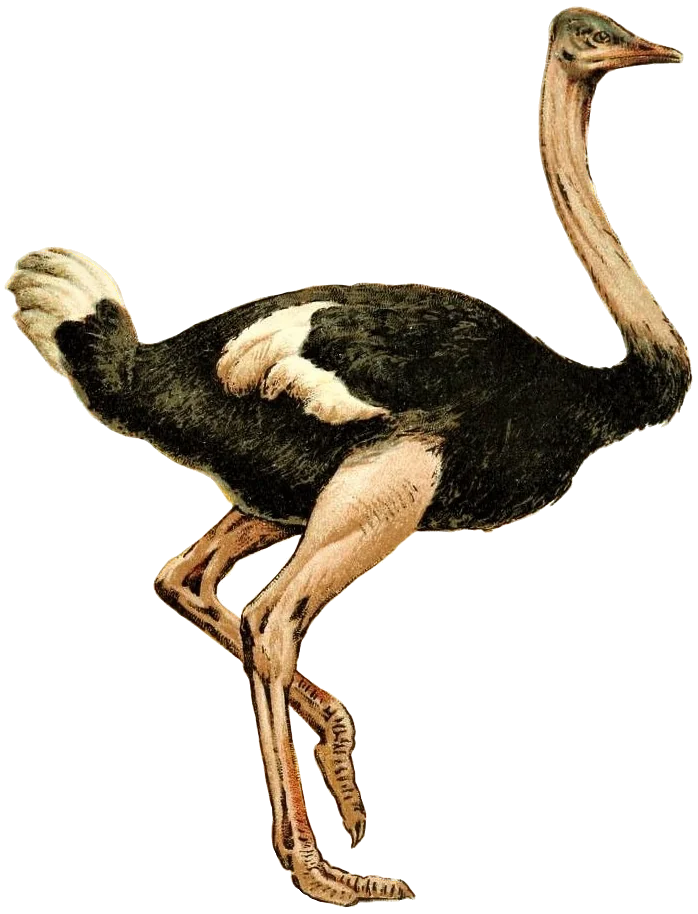
Bankivahuhn (Haushuhn)Red junglefowl (chicken)
Gallus gallus
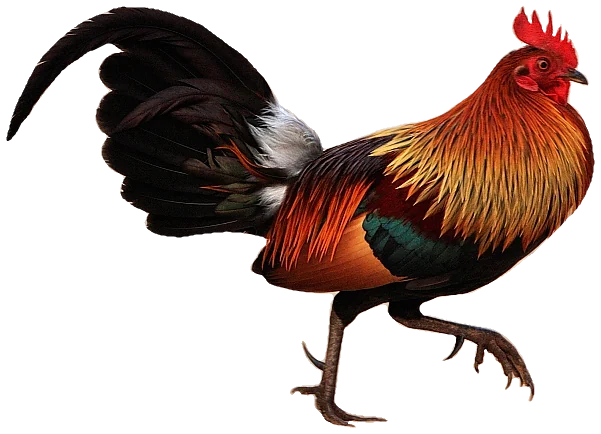
Das Bankivahuhn ist ein Waldhuhn aus Süd- und Südostasien und die wilde Stammform unseres Haushuhns. Hähne tragen goldene Halsfedern, einen roten Kamm und lange, schillernde Schwanzfedern. Als Vogel ist es ein heute lebender Dinosaurier. Das Haushuhn ist mit über 26 Milliarden Tieren der häufigste Vogel der Erde.The red junglefowl is a forest bird from South and Southeast Asia and the wild ancestor of our domestic chicken. Roosters have golden neck feathers, a red comb and long, iridescent tail feathers. As a bird it is a living dinosaur. With more than 26 billion animals, the domestic chicken is the most common bird on Earth.
Mehr InformationenMore information
Carl von Linné beschrieb das Bankivahuhn 1758 als Phasianus gallus. Heute gehört es zur Gattung Gallus, zu der vier Arten von Kammhühnern gehören. «Gallus» ist lateinisch für Hahn. Das Haushuhn gilt als Unterart, Gallus gallus domesticus.Carl Linnaeus described the red junglefowl in 1758 as Phasianus gallus. Today it belongs to the genus Gallus, which contains four species of junglefowl. "Gallus" is Latin for rooster. The domestic chicken is regarded as a subspecies, Gallus gallus domesticus.
Wilde Hähne wiegen etwa 1.5 Kilogramm, Hennen etwa 1 Kilogramm, also deutlich weniger als die meisten Haushühner. Mit Schwanz wird ein Hahn bis 70 Zentimeter lang. Das Bankivahuhn frisst vor allem Früchte und Samen vom Boden, dazu Insekten, Würmer und kleine Eidechsen. Küken schlüpfen nach 21 Tagen.Wild roosters weigh about 1.5 kilograms and hens about 1 kilogram, much less than most domestic chickens. Including its tail, a rooster grows up to 70 centimetres long. The red junglefowl mainly eats fruit and seeds from the ground, plus insects, worms and small lizards. Chicks hatch after 21 days.
Wann und wo das Huhn domestiziert wurde, ist umstritten. Eine Studie mit 863 Genomen kam 2020 auf etwa 9500 Jahre und Südostasien. Eine grosse archäologische Studie von 2022 fand die ersten sicheren Knochen von Haushühnern in Zentralthailand, etwa 1650 bis 1250 v. Chr. Sie vermutet, dass Reis- und Hirsefelder die Wildhühner in die Nähe der Menschen lockten.When and where the chicken was domesticated is disputed. A study of 863 genomes in 2020 arrived at about 9,500 years ago in Southeast Asia. A large archaeological study in 2022 found the first certain bones of domestic chickens in central Thailand, around 1650 to 1250 BC. It suggests that rice and millet fields drew wild junglefowl close to people.
Wusstest du?Did you know?
- 2023 gab es weltweit über 26.5 Milliarden Haushühner.In 2023 there were more than 26.5 billion domestic chickens worldwide.4
- Eine Legehenne kann über 300 Eier im Jahr legen.A laying hen can produce more than 300 eggs a year.4
- Im Kropf eines einzigen Bankivahuhns fanden sich rund 1000 Termiten.About 1,000 termites were found in the crop of a single red junglefowl.3
- Hähne locken Hennen mit einem «Futtertanz»: Sie heben einen Leckerbissen auf, lassen ihn fallen und rufen dabei.Roosters attract hens with a "tidbitting" display: they pick up a morsel, drop it and call.3
- Hähne haben einen spitzen Knochensporn am Bein, den sie gegen Rivalen und Feinde einsetzen.Roosters have a sharp bony spur on the leg, which they use against rivals and predators.3
Was man nicht sicher weissWhat we don’t know for sure
- Wann das Huhn domestiziert wurde: Genetische und archäologische Studien kommen zu sehr unterschiedlichen Zeiten.When the chicken was domesticated: genetic and archaeological studies arrive at very different dates.1,2
- Wie viel Erbgut andere Kammhuhn-Arten zum Haushuhn beigetragen haben.How much DNA other junglefowl species contributed to the domestic chicken.1,3
VerwandtschaftRelationships
Das Bankivahuhn gehört zu den Hühnervögeln (Galliformes), zusammen mit Fasanen, Pfauen und Truthühnern. Wie alle Vögel ist es ein Theropode und damit ein Nachfahre von Raubdinosauriern.The red junglefowl belongs to the gamebirds (Galliformes), together with pheasants, peafowl and turkeys. Like all birds it is a theropod and so a descendant of predatory dinosaurs.3
SteckbriefKey facts
- LängeLength
- ca. 0.7 mapprox. 0.7 m3Hahn mit Schwanzfedern.Rooster including tail feathers.
- GewichtWeight
- 1–1.5 kg1–1.5 kg3Wildform: Hennen etwa 1 kg, Hähne etwa 1.5 kg.Wild form: hens about 1 kg, roosters about 1.5 kg.
- ZeitalterPeriod
- HeuteToday
- ErnährungDiet
- AllesfresserOmnivore3Früchte und Samen, dazu Insekten und andere Kleintiere.Fruit and seeds, plus insects and other small animals.
- FortbewegungLocomotion
- zweibeinigtwo-legged3
FundorteFossil sites
EntdeckungDiscovery3
- JahrYear
- 1758
- OrtPlace
- «India orientali»; später auf die Insel Côn Sơn (Vietnam) festgelegt"India orientali"; later restricted to Côn Sơn Island (Vietnam)
- Beschrieben vonDescribed by
- Carl von Linné (1758)
GrössenvergleichSize comparison
QuellenSources
- Wang, M.-S. et al. (2020): 863 genomes reveal the origin and domestication of chicken. Cell Research 30
- Peters, J. et al. (2022): The biocultural origins and dispersal of domestic chickens. PNAS 119
- Wikipedia: Red junglefowl (secondary source, accessed October 2026)
- Wikipedia: Chicken (secondary source, accessed October 2026)