AnkylosaurusAnkylosaurus
Ankylosaurus magniventris
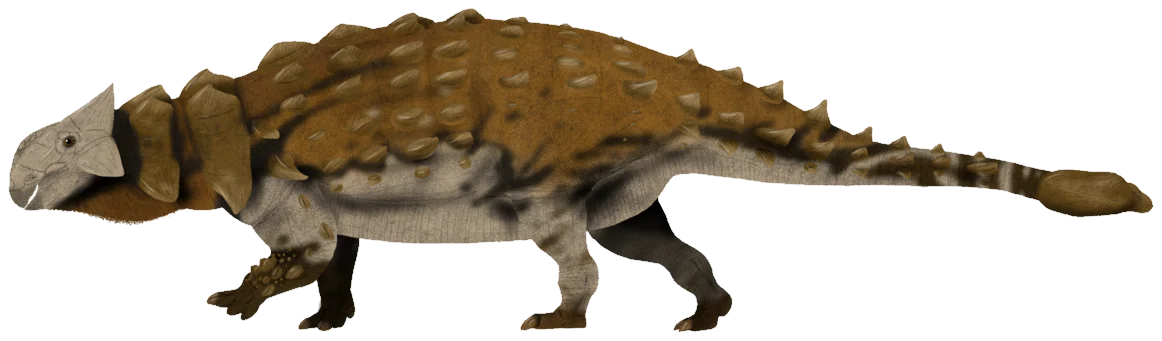
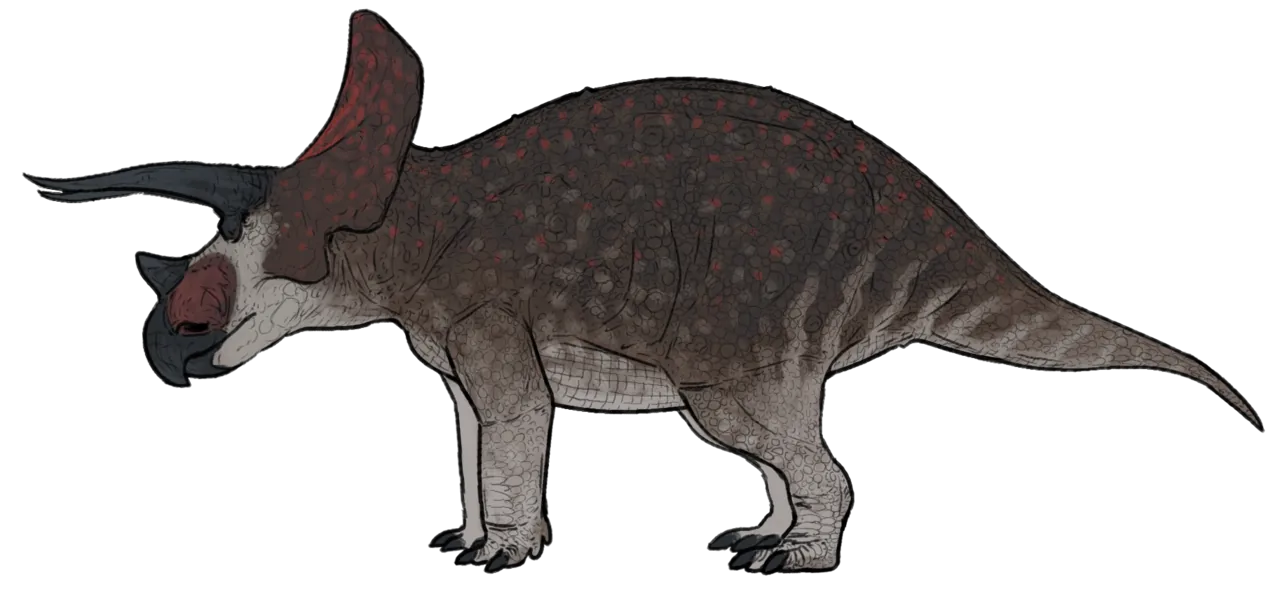
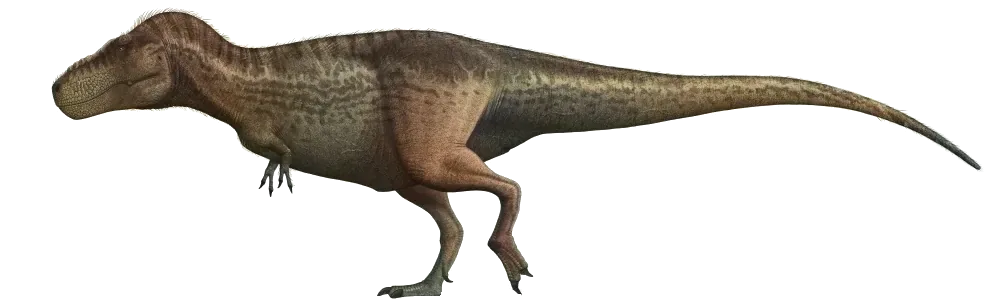
Ankylosaurus war ein gepanzerter Pflanzenfresser aus der allerletzten Zeit der Kreide in Nordamerika. Sein breiter, flacher Körper war mit Knochenplatten bedeckt, und am Schwanzende sass eine schwere Knochenkeule. Er wurde wohl 6 bis 8 Meter lang. Er lebte zur gleichen Zeit wie Tyrannosaurus und Triceratops.Ankylosaurus was an armoured plant-eater from the very end of the Cretaceous in North America. Its broad, low body was covered in bony plates, and a heavy bony club sat at the end of its tail. It probably grew 6 to 8 metres long. It lived at the same time as Tyrannosaurus and Triceratops.
Mehr InformationenMore information
Ein Team des American Museum of Natural History unter Barnum Brown fand 1906 in Montana das erste Skelett; entdeckt hatte es der Sammler Peter Kaisen. Brown beschrieb das Tier 1908. Der Name bedeutet etwa «versteifte Echse», weil viele Knochen verwachsen sind; magniventris heisst «grosser Bauch». Ein vollständiges Skelett ist bis heute nicht bekannt.In 1906 an American Museum of Natural History team led by Barnum Brown found the first skeleton in Montana; it was discovered by the collector Peter Kaisen. Brown described the animal in 1908. The name means roughly "stiffened lizard", because many bones are fused; magniventris means "great belly". No complete skeleton is known to this day.
Ankylosaurus ist der grösste bekannte Ankylosaurier. Der grösste Schädel ist etwa 64.5 Zentimeter lang und 74.5 Zentimeter breit. Schätzungen für die Länge reichen von gut 6 bis 8 Metern, für das Gewicht von etwa 4.8 bis 8 Tonnen. Hinten am Schädel sassen Hörner, Knochenhalbringe schützten den Hals.Ankylosaurus is the largest known ankylosaur. The largest skull is about 64.5 centimetres long and 74.5 centimetres wide. Estimates of its length range from just over 6 to 8 metres, and of its mass from about 4.8 to 8 tonnes. Horns sat at the back of the skull, and bony half-rings protected the neck.
Die Schwanzkeule bestand aus verwachsenen Wirbeln und grossen Knochenplatten. Eine Studie von 2009 zeigte, dass grosse Keulen genug Kraft hatten, um Knochen zu brechen. Ob sie gegen Raubtiere oder im Kampf unter Artgenossen dienten, ist offen. Mit seiner breiten Schnauze frass Ankylosaurus wohl niedrige Pflanzen wie Farne und Sträucher.The tail club was made of fused vertebrae and large bony plates. A 2009 study showed that large clubs had enough force to break bones. Whether they were used against predators or in fights between rivals is open. With its broad snout Ankylosaurus probably ate low plants such as ferns and shrubs.
Wusstest du?Did you know?
- Brown rekonstruierte Ankylosaurus 1908 nach dem Vorbild von Stegosaurus, ohne Schwanzkeule; die Keule kannte man noch nicht.In 1908 Brown reconstructed Ankylosaurus after the model of Stegosaurus, without a tail club; the club was not yet known.5
- Brown hielt Knochenplatten, die er 1900 bei einem Tyrannosaurus fand, für dessen Panzer; sie stammen wohl von Ankylosaurus.Brown took bony plates he found with a Tyrannosaurus in 1900 for its armour; they probably come from Ankylosaurus.3,5
- Die einzige bekannte Schwanzkeule von Ankylosaurus wurde 1910 in Alberta gefunden.The only known tail club of Ankylosaurus was found in Alberta in 1910.5
- Über den Augen sassen kleine Knochen, die die Augen wohl zusätzlich schützten.Small bones above the eyes probably gave them extra protection.5
- Er lebte in den letzten Millionen Jahren vor dem grossen Aussterben vor 66 Millionen Jahren.It lived in the last few million years before the great extinction 66 million years ago.5
Was man nicht sicher weissWhat we don’t know for sure
- Wofür die Schwanzkeule vor allem diente: Abwehr von Raubtieren oder Kämpfe unter Artgenossen.What the tail club was mainly for: fending off predators or fights between rivals.4,5
- Wie gross Ankylosaurus wirklich wurde; es gibt nur wenige unvollständige Funde.How large Ankylosaurus really grew; there are only a few incomplete finds.2,3
- Wozu die verschlungenen Hohlräume in der Schnauze dienten: Wärme- und Wasserhaushalt oder Laute.What the winding cavities in the snout were for: heat and water balance or sounds.5
VerwandtschaftRelationships
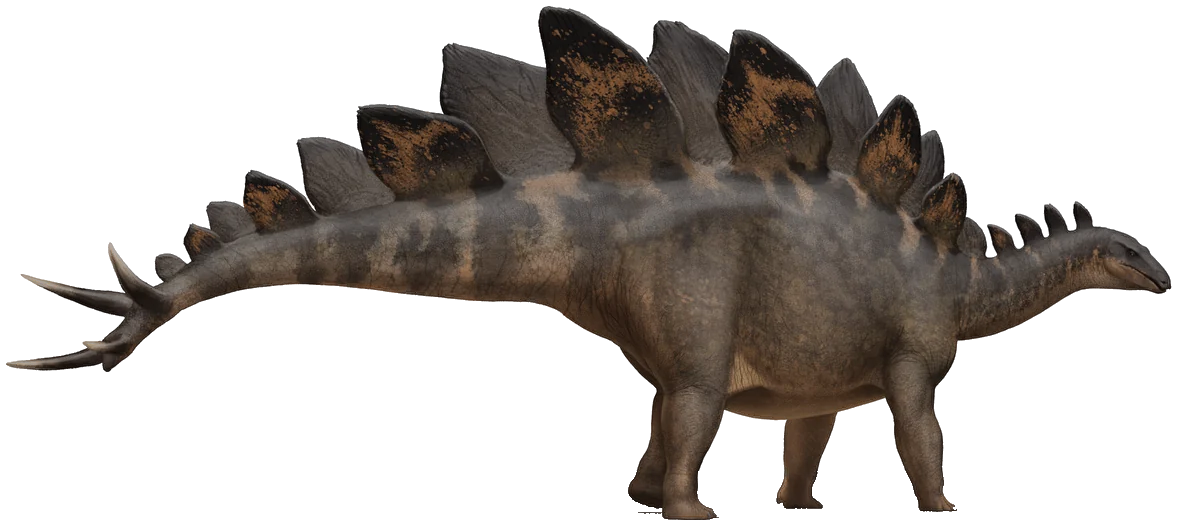
Ankylosaurus gehört zu den Ankylosauriden, gepanzerten Ornithischiern mit Schwanzkeule. Seine nächsten Verwandten sind wohl Anodontosaurus und Euoplocephalus. Zusammen mit Stegosaurus zählt er zu den Thyreophoren, den «Schildträgern».Ankylosaurus belongs to the ankylosaurids, armoured ornithischians with a tail club. Its closest relatives are probably Anodontosaurus and Euoplocephalus. Together with Stegosaurus it is one of the thyreophorans, the "shield bearers".2,5
SteckbriefKey facts
- LängeLength
- 6–8 m6–8 m2,3Carpenter (2004) schätzte bis 6.25 m, Arbour & Mallon (2017) etwa 8 m.Carpenter (2004) estimated up to 6.25 m, Arbour & Mallon (2017) about 8 m.
- GewichtWeight
- 4.8–8 t4.8–8 t2,5Die obere Zahl ist eine vorsichtige Schätzung für das grösste Tier.The upper figure is a tentative estimate for the largest animal.
- ZeitraumTime range
- 70–66 Mio. Jahre70–66 million years ago5Maastrichtium, ganz am Ende der Kreidezeit.Maastrichtian, at the very end of the Cretaceous.
- ErnährungDiet
- PflanzenfresserHerbivore3,5Wohl niedrige Pflanzen, vielleicht auch Früchte.Probably low plants, perhaps also fruit.
- FortbewegungLocomotion
- vierbeinigfour-legged5
FundorteFossil sites
EntdeckungDiscovery1,5
- JahrYear
- 1906
- OrtPlace
- Gilbert Creek, Montana, USAGilbert Creek, Montana, USA
- Beschrieben vonDescribed by
- Barnum Brown (1908)
- FundSpecimen
- Holotyp AMNH 5895
Gefunden vom Sammler Peter Kaisen bei einer Expedition unter Barnum Brown.Found by the collector Peter Kaisen on an expedition led by Barnum Brown.
Wo gefundenWhere it was found
Ungefähre Lage, nur die Region ist angegeben: MontanaApproximate location, only the region is given: Montana6 · FundkarteDiscovery map →
GrössenvergleichSize comparison
QuellenSources
- Brown, B. (1908): The Ankylosauridae, a new family of armored dinosaurs from the Upper Cretaceous. Bulletin of the American Museum of Natural History 24
- Arbour, V. M. & Mallon, J. C. (2017): Unusual cranial and postcranial anatomy in the archetypal ankylosaur Ankylosaurus magniventris. FACETS 2
- Carpenter, K. (2004): Redescription of Ankylosaurus magniventris Brown 1908 (Ankylosauridae) from the Upper Cretaceous of the Western Interior of North America. Canadian Journal of Earth Sciences 41
- Arbour, V. M. (2009): Estimating impact forces of tail club strikes by ankylosaurid dinosaurs. PLOS ONE 4
- Wikipedia: Ankylosaurus (secondary source, accessed October 2026)
- Wikipedia: Montana (coordinates, accessed October 2026)