GangesgavialGharial
Gavialis gangeticus

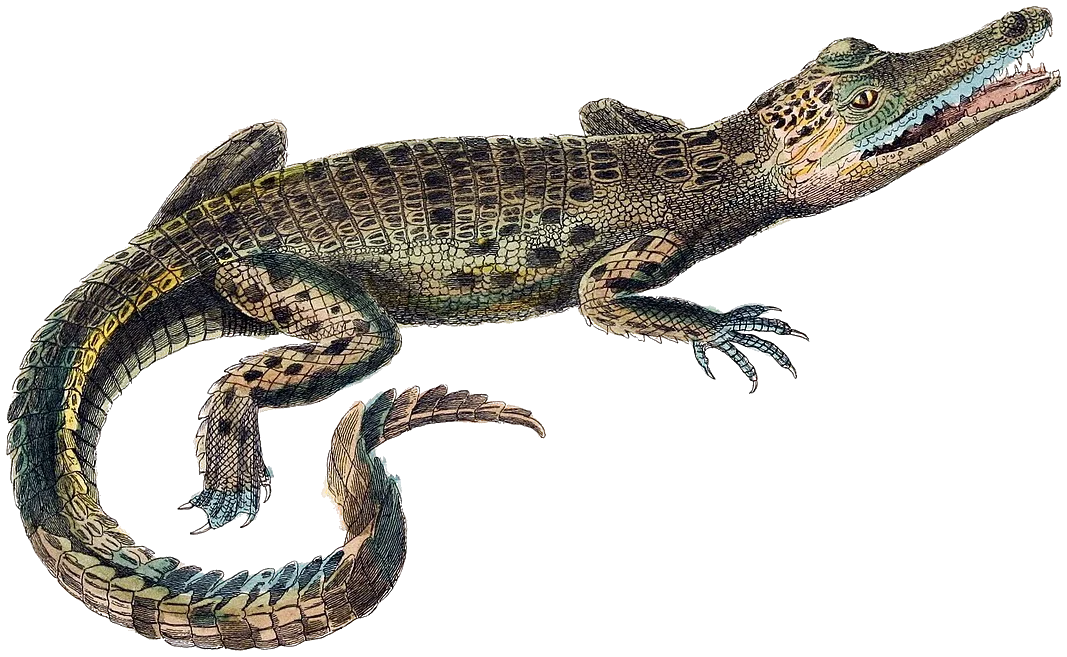
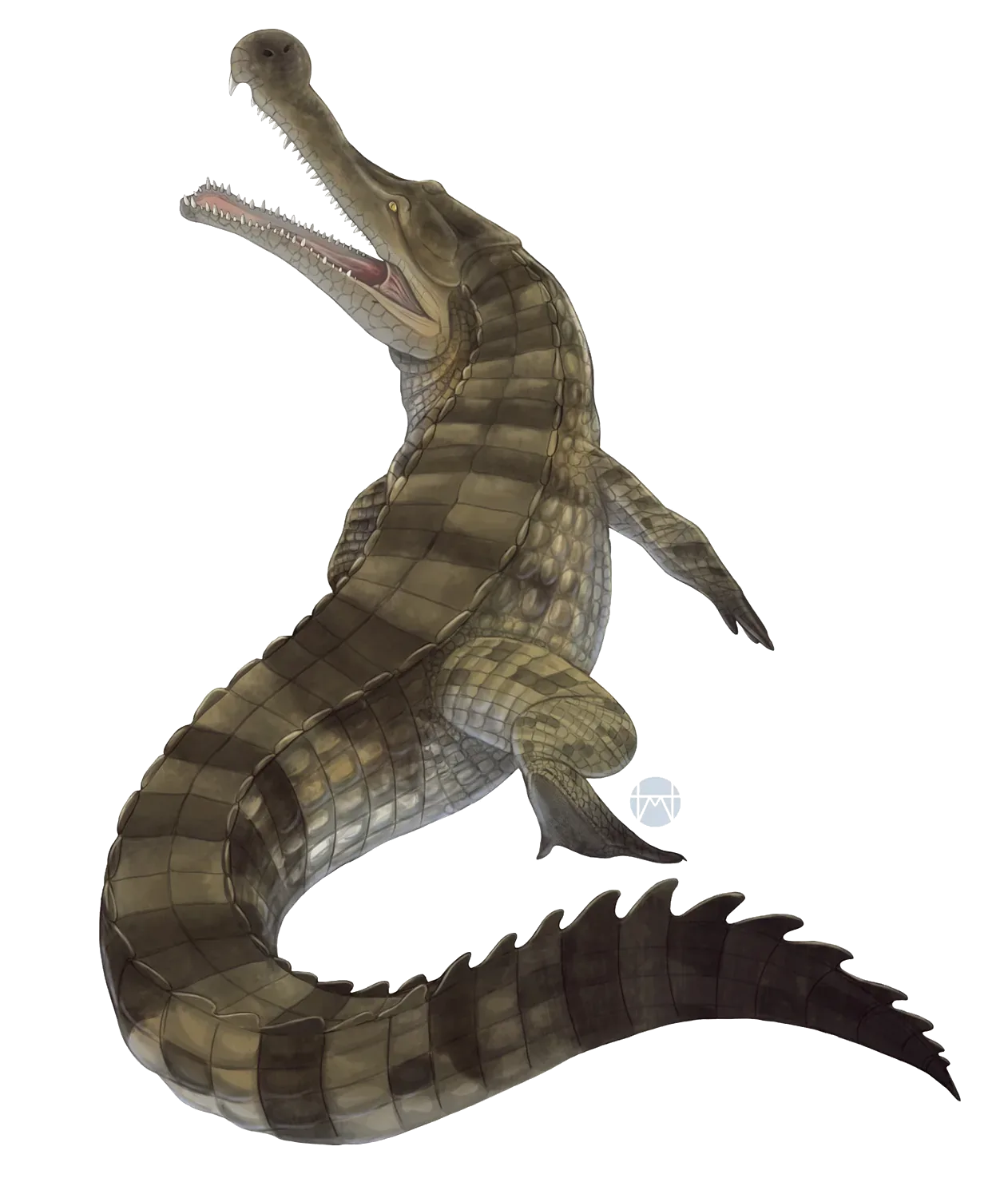
Der Gangesgavial ist ein heute lebendes Krokodil aus den Flüssen Nordindiens und Nepals. Mit seiner sehr langen, schmalen Schnauze und rund 110 spitzen Zähnen ist er auf Fische spezialisiert. Männchen werden bis 6 Meter lang und tragen eine knollige Verdickung an der Schnauzenspitze. Er ist vom Aussterben bedroht.The gharial is a living crocodilian from the rivers of northern India and Nepal. With its very long, narrow snout and about 110 sharp teeth it is specialised in catching fish. Males grow up to 6 metres long and carry a bulbous knob on the tip of the snout. It is critically endangered.
Mehr InformationenMore information
Johann Friedrich Gmelin beschrieb die Art 1789 als Lacerta gangetica. Der Name Gharial kommt vom Hindustani-Wort «ghara» für einen Tontopf, wegen der Knolle auf der Schnauze erwachsener Männchen. Mit ihr können sie ein zischendes Geräusch erzeugen, das bis 75 Meter weit hörbar ist. Kein anderes lebendes Krokodil zeigt so deutlich, ob es Männchen oder Weibchen ist.Johann Friedrich Gmelin described the species in 1789 as Lacerta gangetica. The name gharial comes from the Hindustani word "ghara" for an earthen pot, because of the knob on the snout of adult males. With it they can make a hissing sound that carries up to 75 metres. No other living crocodilian shows so clearly whether it is male or female.
Der Gangesgavial lebt stärker im Wasser als jedes andere Krokodil und verlässt es nur zum Sonnen und zum Nestbau auf Sandbänken. Weibchen legen 20 bis 95 Eier; es sind die grössten Eier aller Krokodile. Die Jungen schlüpfen nach 71 bis 93 Tagen, kurz vor dem Monsun.The gharial is more aquatic than any other crocodilian and leaves the water only to bask and to nest on sandbanks. Females lay 20 to 95 eggs; they are the largest eggs of any crocodilian. The young hatch after 71 to 93 days, just before the monsoon.
Einst lebte er in allen grossen Flüssen vom Indus bis zum Irrawaddy. Heute bewohnt er nur noch etwa 2 Prozent dieses Gebiets. Die IUCN schätzte 2019 höchstens 900 Tiere, davon rund 650 erwachsene. Bedroht ist er vor allem durch Sandabbau, Landwirtschaft am Ufer, Überfischung und Fischernetze. Seit den 1980er-Jahren werden in Indien und Nepal gezüchtete Tiere ausgesetzt.It once lived in all the major rivers from the Indus to the Irrawaddy. Today it occupies only about 2 percent of that area. In 2019 the IUCN estimated at most 900 animals, about 650 of them adults. It is threatened mainly by sand mining, farming along the banks, overfishing and fishing nets. Since the 1980s captive-bred animals have been released in India and Nepal.
Wusstest du?Did you know?
- Der Name kommt von «ghara», dem Hindustani-Wort für einen Tontopf, wegen der Knolle auf der Schnauze der Männchen.The name comes from "ghara", the Hindustani word for an earthen pot, because of the knob on the males' snout.4
- Er hat rund 110 spitze, ineinandergreifende Zähne.It has about 110 sharp, interlocking teeth.4
- Seine Eier sind die grössten aller Krokodile, im Mittel etwa 160 Gramm schwer.Its eggs are the largest of any crocodilian, weighing about 160 grams on average.4
- Die ältesten bekannten Darstellungen des Gangesgavials sind etwa 4000 Jahre alt und stammen aus dem Industal.The oldest known depictions of the gharial are about 4,000 years old and come from the Indus Valley.4
- Im Hinduismus gilt er als Reittier der Flussgöttin Ganga.In Hinduism it is regarded as the mount of the river goddess Ganga.4
Was man nicht sicher weissWhat we don’t know for sure
- Wie viele Tiere heute leben; die Zahlen schwanken und werden durch Auswilderungen beeinflusst.How many animals live today; the numbers vary and are affected by releases of captive-bred animals.3,4
- Wozu die Knolle der Männchen genau dient: Laute, Zeichen der Geschlechtsreife oder Balz.What exactly the males' knob is for: sounds, a sign of maturity or courtship.4
VerwandtschaftRelationships
Der Gangesgavial gehört zu den Gavialidae. Erbgutvergleiche zeigen, dass der Sundagavial (Tomistoma) sein nächster lebender Verwandter ist. Beide sind entfernter mit den echten Krokodilen wie dem Leistenkrokodil verwandt.The gharial belongs to the Gavialidae. Genetic studies show that the false gharial (Tomistoma) is its closest living relative. Both are more distantly related to true crocodiles such as the saltwater crocodile.4
SteckbriefKey facts
- GewichtWeight
- 160–750 kg160–750 kg2,4Männchen im Mittel etwa 160 kg, grosse Männchen 600–750 kg. Schwerstes gemessenes Tier: 977 kg.Males about 160 kg on average, large males 600–750 kg. Heaviest recorded animal: 977 kg.
- ZeitalterPeriod
- HeuteToday
- ErnährungDiet
- FischfresserFish-eater1,4Vor allem Fische; Jungtiere auch Insekten, Kaulquappen und Frösche.Mainly fish; young animals also insects, tadpoles and frogs.
- FortbewegungLocomotion
- an Land und im Wasseron land and in water4Das am stärksten ans Wasser gebundene Krokodil.The most aquatic of all crocodilians.
FundorteFossil sites
EntdeckungDiscovery4
- JahrYear
- 1789
- OrtPlace
- Typusfundort nicht ermitteltType locality not determined
- Beschrieben vonDescribed by
- Johann Friedrich Gmelin (1789)
GrössenvergleichSize comparison
QuellenSources
- Whitaker, R. & Basu, D. (1982): The Gharial (Gavialis gangeticus): A review. Journal of the Bombay Natural History Society 79
- Stevenson, C. & Whitaker, R. (2010): Gharial Gavialis gangeticus. In: Crocodiles. Status Survey and Conservation Action Plan, 3rd edition. Crocodile Specialist Group
- Lang, J., Chowfin, S. & Ross, J. P. (2019): Gavialis gangeticus. The IUCN Red List of Threatened Species 2019
- Wikipedia: Gharial (secondary source, accessed October 2026)