SarcosuchusSarcosuchus
Sarcosuchus imperator
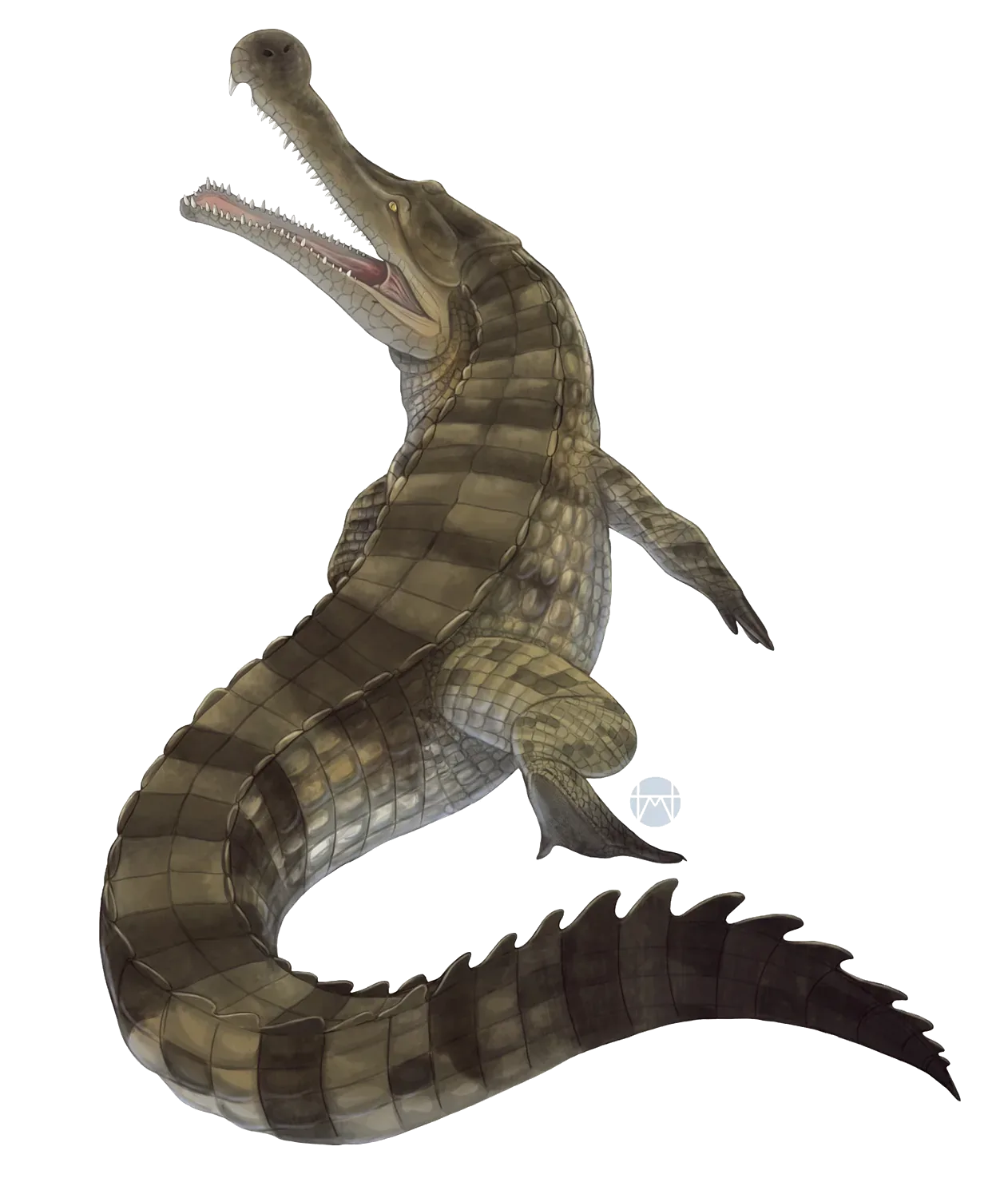
Sarcosuchus war ein riesiger Verwandter der heutigen Krokodile und lebte in der frühen Kreidezeit in Afrika und Südamerika. Mit einer Länge von etwa 9 bis 12 Metern gehört er zu den grössten Krokodilverwandten, die je gelebt haben. Er lebte in Flüssen und frass wohl Fische, aber vermutlich auch Dinosaurier. Obwohl er wie ein Krokodil aussah, ist er mit den heutigen Krokodilen nur entfernt verwandt.Sarcosuchus was a giant relative of today’s crocodiles and lived in the Early Cretaceous in Africa and South America. At about 9 to 12 metres long, it is one of the largest crocodile relatives that ever lived. It lived in rivers and probably ate fish, but likely dinosaurs too. Although it looked like a crocodile, it is only distantly related to living crocodiles.
Mehr InformationenMore information
Ein fast vollständiger Schädel wurde 1964 von einem französischen Team, das nach Uran suchte, bei Gadoufaoua in Niger entdeckt. France de Broin und Philippe Taquet beschrieben 1966 die Art Sarcosuchus imperator. Der Name bedeutet etwa «Fleisch-Krokodil», nach dem ägyptischen Krokodilgott Sobek. Zähne einer zweiten Art, S. hartti, waren schon in den 1850er Jahren in Brasilien gefunden worden.An almost complete skull was discovered at Gadoufaoua in Niger in 1964 by a French team searching for uranium. France de Broin and Philippe Taquet described the species Sarcosuchus imperator in 1966. The name means roughly "flesh crocodile", after the Egyptian crocodile god Sobek. Teeth of a second species, S. hartti, had already been found in Brazil in the 1850s.
Die besten Fossilien sammelte ein Team um Paul Sereno 1997 und 2000 in der Elrhaz-Formation in Niger, darunter mehrere Schädel. Sereno und Kollegen schätzten 2001 eine Länge von 11 bis 12 Metern und ein Gewicht von etwa 8 Tonnen. Wachstumslinien in den Knochenplatten der Haut deuten darauf hin, dass Sarcosuchus 50 bis 60 Jahre brauchte, um ausgewachsen zu sein. Eine Studie von 2019, die die Kopfbreite als Massstab nutzte, kam auf kleinere Werte von etwa 9 bis 9.5 Metern und 3.5 bis 4.3 Tonnen.The best fossils were collected by a team led by Paul Sereno in 1997 and 2000 in the Elrhaz Formation in Niger, including several skulls. In 2001 Sereno and colleagues estimated a length of 11 to 12 metres and a weight of about 8 tonnes. Growth lines in the bony skin plates suggest that Sarcosuchus took 50 to 60 years to become fully grown. A 2019 study using head width as a measure arrived at smaller values of about 9 to 9.5 metres and 3.5 to 4.3 tonnes.
Sarcosuchus gehört zu den Pholidosauriden, einer ausgestorbenen Gruppe innerhalb der Neosuchia, und ist nicht direkt mit den heutigen Krokodilen verwandt. Anders als seine nächsten Verwandten, die als Fischfresser an Küsten lebten, bewohnte er Flusslandschaften. Die kräftigen, nicht ineinandergreifenden Zähne sprechen für eine vielseitige Nahrung aus Fischen und grossen Wirbeltieren. Ob er Beute wie heutige Krokodile mit der «Todesrolle» zerriss, ist fraglich.Sarcosuchus belongs to the pholidosaurids, an extinct group within Neosuchia, and is not directly related to living crocodiles. Unlike its closest relatives, which lived as fish-eaters along coasts, it inhabited river landscapes. Its sturdy teeth, which did not interlock, suggest a varied diet of fish and large vertebrates. Whether it tore apart prey with a "death roll" like modern crocodiles is doubtful.
Wusstest du?Did you know?
- Der Name bedeutet etwa «Fleisch-Krokodil» und spielt auf den ägyptischen Krokodilgott Sobek an.The name means roughly "flesh crocodile" and refers to the Egyptian crocodile god Sobek.7
- Der grösste bekannte Schädel ist rund 1.6 Meter lang.The largest known skull is about 1.6 metres long.2,7
- Sarcosuchus brauchte wohl 50 bis 60 Jahre, um ausgewachsen zu sein.Sarcosuchus probably took 50 to 60 years to become fully grown.2
- Der Holotyp-Schädel wurde von Forschern gefunden, die eigentlich nach Uran suchten.The holotype skull was found by researchers who were actually searching for uranium.7
- Die ersten Zähne aus Brasilien beschrieb Othniel Charles Marsh 1869 als Crocodylus hartti.Othniel Charles Marsh described the first teeth from Brazil in 1869 as Crocodylus hartti.4,7
Was man nicht sicher weissWhat we don’t know for sure
- Wie gross Sarcosuchus wurde: Je nach Methode zwischen etwa 9 und 12 Metern.How large Sarcosuchus grew: between about 9 and 12 metres depending on the method.2,3
- Wie oft er Dinosaurier jagte: Die Zähne sprechen für vielseitige Nahrung, direkte Belege für Dinosaurier als Beute fehlen.How often it hunted dinosaurs: the teeth suggest a varied diet, direct evidence of dinosaurs as prey is lacking.2,7
- Ob Sarcosuchus die «Todesrolle» heutiger Krokodile beherrschte: Ein Modell von 2014 spricht dagegen.Whether Sarcosuchus could perform the "death roll" of modern crocodiles: a 2014 model suggests not.6
- Wie lange die Gattung existierte: Ein möglicher jüngerer Fund aus dem Cenoman ist unsicher.How long the genus existed: a possible younger find from the Cenomanian is uncertain.7
VerwandtschaftRelationships
Sarcosuchus gehört zu den Pholidosauriden innerhalb der Neosuchia und damit zu den Crocodylomorpha, der Krokodil-Linie der Archosaurier. Mit den heutigen Krokodilen (Crocodylia) ist er nur entfernt verwandt.Sarcosuchus belongs to the pholidosaurids within Neosuchia and thus to Crocodylomorpha, the crocodile line of archosaurs. It is only distantly related to living crocodiles (Crocodylia).2,7
SteckbriefKey facts
- LängeLength
- 9–12 m9–12 m2,32001: mindestens 11–12 m; 2019 (Kopfbreite): ca. 9–9.5 m.2001: at least 11–12 m; 2019 (head width): about 9–9.5 m.
- GewichtWeight
- 3.45–8 t3.45–8 t2,32001: ca. 8 t; 2019: ca. 3.5–4.3 t.2001: about 8 t; 2019: about 3.5–4.3 t.
- ZeitraumTime range
- 130–112 Mio. Jahre130–112 million years ago7Die Funde aus Niger sind etwa 125 bis 112 Mio. Jahre alt.The finds from Niger are about 125 to 112 million years old.
- ErnährungDiet
- FleischfresserCarnivore2Vielseitig: Fische und grosse Wirbeltiere, wohl auch Dinosaurier.Generalist: fish and large vertebrates, probably including dinosaurs.
- FortbewegungLocomotion
- an Land und im Wasseron land and in water2Lebte in Flusslandschaften.Lived in river landscapes.
FundorteFossil sites
EntdeckungDiscovery1,7
- JahrYear
- 1964
- OrtPlace
- Gadoufaoua, NigerGadoufaoua, Niger
- Beschrieben vonDescribed by
- France de Broin & Philippe Taquet (1966)
- FundSpecimen
- Holotyp: fast vollständiger Schädel
Entdeckt von einem Team der französischen Atomenergiekommission auf der Suche nach Uran. Weitere Funde durch Paul Sereno 1997 und 2000.Discovered by a team of the French Atomic Energy Commission searching for uranium. Further finds by Paul Sereno in 1997 and 2000.
Wo gefundenWhere it was found
Ungefähre Lage, nur die Region ist angegeben: Elrhaz FormationApproximate location, only the region is given: Elrhaz Formation8 · FundkarteDiscovery map →
GrössenvergleichSize comparison
QuellenSources
- de Broin, F. & Taquet, P. (1966): Découverte d’un crocodilien nouveau dans le Crétacé inférieur du Sahara. Comptes Rendus de l’Académie des Sciences 262
- Sereno, P. C., Larsson, H. C. E., Sidor, C. A. & Gado, B. (2001): The giant crocodyliform Sarcosuchus from the Cretaceous of Africa. Science 294
- O’Brien, H. D. et al. (2019): Crocodylian head width allometry and phylogenetic prediction of body size in extinct crocodyliforms. Integrative Organismal Biology 1
- Marsh, O. C. (1869): Notice of some new reptilian remains from the Cretaceous of Brazil. American Journal of Science s2-47
- Buffetaut, E. & Taquet, P. (1977): The giant crocodilian Sarcosuchus in the Early Cretaceous of Brazil and Niger. Palaeontology 20, pp. 203–208
- Blanco, R. E., Jones, W. W. & Villamil, J. (2014): The ‘death roll’ of giant fossil crocodyliforms (Crocodylomorpha: Neosuchia). Historical Biology 27
- Wikipedia: Sarcosuchus (secondary source, accessed October 2026)
- Wikipedia: Elrhaz Formation (coordinates, accessed October 2026)