EffigiaEffigia
Effigia okeeffeae
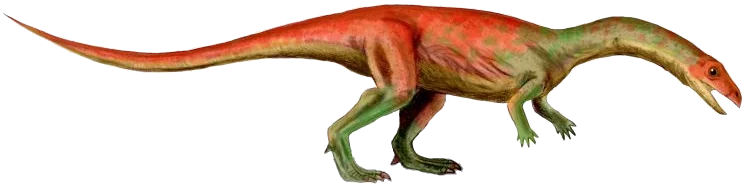
Effigia war ein Pseudosuchier aus der späten Trias von New Mexico, der auf zwei Beinen lief. Mit langem Hals und zahnlosem Schnabel sah er fast aus wie ein Straussendinosaurier, war aber näher mit Krokodilen verwandt. Er ist ein Paradebeispiel für konvergente Evolution. Er frass wohl weiche Pflanzen.Effigia was a pseudosuchian from the Late Triassic of New Mexico that walked on two legs. With a long neck and toothless beak it looked almost like an ostrich dinosaur, but it was more closely related to crocodiles. It is a textbook example of convergent evolution. It probably ate soft plants.
Mehr InformationenMore information
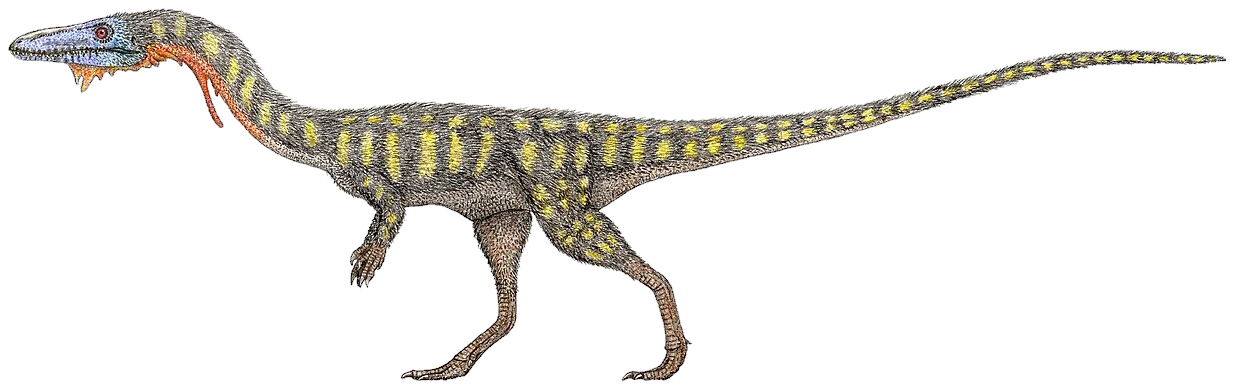
Edwin Colbert grub 1947 auf der Ghost Ranch in New Mexico Gesteinsblöcke voller Coelophysis aus. Viele Blöcke wurden nie geöffnet. Erst 2004 fand der Student Sterling Nesbitt im American Museum of Natural History in einem davon ein unbekanntes Tier. Er und Mark Norell benannten es 2006 nach der Malerin Georgia O'Keeffe, die lange auf der Ghost Ranch lebte.In 1947 Edwin Colbert dug blocks of rock full of Coelophysis out of the Ghost Ranch in New Mexico. Many blocks were never opened. Only in 2004 did the student Sterling Nesbitt find an unknown animal in one of them at the American Museum of Natural History. He and Mark Norell named it in 2006 after the painter Georgia O'Keeffe, who lived at Ghost Ranch for many years.
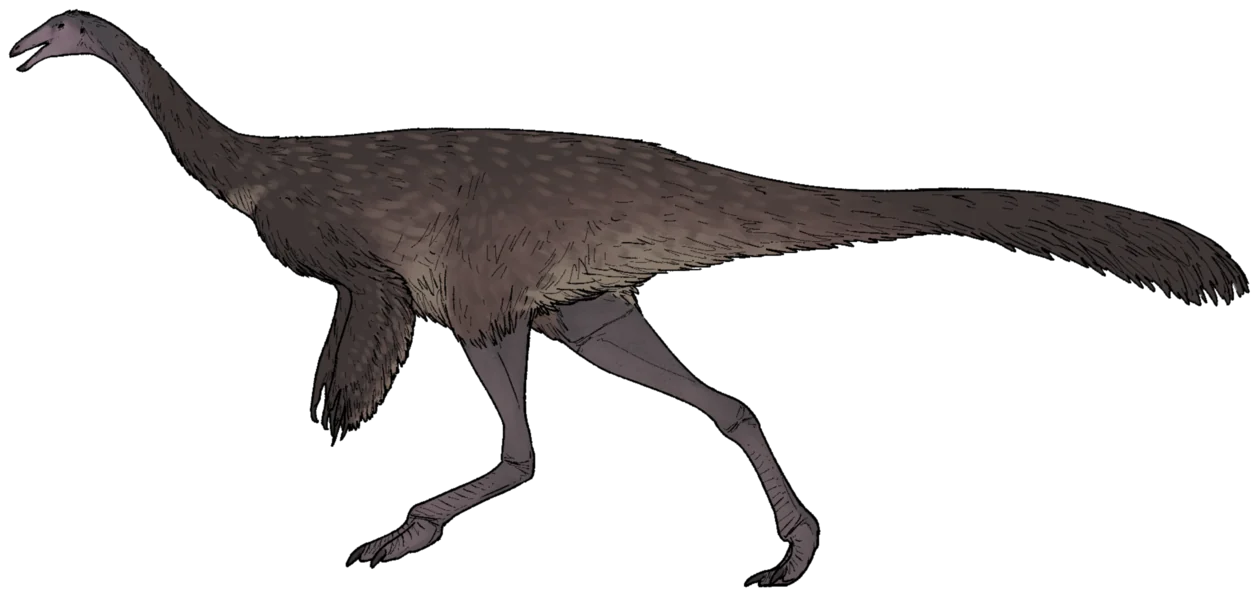
Effigia lief auf zwei Beinen, hatte einen langen Hals und einen zahnlosen Schnabel. In vielen Merkmalen von Schädel und Skelett gleicht er den Ornithomimiden, Dinosauriern, die erst viel später in der Kreidezeit lebten. Solch eine starke Übereinstimmung an so vielen Stellen bei entfernt verwandten Tieren ist selten.Effigia walked on two legs, had a long neck and a toothless beak. In many features of the skull and skeleton it resembles the ornithomimids, dinosaurs that lived much later in the Cretaceous. Such a close match in so many places between distantly related animals is rare.
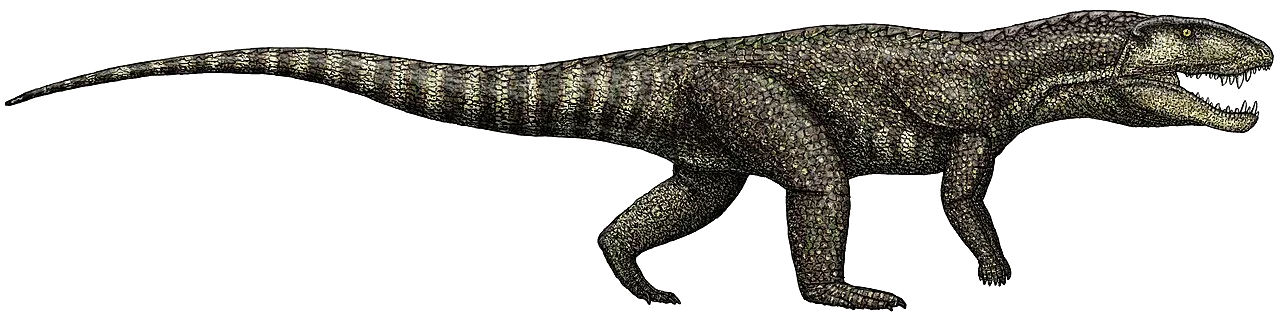
Effigia gehört zu den Shuvosauriden, einer Gruppe der Poposauroiden innerhalb der Krokodil-Linie. Untersuchungen der Kiefer deuten auf einen Pflanzenfresser hin, der weiche Pflanzenteile abbiss. Für ein Picken wie bei Straussen war der Schädel wohl nicht stabil genug.Effigia belongs to the shuvosaurids, a group of poposauroids within the crocodile line. Studies of the jaws suggest a plant-eater that bit off soft plant parts. Its skull was probably not strong enough for pecking like an ostrich.
Effigia gehört zu den Shuvosauriden, einer kleinen Familie der späten Trias aus Nordamerika und Argentinien. Zu ihr zählen auch Shuvosaurus aus Texas und Sillosuchus aus Argentinien. Nesbitt zeigte 2007 ausserdem, dass Chatterjeea dasselbe Tier ist wie Shuvosaurus. Wie die Straussendinosaurier viel später hatten diese Tiere einen zahnlosen Schnabel und liefen auf zwei Beinen.Effigia belongs to the shuvosaurids, a small Late Triassic family from North America and Argentina. It also includes Shuvosaurus from Texas and Sillosuchus from Argentina. In 2007 Nesbitt also showed that Chatterjeea is the same animal as Shuvosaurus. Like the ostrich dinosaurs much later, these animals had a toothless beak and walked on two legs.
Wusstest du?Did you know?
- Das Fossil lag fast 60 Jahre ungeöffnet in einem Gipsblock im Museum.The fossil lay unopened in a plaster block in the museum for almost 60 years.3
- Der Artname ehrt die Malerin Georgia O'Keeffe.The species name honours the painter Georgia O'Keeffe.3
- Er gleicht den viel späteren Straussendinosauriern so stark, dass Forschende von «extremer» Konvergenz sprechen.It resembles the much later ostrich dinosaurs so closely that researchers speak of "extreme" convergence.1,3
- Er lief auf zwei Beinen, obwohl er näher mit Krokodilen als mit Dinosauriern verwandt ist.It walked on two legs, although it is more closely related to crocodiles than to dinosaurs.1
- Er wurde in Blöcken entdeckt, die eigentlich wegen Coelophysis gesammelt worden waren.It was discovered in blocks that had actually been collected for Coelophysis.3
Was man nicht sicher weissWhat we don’t know for sure
- Ob Effigia eine eigene Gattung ist oder zu Shuvosaurus gehört.Whether Effigia is a separate genus or belongs to Shuvosaurus.3
- Wie gross und schwer er war.How large and heavy it was.3
- Ob Effigia mit dem Schnabel auch pickte; die Untersuchung des Schädels spricht eher dagegen.Whether Effigia also pecked with its beak; studies of the skull suggest it did not.3
VerwandtschaftRelationships
Effigia gehört zu den Shuvosauriden und den Poposauroiden, Pseudosuchiern der Trias. Sein nächster Verwandter ist Shuvosaurus aus Texas.Effigia belongs to the shuvosaurids and the poposauroids, pseudosuchians of the Triassic. Its closest relative is Shuvosaurus from Texas.2,3,5
SteckbriefKey facts
FundorteFossil sites
- Ghost Ranch, New Mexico, USAGhost Ranch, New Mexico, USA3Chinle-Formation
EntdeckungDiscovery3
- JahrYear
- 1947
- OrtPlace
- Ghost Ranch, New Mexico, USAGhost Ranch, New Mexico, USA
- Beschrieben vonDescribed by
- Sterling Nesbitt & Mark Norell (2006)
Gesammelt 1947 von Edwin Colbert, erst 2004 im Museum erkannt.Collected in 1947 by Edwin Colbert, only recognised in the museum in 2004.
Wo gefundenWhere it was found
Lage von Ghost RanchLocation of Ghost Ranch4 · FundkarteDiscovery map →
GrössenvergleichSize comparison
QuellenSources
- Nesbitt, S. J. & Norell, M. A. (2006): Extreme convergence in the body plans of an early suchian (Archosauria) and ornithomimid dinosaurs (Theropoda). Proceedings of the Royal Society B 273
- Nesbitt, S. J. (2007): The anatomy of Effigia okeeffeae (Archosauria, Suchia), theropod-like convergence, and the distribution of related taxa. Bulletin of the American Museum of Natural History 302
- Wikipedia: Effigia (secondary source, accessed October 2026)
- Wikipedia: Ghost Ranch (coordinates, accessed October 2026)
- Wikipedia: Shuvosauridae (secondary source, accessed October 2026)