QuetzalcoatlusQuetzalcoatlus
Quetzalcoatlus northropi
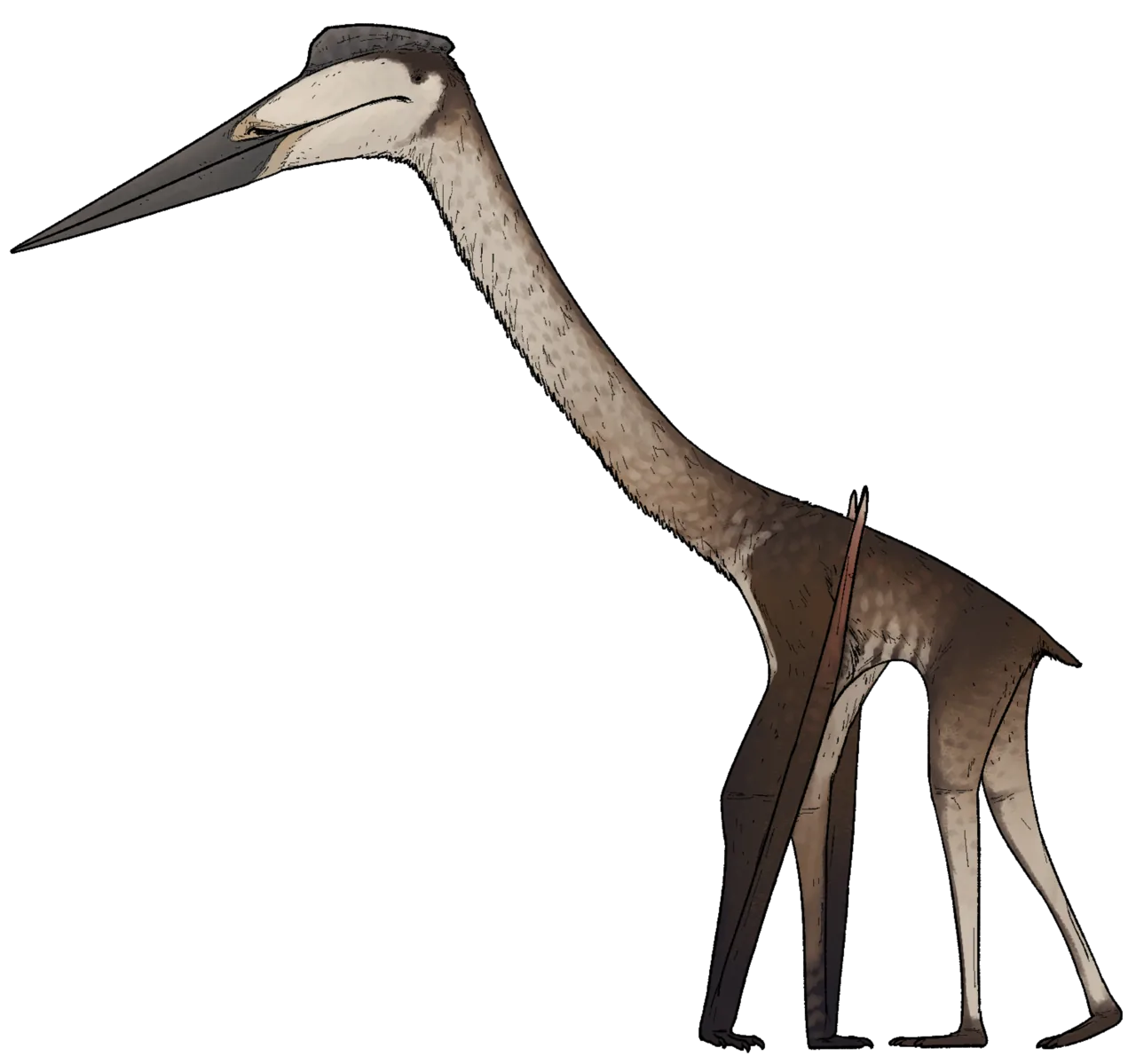
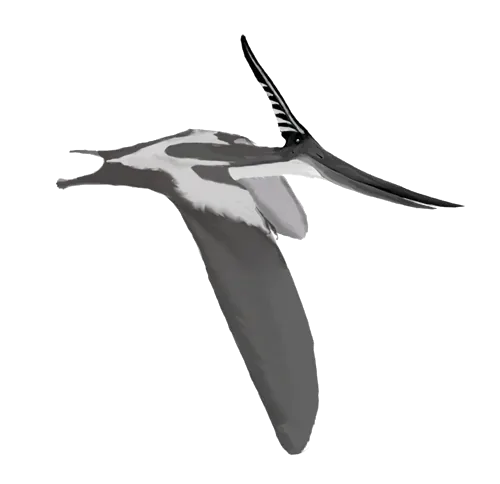
Quetzalcoatlus war einer der grössten Flugsaurier und eines der grössten fliegenden Tiere aller Zeiten. Mit rund 10 bis 11 Metern Spannweite war er so breit wie ein kleines Flugzeug, stehend so hoch wie eine Giraffe. Er lebte am Ende der Kreidezeit im heutigen Texas. Flugsaurier sind keine Dinosaurier, aber ihre nahen Verwandten.Quetzalcoatlus was one of the largest pterosaurs and one of the largest flying animals of all time. With a wingspan of about 10 to 11 metres it was as wide as a small aircraft, and standing it was as tall as a giraffe. It lived at the end of the Cretaceous in present-day Texas. Pterosaurs are not dinosaurs, but their close relatives.
Mehr InformationenMore information
Der Student Douglas Lawson fand 1971 im Big-Bend-Nationalpark in Texas die ersten Knochen, Teile eines riesigen Flügels. 1975 stellte er den Fund in der Fachzeitschrift Science vor und nannte ihn das grösste bekannte Flugtier. Der Name ehrt die aztekische Gottheit Quetzalcoatl und den Flugzeugbauer John Knudsen Northrop. Neben Q. northropi ist eine kleinere Art bekannt, Q. lawsoni.In 1971 the student Douglas Lawson found the first bones, parts of a huge wing, in Big Bend National Park, Texas. In 1975 he presented the find in the journal Science and called it the largest known flying animal. The name honours the Aztec deity Quetzalcoatl and the aircraft designer John Knudsen Northrop. Besides Q. northropi, a smaller species is known, Q. lawsoni.
Lawson schätzte die Spannweite zunächst auf 15.5 Meter; spätere Schätzungen schwankten von gut 5 bis über 25 Meter. Heute gelten etwa 10 bis 11 Meter als wahrscheinlich. Auch das Gewicht ist schwer zu bestimmen; die meisten neueren Schätzungen liegen bei 200 bis 250 Kilogramm, eine Studie von 2021 kam auf rund 150 Kilogramm. Am Boden stand er auf allen vieren und hielt den Kopf wohl über 4 Meter hoch.Lawson first estimated the wingspan at 15.5 metres; later estimates ranged from just over 5 to more than 25 metres. Today about 10 to 11 metres is considered likely. Weight is also hard to determine; most recent estimates are 200 to 250 kilograms, one 2021 study arrived at about 150 kilograms. On the ground it stood on all fours and probably held its head more than 4 metres high.
Wie Quetzalcoatlus Nahrung fand, ist umstritten. Früher hielt man ihn für einen Aasfresser oder für einen Fischfänger, der im Flug übers Wasser streift. Heute wird meist angenommen, dass er wie ein Storch am Boden kleine Tiere jagte. Wie ein so grosses Tier abhob, wird ebenfalls diskutiert; wahrscheinlich stiess es sich mit allen vier Gliedmassen ab.How Quetzalcoatlus found food is debated. It was once thought to be a scavenger, or a fish-catcher skimming over water in flight. Today it is usually assumed to have hunted small animals on the ground like a stork. How such a large animal took off is also discussed; it probably launched using all four limbs.
Wusstest du?Did you know?
- Die Art Q. northropi ist nach dem Flugzeugbauer John Knudsen Northrop benannt, dessen Nurflügler dem Tier ähnelten.The species Q. northropi is named after the aircraft designer John Knudsen Northrop, whose flying wings resembled the animal.2,7
- Lawson schätzte die Spannweite 1975 auf 15.5 Meter, deutlich mehr als heutige Schätzungen.In 1975 Lawson estimated the wingspan at 15.5 metres, well above today’s estimates.1
- Stehend hielt Quetzalcoatlus den Kopf wohl etwa so hoch wie eine Giraffe.Standing, Quetzalcoatlus probably held its head about as high as a giraffe.5,7
- Der Name war jahrzehntelang formal ungültig und wurde erst 2019 von der Nomenklaturkommission offiziell bestätigt.For decades the name was formally invalid; it was only officially confirmed by the nomenclature commission in 2019.2,7
- Lawson fand im selben Gebiet ein Jahr zuvor auch den ersten Tyrannosaurus-Fund aus Texas.The year before, Lawson had also found the first Tyrannosaurus fossil from Texas in the same area.6,7
Was man nicht sicher weissWhat we don’t know for sure
- Wie gross und schwer Quetzalcoatlus genau war: Vom grossen Q. northropi kennt man vor allem Flügelknochen.How large and heavy Quetzalcoatlus was exactly: of the large Q. northropi mostly wing bones are known.2,7
- Wie er sich ernährte: Jäger am Boden, Aasfresser oder Sondierer im Schlamm.How it fed: ground hunter, scavenger or mud prober.3,5,7
- Wie ein so grosses Tier abheben und wie lange es fliegen konnte.How such a large animal could take off and how long it could fly.4,7
- Welche weiteren Riesenfunde zu Q. northropi gehören: Nur ein zweites Exemplar, eine Elle, lässt sich sicher zuordnen.Which other giant finds belong to Q. northropi: only one second specimen, an ulna, can be assigned with confidence.2,7
VerwandtschaftRelationships
Quetzalcoatlus gehört zu den Azhdarchiden, einer Familie langhalsiger Flugsaurier innerhalb der Pterodactyloidea. Flugsaurier sind keine Dinosaurier; beide Gruppen gehören zu den Avemetatarsalia.Quetzalcoatlus belongs to the azhdarchids, a family of long-necked pterosaurs within Pterodactyloidea. Pterosaurs are not dinosaurs; both groups belong to Avemetatarsalia.2,7
SteckbriefKey facts
- Höhe (stehend)Height (standing)
- ca. 4 mapprox. 4 m5,7Kopfhöhe im Stehen, laut Schätzung über 4 m (Untergrenze); Schulterhöhe etwa 2–3 m.Head height when standing, estimated at more than 4 m (lower bound); shoulder height about 2–3 m.
- SpannweiteWingspan
- 10–11 m10–11 m4,7Q. northropi; frühere Schätzungen reichten von gut 5 bis über 25 m.Q. northropi; earlier estimates ranged from just over 5 to more than 25 m.
- GewichtWeight
- 150–250 kg150–250 kg4,7Die meisten neueren Schätzungen: 200–250 kg; Padian et al. 2021: ca. 150 kg; eine Schätzung von 544 kg gilt als Ausreisser.Most recent estimates: 200–250 kg; Padian et al. 2021: about 150 kg; an estimate of 544 kg is considered an outlier.
- ZeitraumTime range
- 68–66 Mio. Jahre68–66 million years ago7Maastrichtium (späte Kreide).Maastrichtian (Late Cretaceous).
FundorteFossil sites
EntdeckungDiscovery1,6,7
- JahrYear
- 1971
- OrtPlace
- Big-Bend-Nationalpark, Texas, USABig Bend National Park, Texas, USA
- Beschrieben vonDescribed by
- Douglas A. Lawson (1975)
- FundSpecimen
- Holotyp TMM 41450-3 (Teil eines linken Flügels)
Gefunden von Lawson als Masterstudent unter Betreuung von Wann Langston Jr.Found by Lawson as a master’s student supervised by Wann Langston Jr.
Wo gefundenWhere it was found
Ungefähre Lage, nur die Region ist angegeben: Big Bend National ParkApproximate location, only the region is given: Big Bend National Park8 · FundkarteDiscovery map →
GrössenvergleichSize comparison
QuellenSources
- Lawson, D. A. (1975): Pterosaur from the latest Cretaceous of West Texas: discovery of the largest flying creature. Science 187
- Andres, B. & Langston, W. Jr. (2021): Morphology and taxonomy of Quetzalcoatlus Lawson 1975. Journal of Vertebrate Paleontology 41
- Witton, M. P. & Naish, D. (2008): A reappraisal of azhdarchid pterosaur functional morphology and paleoecology. PLoS ONE 3
- Padian, K. et al. (2021): Functional morphology of Quetzalcoatlus Lawson 1975. Journal of Vertebrate Paleontology 41
- Witton, M. P. & Naish, D. (2013): Azhdarchid pterosaurs: water-trawling pelican mimics or ‘terrestrial stalkers’? Acta Palaeontologica Polonica
- Brown, M. A., Sagebiel, J. C. & Andres, B. (2021): The discovery, local distribution, and curation of the giant azhdarchid pterosaurs from Big Bend National Park. Journal of Vertebrate Paleontology 41
- Wikipedia: Quetzalcoatlus (secondary source, accessed October 2026)
- Wikipedia: Big Bend National Park (coordinates, accessed October 2026)